‘Big Phil’ has huge shoes to fill
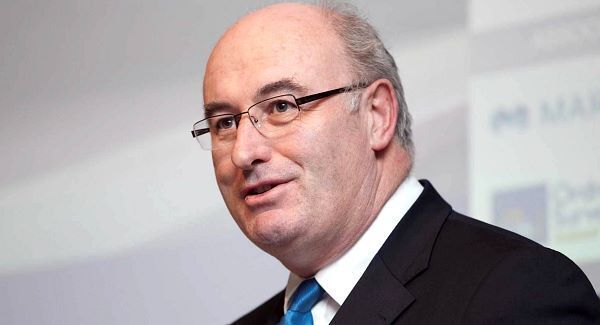
In the early years of the Government, the Kilkenny man emerged as a lightning rod for protest. From charges for water and septic tanks, from the reorganisation of local Government to the phasing in of the property tax, ‘Big Phil’ has found himself engaged in plenty of heavy political lifting.
He is a seasoned politician with considerable organisational skills, and a personality that can teeter between heartiness and gruffness.
At the start of his career, more than 20 years ago, he secured his seat in the Seanad, in part, thanks to votes from Workers Party councillors. He soon secured a Dáil seat and before long, a junior post in the Rainbow Government in late 1994, only to be forced to resign, soon after, when details of the budget were accidentally released to the media from his office.
He shrugged off the setback, but it would be 2011 before he secured a senior post in Government, having helped Enda Kenny see off the Bruton leadership challenge. Now, he is on the cusp of securing one of the plum positions in public life, becoming the second Irishman to fill a post which controls around 40%of the total EU budget.
Hogan steps into large shoes. Back in 1990, his predecessor, Ray MacSharry pushed through what is regarded as the most radical overhaul in the Common Agricultural Policy in its 30-year history. He also had to defend the industry against a concerted effort from the US for even more swinging cuts. MacSharry responded vigorously, accusing the Americans of intimidation. It is accepted that his abrasive style served him well in the rough and tumble of EU politics.
Both MacSharry and his predecessor, Peter Sutherland, served under Jacques Delors, the architect of the single European market and the man who laid the foundations for the euro. Sutherland made his name in charge of the competition portfolio, paving the way for aviation deregulation and the emergence of the low cost airlines.
Hogan will not be unfamiliar with his new responsibilities. His Carlow-Kilkenny-East Wicklow constituency has a strong agricultural heritage. Glanbia Plc is based in Kilkenny from which area its predecessor, Avonmore Foods emerged. Farmers in his constituency look set to participate fully in the rise in production due to take place from the start of 2015. However, the recent travails of beef producers along with a softening in milk prices serve as a reminder that the road to farm expansion is paved with unexpected obstacles.
The new commissioner will be expected to work to try and redress the commercial imbalance between primary suppliers and the powerful multiples which are engaged in increasingly cut throat competition with each other to secure access to the food consumer’s purse. His appointment has been welcomed by the IFA, the leading industry body, but he will know well that rural Ireland does not speak with one voice.
In its response to the latest reforms to the CAP, the United Farmers’ Association has accused Hogan’s cabinet colleague, Agriculture Minister Simon Coveney of “keeping his promises to his big farmer friends.” As the UFA sees it, “CAP payments policy in operation since 2003 has worked to the detriment of 80% of Irish farmers.”
Key challenges on Hogan’s in tray include the upcoming transatlantic trade deal. His party colleague, Mairead McGuinness, MEP, has warned that it could “decimate Irish suckler beef production.” Concerns have been expressed that following agreement on the ‘TTIP’, the market could be flooded with product either genetically modified or pumped with antibiotics.
According to Compassion in World Farming, “what is at risk is the model of a more extensive, small scale agriculture which could be pushed aside in favour of bigger intensive systems which could produce food on a more massive scale.” Of course, the trade deal, if agreed, would boost Ireland’s service exports. A separate deal with South American states is also in the pipeline.
While the recent CAP reform is already in place, the new commissioner will be in a position to shape the next round of reforms, soon to get under way.
Farming sources suggest that despite the rhetoric, the current reforms do involve a significant shift of resources from the east of the country to farmers in the west, with farmers engaged in low intensive production gaining at the expense of farmers who work their land heavily.
The rural development part of Hogan’s portfolio is of particular significance given the way rural areas have lost out in relative terms to larger cities both in Ireland and across Europe as a whole. The outgoing agriculture commissioner, Dacian Ciolos, a Romanian, was a strong supporter of small farm producers and Hogan will have to walk a fine line between supporting agricultural production at a time when restrictions are soon to be lifted, and ensuring that the small man and struggling small communities are lifted from their current states.
The new commissioner has already begun forming his group of advisers, or ‘cabinet’ which will be headed by Limerick man, Peter Power, who once worked for farmers’ leader, the late TJ Maher, before becoming the right hand man of Peter Mandelson, Britain’s EU commissioner. These days, appointments to cabinets are much sought after. They contain a mix of senior bureaucrats and rising young officials.
Catherine Day, head of the Commission service, served in the cabinet of an early 1980s commissioner, Dick Burke, at the start of her career. Her predecessor, David O Sullivan, also cut his teeth in a cabinet.
Cabinet members spend much of their time dealing with lobbyists. The largest corporations are directly represented in Brussels.
Much of their time is spent bringing MEPs on side. Cabinet officials must watch that amendments have not been slipped into legislation, late in the day, at the behest of lobbyists who have managed to ‘turn’ an MEP sitting on a key parliamentary committee. A key feature of Brussels life is the way the representation of powerful producer interests outweighs those of ordinary consumers. This pro producer bias has contributed in no small way to popular disillusionment with the EU, one that is paralleled in US political life, where contempt for Washington DC and its murky ways, appears boundless.
While Phil Hogan will escape constituency work and party in-fighting, his range of responsibilities will be huge. The external environment and in particular, the sanctions against Russia and its consequences will be the most urgent issue requiring to be addressed. Already, in the past week or so, Gazprom has flexed its muscles in turning down the natural gas tap to neighbouring Poland. The winter ahead could be a chilly, if not expensive, one for Europe’s energy consumers.
At the same time, farmers fret over the disruption to markets following on from sanctions.
But concern with matters urgent cannot displace attention to issues of longer term consequence. As an outgoing environment minister, Phil Hogan will be well aware of the challenges posed to farming by the requirement to reduce carbon output. Farmer bodies such as the IFA, meanwhile, argue strongly that displacing production in places like Ireland where carbon sequestering grassland plays a big role, in favour of less environmentally friendly producers, would be counter productive. The IFA must know that, at least, there is a friendly Irish face at the top table.

CONNECT WITH US TODAY



Be the first to know the latest news and updates