ECB is ready to do more
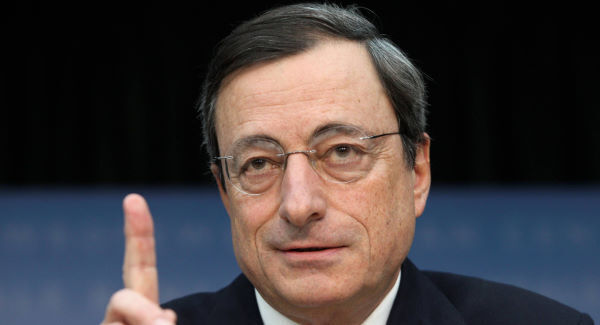
Speaking at the annual Jackson Hole conference of central banks in Wyoming, Draghi said recent growth data confirmed the currency bloc’s recovery remained “uniformly weak” and promised to keep the policy stance accommodative for an extended period of time.
The ECB cut interest rates to record lows in June and launched measures to pump money into the sluggish eurozone economy, where inflation has been in what Draghi has called “the danger zone” of below 1% for 10 months.
“I am confident that the package of measures we announced in June will indeed provide the intended boost to demand, and we stand ready to adjust our policy stance further,” Draghi said in a speech text.
“The governing council would use also unconventional instruments to safeguard the firm anchoring of inflation expectations over the medium- to long-term,” he said.
He did not, however, add any qualifier this time, such as in introductory remarks at his August news conference when he added: “...should it become necessary to further address risks of too prolonged a period of low inflation”.
The most powerful tool left in the ECB’s toolbox are large-scale asset purchases, also known as quantitative easing.
Draghi expected support for the economy from a weaker euro, a planned scheme to revive Europe’s market for securitised loans and the ECB’s new long-term loan plan, dubbed TLTROs, for which he said there was “significant interest from banks”.
“We have already seen exchange rate movements that should support both aggregate demand and inflation, which we expect to be sustained by the diverging expected paths of policy in the US and the euro area,” he said.
The euro hit its weakest level against the dollar since September 2013 yesterday.
While the eurozone is teetering on the brink of deflation, struggling with stagnant growth and double-digit rates of unemployment, the picture looks more rosy across the Atlantic where the US Federal Reserve has started to rein in stimulus.
The Fed is widely expected to start raising interest rates next year, a move that is seen to push up the dollar and thereby weaken the euro further.
Leading business surveys this week showed that growth in business activity in the eurozone slowed more than expected in August, despite widespread price cutting, which bodes ill for a pickup in inflation which is close to zero.
Eurozone annual inflation stood at 0.4% in July, the weakest since October 2009 at the height of the financial crisis and a far cry from the ECB’s target of below but close to 2%. It is expected to weaken further in August.
Calls for the ECB to do more grew louder after data showed growth ground to a halt in the second quarter, dragged down by a shrinking economy in Germany and a stagnant France, even before any impact from sanctions imposed on and by Russia over Ukraine.
Yesterday, James Bullard, president of the St Louis Federal Reserve Bank called on the ECB to act to bolster the flagging eurozone economy and lift inflation, warning of risks to the global recovery.
Draghi, in his speech, made clear neither monetary nor fiscal policy alone could solve Europe’s problems, urging governments to push ahead with structural reforms, such as making labour markets more flexible.
A stronger co-ordination among eurozone member countries on fiscal policies should in principle allow for a more growth-friendly overall fiscal stance for the eurozone, he said.