EU Commission gives budget warning
The Irish Government has agreed through the excessive deficit procedure to reduce its deficit below 3% by the end of 2015. Moreover, by 2018, under the Fiscal Stability Treaty, it has agreed to achieve structurally balanced budgets.
According to the terms of the excessive deficit procedure, the Government is set to implement €2bn in fiscal consolidation in October’s budget in order to reach the 3% target.
But now that is coming under huge pressure.
The front-runner in the race to succeed Eamon Gilmore as the leader of the Labour Party, Joan Burton, has said she will look to ease up in the planned €2bn in consolidation in October.
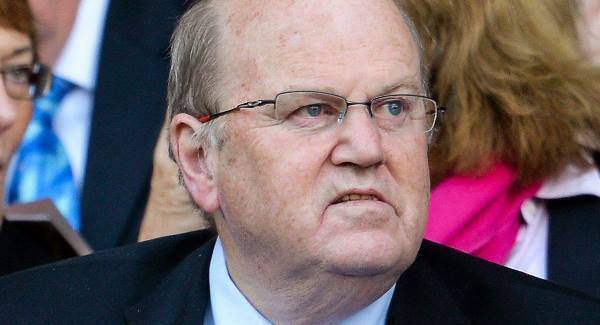
Finance Minister Michael Noonan has said he will wait until the end of the summer — when there is much greater clarity on tax receipts for the year and the level of growth in the economy — before he makes a decision on the level of adjustment in October’s budget.
Mr Noonan and Taoiseach Enda Kenny have signalled they would like to introduce tax cuts for middle-income earners if the budgetary arithmetic stacks up.
However, the Commission in its latest country-specific recommendations as part of the European semester programme, repeated its calls for the Government to adhere to the planned consolidation and implement the €2bn in budget cuts.
The Commission is basing its deficit figures on growth this year of 1.7%.
The Department of Finance’s growth forecast for the year is 2% while the ESRI’s is 2.6%.
If actual growth pans out closer to the ESRI’s forecast rather than the Commission’s, and the same level of job creation is maintained this year compared with last year, then there could be room to ease up in the level of budget cuts.
However, Ireland is still covered by the Excessive Deficit Procedure, which means that the Government will be penalised if its fails to meet the 3% target.
The Government will release a draft version of the budget to the Commission before it publishes its budget on October 14.
The Commission will issue an opinion on the budget and whether it will enable Ireland meet its targets. But potential sanctions cannot be imposed on Ireland unless it fails to meet its target. Moreover, a decision to impose penalties on Ireland, which would be a series of fines, ultimately will be made by the Council of Ministers.


CONNECT WITH US TODAY



Be the first to know the latest news and updates