Sights set on ‘next-generation of medicines’
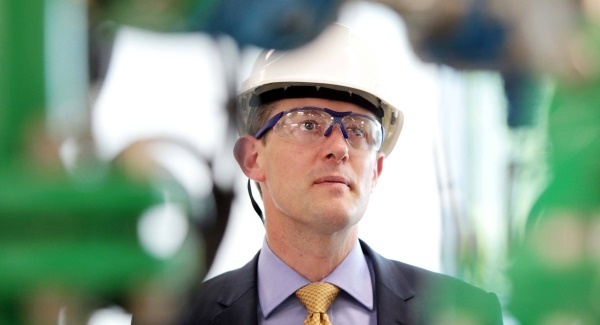
The New Product Technology Laboratory (NPTL) is a move away from the huge bulk manufacturing of drugs in the thousands of kilos towards more potent, low-volume drugs.
Pfizer vice president Paul Duffy said some of these new drugs are produced commercially in tiny volumes compared to the blockbuster drugs of the 90s.
“The facility it is designed to manufacture smaller quantities of more potent, target-typed medicine. It is not going to be a facility that will manufacture thousands of kilo. It is a facility that is designed to manufacture kilos of product. Some of these drugs can be 5kg or 6kg very, very small versus Lipitor 250,000kg of the active ingredient,” he said.
Lipitor has been the world’s best selling drug for a number of years. The production of the blockbuster cholesterol fighting statin was so successful it had a distorting effect on the overall gross domestic product figures for Ireland. The end of the patent on Lipitor was one of the key events in the so-called “patent cliff,” which saw a number of patents expire and have a knock-on effect on Irish economic performance.
Dr Duffy said there was nothing new about the expiry of patents, but he said there had been a failure of research to deliver the next round of blockbusters.
“Products have come off patent for as long as the industry has existed. As products come off patent, you have products coming through research to fill that gap and it has been pretty seamless,” he said.
He said there was very little that Pfizer could do to control the lifecycle of patents. The key was to insure the company had a pipeline of new patented drugs to replace older patents. A move away from blockbuster drugs towards bioactive and niche drugs working with people’s genetic codes had been believed to be the future of the industry.
This had led to fears that the Ringaskiddy plant would be outdated as the chemistry it focuses on was mainly in creating bulk runs of blockbuster drugs. However Dr Duffy disagreed.
“The assumption was that everything would now be biologics and large molecules. What we do in Grange Castle is these large molecules. What we do in Cork is small molecule chemical synthesis, and years ago people felt that chemical synthesis was no longer going to be the future, but the reality is chemical synthesis is still a significant part of our portfolio,” he said.
He remains confident that with the new facilities the Ringaskiddy site has a strong future due to its broad range of capabilities.
“We have the full portfolio of capability to the development work and the manufacturing work and we have the people to match. There is no point in just having the facilities if you don’t have the people capable of operating those facilities.
“Good scientists, good chemists, good engineer, good operators and the site has that combined intellectual capability in the people and the physical capability in the equipment,” he said.
CONNECT WITH US TODAY



Be the first to know the latest news and updates