Deflation risk could test Draghi’s resolve
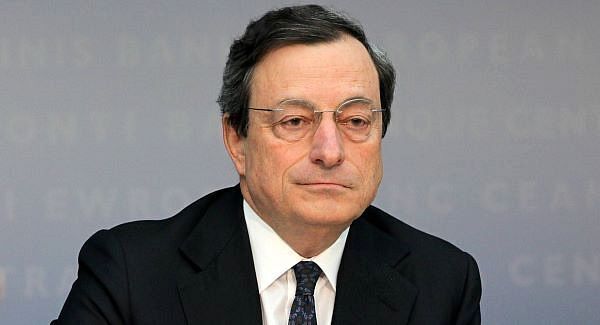
“In between the wars, he saw an inscription on a German monument, a German statue saying that ‘if you lose your money you’ve lost nothing, because with a good business you will take it back; if you lose honour, you’ve lost a lot, but with good heroic action you can get it back; but if you’ve lost courage, you’ve lost everything.’”
Draghi showed his steeliness at the height of the eurozone crisis, vowing to do “whatever it takes” to save the currency.
Now investors would like him to show the same mettle again and take bold policy action to buoy the eurozone economy and steer it away from the economic quicksand of deflation. They may be disappointed.
Draghi has shelved one bite-sized measure the ECB discussed, essentially thinning its armoury to a “big bazooka” — US-style quantitative easing that would be difficult for some ECB policymakers to stomach — or nothing.
So far, the ECB insists inflation expectations are sound, or “anchored” in central bank parlance, and there is no risk of deflation, which would lead households to defer purchases, crimping demand and entrenching a downward price spiral.
But the situation is fragile and could change quickly.
“You should not be over-reassured by the fact that expectations are still anchored, and I would add that when you find out that they are not anchored any more, it may be too late,” said Francesco Papadia, a former director general for market operations at the ECB.
The example of Japan, which has been mired in deflation for 15 years, offers a frightening precedent. Price declines were so mild to start with, it took a long time for the Bank of Japan to acknowledge deflation had set in and that it was dangerous enough to require a strong policy response.
There are striking parallels between 1990s Japan and the eurozone’s plight now: weak bank lending, fragile economic growth, a rising exchange rate, and the central bank’s insistence that deflation is not on the horizon.
There are some differences between the economies: with an ECB-led health check of its banking sector, the eurozone is being more proactive than Japan in cleaning up its banks. And there is no sign yet of European consumers deferring purchases.
“The situation in the euro area is different because inflation expectations are firmly anchored, whereas they were not in Japan,” Draghi explained after the ECB’s March 6 policy meeting.
ECB staff forecasts released last week showed eurozone inflation quickening from 0.8% last month to 1.5% in 2016, when it would hit 1.7% in the final quarter.
That would see inflation just about hit the ECB’s target of “close to but below 2%” within its policy-relevant medium-term horizon. But inflation is notoriously difficult to forecast over longer periods.
“The experience of Japan is sobering here because nobody expected that Japan would have some 15 years of inflation bordering with deflation: our ability to forecast inflation over the medium-run is poor,” said Papadia.
Andrew Bosomworth, a portfolio manager at Pimco, the world’s largest bond fund, says a shock to the eurozone economy could easily blow the bloc’s fragile recovery off course and send it towards deflation.
That certainly happened in Japan in 1997, when a toxic mix of tighter fiscal policy and the Asian financial crisis plunged the economy into recession and pushed it deeper into deflation.
Emerging market turmoil poses the biggest such risk for the ECB, with Draghi saying last week that tensions over Ukraine “could quickly become substantial and generate developments that are unforeseeable and, potentially, of great consequence.”
Such turbulence, coupled with policy inaction from the ECB, risks further boosting the euro, which hit a two-and-a-half year high against the dollar after the ECB last week left interest rates on hold and unveiled no other policy measures.
“The recent appreciation of the euro has had indeed a strong disinflationary impact,” Bank of France chief Christian Noyer said last week, adding that “permanent and deep forces” were weighing on inflation in the eurozone and wider world.
Draghi struck a more dovish tone last Thursday, saying the ECB would counter any material risk of inflation expectations becoming unanchored with fresh policy measures, which he said the bank had been preparing.
But he described deflation risks as “quite limited”.
The Japanese experience shows a defensive approach to deflation risks can see a major economy come unstuck. Consumer prices in Japan began to slip in 1999, by 0.3%, followed by a 0.7% fall in 2000, but it took until 2001 for the central bank to deploy quantitative easing. Prices fell 4.1% in the 15 years to 2012, an average of 0.3% a year.
The BoJ has long argued that deflation was only a symptom of a structural malaise. It also held doubts on whether flooding markets with cash would push up prices, a suspicion still shared by some central bankers, including those at the ECB.
The foot-dragging took its toll.
A prolonged period of sticky deflation sapped Japan’s economic strength by encouraging companies and households to hold on to cash. Japanese firms are still sitting on 230 trillion yen (€1.62 trillion) in cash, nearly half the size of the country’s economy.
The deflation debate is particularly relevant to countries on the eurozone periphery that are struggling to reduce their debts. Greece is already running a negative inflation rate.
But the problem is perhaps biggest for Italy, which is saddled with €2tn of public debt, and is struggling with the need both to cut costs and spark growth.
“If Italy does the same sort of internal devaluation that Spain, Ireland, Greece, and Portugal have done, then eurozone aggregate inflation is going lower,” said Bosomworth. “Europe is very much on a knife edge.”
The risk is that inflation expectations swing lower and consumers start deferring purchases.
Draghi’s predecessor as ECB president, Jean-Claude Trichet, said that is not happening. “But this does not mean that you do not have to be very careful,” Trichet added.
CONNECT WITH US TODAY



Be the first to know the latest news and updates











