Exporters get a taste of eastern promise
Brazil, Russia, India, and China have proved to be tough nuts to crack, but there are some encouraging signs from the latest figures for food and drink exports.
For the first time, the value of food and drink exports to Asia has exceeded €500m, reaching €610m in 2013 compared with €470m in 2012.
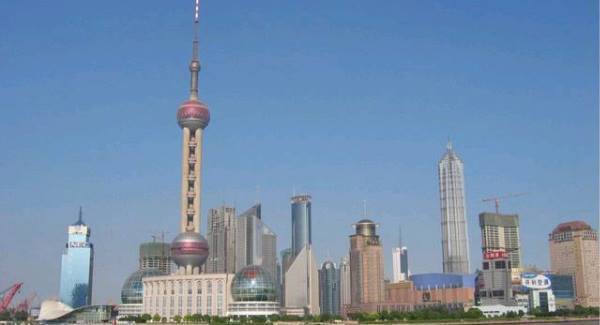
China accounted for €390m of this figure — still modest enough. However, as recently as 2008, we exported just €80m in food and drink items to the country which recently overtook the US to become the world’s largest trader in goods.
Bord Bia opened an office in Shanghai in 2008 and followed this up with another in the Middle East. Breffni Kennedy, manager international markets, Bord Bia, said the aim will be to double the volume of exports into this region to €500m by 2020.
Elsewhere in Asia, the Japanese market has just been opened up to Irish beef following a 12-year hiatus resulting from the BSE/CJD crisis.
Japan imports 60% of its food requirement whereas Ireland exports 80% of its food production. The Japanese consume 500,000 tonnes of beef, each year — Ireland exports the same amount.
Mr Kennedy points out that exports of food and drink to international markets (including the US, but excluding other European countries) has risen by 60% in four years.
The lifting of EU Cap restrictions next year should boost this trend, though some concern is being expressed about the capacity of Irish farmers to meet this demand. There are also fears about a possible bank lending ‘bubble’ as producers ramp up to meet anticipated demand at a time when food imports from the US into Europe are set to rise sharply following the new trade deal.
Mr Kennedy points out that 37,000 farms have been audited under the National Sustainability Programme. The aim is to boost efficiencies in areas such as raw material sourcing, energy use, and carbon emissions. Results from the audits are being fed back to the farms by advisors.
Enterprise Ireland and the Irish Exporters’ Association are both active in promoting trade links with emerging countries.
Enterprise Ireland has a 10-person team in Dublin, including individuals from Japan, China, Russia, and Brazil who are “on the case”.
Conor Fahy is the manager of high growth markets with Enterprise Ireland. He points to projections to the effect that by 2030, the economies of the Brazil, Russia, India, and China along with Indonesia, Mexico, and Turkey, will be one quarter larger in size than the established G7 economies.
Former Goldman Sachs chief economist Jim O’Neill has identified the fast emerging bloc of demographically young countries led by Mexico, Indonesia, Nigeria, and Turkey.
He visited these countries for a series which was broadcast last week on the BBC.
Indonesia has a population of 238m, the fourth largest in the world. Nigeria has 175m citizens, at a very rough estimate. There are around 120m Mexicans and 75m Turks.
These are huge potential markets. Mr O’Neill believes that all four countries could join the world’s top 10 economies by 2050, although he accepts that this is by no means a foregone conclusion.
A visit to Jakarta, the world’s further biggest conurbation with an estimated 28m inhabitants, alerted him to Indonesia’s dependence on China’s commodity import boom and to the existence of a property bubble combined with huge infrastructure deficits. Parts of Jakarta are already sinking into the sea.
But the Goldman Sachs veteran was also hugely impressed by the entrepreneurial skills of Nigerians — this country gets by with constant power cuts. Total electricity supply is one hundredth that in Britain. Mr O Neill agrees with the country’s finance minister, Ngozi Okonjo, that growth could surge if the power crisis were sorted.
Turkey, meanwhile, has developed global companies like white goods manufacturer, Beko.
So are Irish firms and state bodies moving to take advantage of the economic opportunities opening up in former business dead zones like Africa?
Ashley Beston of the Irish Exporters’ Association, said the organisation has just signed a memorandum of understanding with its 48,000 member Turkish counterpart.
The TV cook, Rachel Allen, has signed deals to sell branded products in the Middle East and in Turkey. Beko has a plant in Clonee, Co Meath — its Irish sales amount to €24m.
Elsewhere, a Nigerian-Irish chamber of Commerce has been established. Both Diageo and Glanbia have plants in the country. Nigerians are famously fond of high strength Guinness. Kerry Group has an office in Lagos.
A trade mission led by Joe Costello, minister of state for trade and development, recently visited Nigeria and South Africa.
Both Waterford Institute of Technology and the Dublin International Foundation College have entered into deals with local educational institutions.
A Wexford company, Chevron Training & Recruitment has signed a deal to train 1,000 builders over three years. It has also opened an office in Lagos.
In east Africa, former soccer international Niall Quinn has joined forces through his firm, Telco, Qsat, with Kerry-based Altobridge, where former tánaiste Dick Spring is a director.
The two firms are providing satellite broadband systems to rural areas. The IEA has also set up an Africa Business Council. It has held round table events to explore opportunities in energy, ICT, and the life sciences.
In Ireland, both Barclays and Investec are playing an important role as financial intermediaries.
The association also set up an Asia trade forum in 2010 as its flagship emergent market body working alongside overseas chambers of commerce such as the Irish chamber in Shanghai.
These bodies tap into the contacts and expertise of key players such as Cork raised, but China based Liam Casey, the boss of PCH, the computer hardware manufacturer.
According to Ms Beston, the IEA has a particular focus on South East Asia. Apart from the established markets of India, China, and Korea, Irish firms are particularly active in Malaysia where UCD and the Royal College of Surgeons run schools.
The IEA also plans to launch a Latin american trade forum shortly. Mexico is the focus of particular investor interest as it increasingly attracts manufacturing back from China, helped by rising Chinese labour costs and America’s fracking-led energy revolution. The GPA and Ryanair founder, Tony Ryan, served for many years as Irish Honorary Consul in Mexico.
The Government and state bodies are certainly targeting emerging markets while firms such as Kentz, ESBI, and Kerry are well placed to capitalise.
Over 70% of Irish exporters are currently targeting new markets. The will is there, but is there really a way?
Sectors such as education, power, food and drink and communications are already providing big openings, though patience and plenty of capital may be required before the can of opportunity can be prised open, in many cases.
But when the can opens, as with the recent surge in students coming to Ireland from Brazil, it can be well worth the wait.
“Closing a deal takes time. It is like the dance of the preying mantis,” said Enterprise Ireland’s Conor Fahy. Exporters must take care not to take on more than they can handle.
“In China, a deal could be so large that it could swamp you,” he cautions. He suggests that most start up firms, unless they have a niche product or technology, are best advised to start off close to home.
“We believe in challenging our client firms’ assumptions. The scale of the opportunities in emerging markets are huge, but the complexities and difficulties should not be underestimated.”