Who is set to gain from bankruptcy shake-up?
A TSUNAMI is about to hit the courts.

Who is set to gain from bankruptcy shake-up?

The number of applications for bankruptcy looks set to surpass the expectations of officialdom by a country mile, putting huge pressure on the Court Service, with the real prospect of lengthy delays while the backlog of petitions for bankruptcy are dealt with.

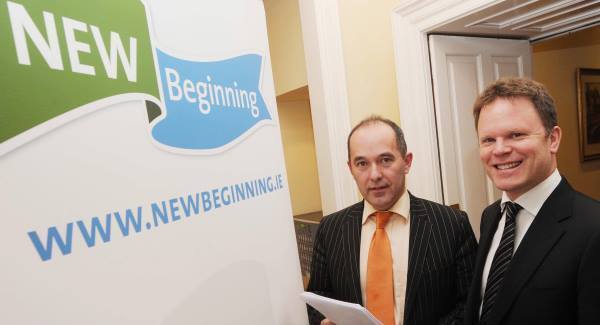
The number of applications could reach as high as 15,000, according to one expert, Ross Maguire, SC, the founder of the borrower advocacy and advisory group, New Beginning.

The new bankruptcy regime only came into operation at the beginning of the month. It brings the period of discharge from bankruptcy down from 12 years — 20 years in certain circumstances — to three (with the possibility of added time to complete a schedule of repayments). Experts are divided as to whether the new regime, part of a broader overhaul of the handling of personal insolvencies, will be transformative, both from the perspective of people saddled with debt and from that of the economy as a whole. It should reduce the numbers of wild geese borrowers forced to take up residence in another jurisdiction — Britain, usually — to speed up the process of discharging their debt.

However, Paul Joyce, legal adviser with the Free Legal Aid Service, Flac, warns that the new system to deal with personal insolvencies risks becoming polarised, with low earners in particular losing out.

The new debt settlement regime will be privately run, with indebted parties given the option of seeking the services of Personal Insolvency Practitioners, or ‘PIPs’.

Mr Joyce believes that many will have difficulty “getting beyond first base” when it comes to negotiating with creditors because of an inability to pay. In his view, the bankruptcy option is one that many should consider. However, it is one that it likely to be suited to higher earners.

“You need to deposit €650 with the Official Assignee in Bankruptcy along with €110 in document fees,” he said. “There is also a requirement to advertise in a national newspaper at a cost of €500 to €700, though this is about to go.”

Many simply cannot afford to stump up more than €750. Some other questions remain. Will it be necessary for a person petitioning for bankruptcy to have applied for a debt settlement arrangement, using the services of a PIP, which also come at a cost, or will a simple visit to a PIP for an initial consultation suffice?

It is generally accepted the bankruptcy option could suit the needs of many people, though experts such as Brendan Burgess, founder of consumer finance website Askaboutmoney.com, have questioned whether bankruptcy is the panacea some make it out to be.

Mr Maguire is a strong supporter of the bankruptcy option. The new regulations are in two parts, the insolvency regime and the PIPs, and the new bankruptcy regime. “We have been giving talks around the country on the reforms over the past 10 weeks,” said Mr Maguire. “People’s main interest, believe it or not, is in bankruptcy.”

The prospect of having the dark cloud of indebtedness lifted appeals to many. It is important to note that people can petition for bankruptcy once they meet certain conditions, without having to secure the agreement of creditors. Schemes of arrangement under which debts are restructured, on the other hand, require the consent of all creditors. Last year, the High Court dealt with a total of 40 bankruptcies — the equivalent figure in the UK was around 50,000 (where cases are usually dealt with by the county courts).

Justice Minister Alan Shatter has indicated that he expects the courts here to deal with 3,000 bankruptcy applications in 2014. Stubbs Gazette predicts that the number of applications will be around 7,000. Mr Maguire says it will be “well north of 10,000, possibly as high as 15,000”.

But will the courts be able to cope? Mr Maguire doubts it. He believes the Government should consider appointing extra High Court judges, or preferably, assign between 10 and 20 judges of the Circuit Court to deal with the matter. Transferring jurisdiction to the Circuit Court will require a change to the Bankruptcy Act, 1998. In the US, every year, one in 130 goes through some insolvency procedure. In Britain, the figure is one in 400. In Ireland, it has been one in 130,000.

It seems the new arrangements may not be the bonanza for the new breed of personal insolvency practitioners that many have expected it would be. In reality, the PIP service is likely to be dominated by large insolvency firms with individual fee levels remaining fairly modest.

MR MAGUIRE believes grasping this nettle can only benefit the economy, as it will allow many self-employed people to resume their former lives, restarting businesses and re-employing again. True, lenders will have to bite the bullet. While mortgage lenders should see their position reinforced under bankruptcy agreements, unsecured creditors will lose out, and consumer loans will get hammered, but many such lenders are in subprime operations and other non-Irish based financial institutions.

Ironically, it has taken the troika to push the Government into action. It remains to be seen whether a wave of write-offs will submerge the system, requiring yet another bailout for State-backed banks. This is one of the big questions that remain unanswered. There are bound to be glitches. Low earners will remain shut out, as they will have insufficient spare income to meet repayment schedules.

Flac is pressing for the State to subsidise a personal insolvency practitioner service for the clearly insolvent. Moreover, bankruptcy is not a suitable option for certain professions or trades as thing stand. A solicitor can continue to practice while in bankruptcy, but not an auctioneer or chemist. New Beginning is considering a challenge in the courts aimed at removing this anomaly. Those petitioning for bankruptcy are advised to stop repaying any of their debts to avoid the risk of favouring one or more creditor over others. Clarity is still required as to the lifestyles that bankrupts and their families will be permitted.

Much media heat has been generated on this topic. The reforms have certainly generated some new thinking among previously unyielding bankers. To the surprise of many, the Irish Mortgage holders Association and founder David Hall, and AIB have agreed a plan under which the bank will pony up €150,000 towards a new advisory body aimed at assisting homeowners behind in their payments.

Brendan Burgess has complimented Mr Hall on his website for this breakthrough, saying it probably makes sense for AIB, given the lack of progress they have had in the courts. That said, the pace of repossessions in the courts has begun to speed up. In many cases, people may be more willing to move, once they can secure an assurance that they will not carry a large debt along with them.

Mr Burgess remains sceptical about the idea that the spectre of bankruptcy will force bank lenders into a more accommodating stance. He believes that the new regime will make very little difference: “Banks will only very rarely write down debt while leaving the borrower in the home.”

Mr Maguire disagrees. In his view, many houses are co-owned and just because one owner is made bankrupt, or self-bankrupts, that does not in itself affect the equity of the other owner.

Whatever the case, 2014 looks set to be a game-breaker of a year in the world of personal insolvency, one in which the courts service and official insolvency agency face big challenges and teething problems, the lenders are forced to confront their moment of truth, and at long last, some, at least, of our large standing army of the indebted gain relief and a chance to re-enter the economy as meaningful players, relieved of the daily burden of confronting pressing demands from creditors.

More in this section

The Business Hub

Newsletter

News and analysis on business, money and jobs from Munster and beyond by our expert team of business writers.

Cookie Policy Privacy Policy Brand Safety FAQ Help Contact Us Terms and Conditions

© Examiner Echo Group Limited