ECB ‘unlikely’ to cut rates any further
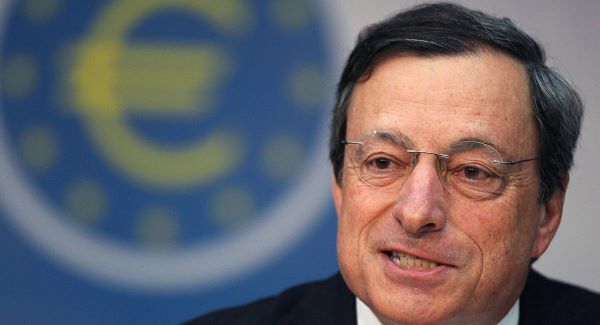
The Frankfurt-based ECB meets on Thursday for its monthly meeting, with the interest rate at a historically low 0.5%. It is unlikely this will be lowered at the meeting or for the foreseeable future, Mr Brzeski said.
“Since the last rate-setting meeting, the eurozone seems to have been in a kind of permanent good-news flow. Thanks to strong German and French growth, the eurozone finally left the recession and, at the same time, prospects have improved,” he said.
“Confidence indicators have continued to increase and currently point to another quarter of positive, albeit low, growth.
“Moreover, the unemployment rate stabilised in July, which in these dire times is already good news. The economic outlook has clearly brightened over the past four weeks.”
However, the region still faces considerable challenges.
“Despite the improved outlook for the second half of the year, it is far too early to give the all-clear for the eurozone economy,” Mr Brzeski said.
“The worst might be behind but the future is not yet bright. With a mix of fundamental problems and external risks, the economy remains fragile.
“Whether it is high unemployment in peripheral countries, depressed bank lending, or the slowdown in emerging markets and increasing oil prices, the path towards a self-sustained recovery will be long.”
Over the past few months, the markets have been looking for guidance from ECB president Mario Draghi on what policies the bank may adopt.
The markets are likely to press Mr Draghi on forward guidance for interest rate policy at Thursday’s meeting.
The new head of the Bank of England, Mark Carney, broke with its 300-year history in the past month by announcing that interest rates would remain low until the unemployment rate dropped below 7%.
Politically, it is much more difficult for the ECB to provide similar guidance. “By not linking its forward guidance to an economic variable as all other major central banks did, the ECB remains vulnerable. A stronger-than-expected economic performance and/or speculation about possible rate hikes by, for example, the Bundesbank, could easily undermine forward guidance,” Mr Brzeski said.
“Obviously, the ECB’s interpretation of forward guidance is a compromise between trying to lock in market rates and sustaining the ECB’s principle of ‘we never pre-commit’. This makes the ECB’s forward guidance a walk on egg shells, hoping that markets do not test the ECB’s determination. Not this week, but eventually, the ECB could be pushed as far as its central bank peers around the world.”