ECB and Germany play down talk of third Greek bailout
Speaking in Athens a day after German finance minister Wolfgang Schäuble bluntly predicted Greece would need a new bailout, ECB executive board member Joerg Asmussen said he had not discussed the issue at talks with senior Greek officials.
He referred instead to the eurozone’s pledge last year to support Greece until it can tap markets again, provided it sticks to its bailout obligations and posts a budget surplus before interest payments.
“This is a decision taken in November last year, it is public knowledge, and there’s nothing new and there’s nothing to add,” he said. “If we look at how things unfold, we will know not before spring next year if the country has reached a primary surplus on an annual basis.”
In Berlin, German officials sought to distance themselves from Mr Schäuble’s comments, which broke a pre-election taboo by describing a new rescue as inevitable.
Greece has already been bailed out twice since 2010 with €240bn worth of agreements coordinated by the ECB, EU and IMF.
It had been expected to seek some form of additional debt relief sooner or later to bring its debt down to a manageable level, but the openness of Mr Schäuble’s statement that there would need to be a third bailout for Athens came as a surprise.
Germany’s finance ministry said the eurozone would take a fresh look at Greece’s aid programme in mid-2014 and that Berlin was not aware of any talks on how to structure a new rescue package.
“We have reached the middle of the current programme. It is Aug 2013, we will certainly have to look in mid-2014 at where we are, what the conditions are and whether the programme has been fulfilled,” said spokesman Martin Kotthaus.
German Chancellor Angela Merkel, in her first comments on Greece since Mr Schäuble’s comments, stuck to her line that it was too early to discuss another package, or to speculate how large it could be.
“I can’t say today what kind of sums might be necessary,” she said. “Only in the middle of next year will we be able to say.”
A Greek finance ministry official said any further help for Greece would aim to cover its funding shortfall in 2014-2016 and would be much smaller than the previous aid packages. The IMF has put Greece’s uncovered funding needs for 2014-2015 at €10.9bn.
Part of that stems from national European central banks refusing to roll over some Greek bonds they hold, as well as a potential shortfalls in tax and privatisation revenues and Greece being unlikely to fully return to bond markets next year.
Greece’s lenders are expected to update these estimates in the autumn.
Mr Schäuble’s comments were immediately seized on by Greece’s anti-bailout opposition, who fear that any new aid will be accompanied with yet another round of painful austerity.
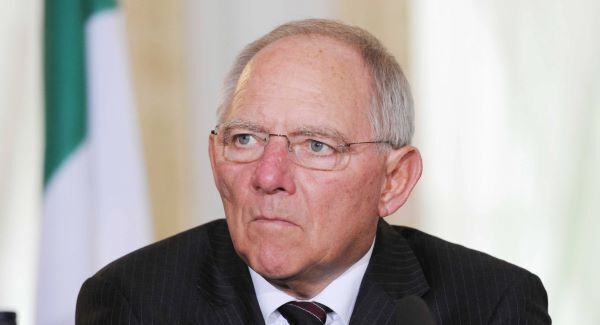
“Schäuble threatens with new help,” leftist newspaper Efimerida ton Syntakton deadpanned on its front page, next to a stern-looking image of Mr Schäuble with tightly pursed lips.
“They admit they failed and now they want to save us again,” the newspaper said.
Panos Skourletis, spokesman for the Syriza opposition party, said: “Contrary to recent talks about an eventual debt writedown, we are going down the same old road, the same recipe, which inflates debt and turns Greece into a debt colony.”
Syriza shocked the established parties in the last two elections by riding a wave of public anger at austerity to become the country’s second largest party.