Securing credit line before exiting bailout ‘not essential’
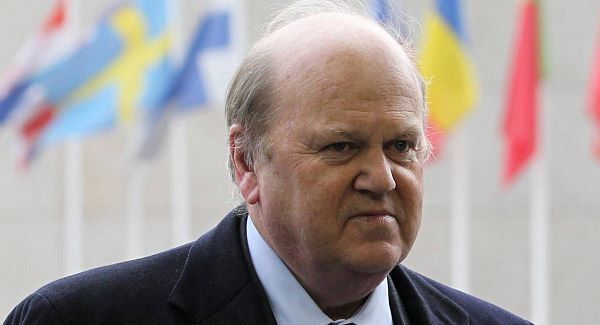
Speaking to reporters in Dublin yesterday, Mr Noonan said: “We don’t need it [precautionary line] at present. The yield on the 10-year bond is 3.93% and if we get an extension on the [bailout loan] maturities, that will put further downward pressure on the yield.”
“We are not actively pursuing a precautionary line. It will come up in discussions with the IMF when I am in Washington next week. However, it is not urgent at present. What we want to get is the extension on the maturities.”
The NTMA made a successful return to the markets last July through a series of three-month treasury bills issued over the summer. This culminated in a 10-year bond in March for a yield of 4.15%, which is inside Spanish and Italian yields, even though neither of these countries is in a bailout programme.
At the close of trading yesterday, Irish 10-year bond yields had dropped to 3.88% — the lowest level since 2006 on expectations that a deal was imminent on an extension of bailout loan maturities.
The IMF and the Irish Fiscal Advisory Council both released their reviews of the Irish economy over the past 10 days and both bodies said if a precautionary credit line was in place, then that would greatly help Ireland’s full return to the markets.
IMF Mission chief Craig Beaumont told Irish journalists last week that the troika was in discussions with the Irish Government about a precautionary credit line, but that “no specific amounts had been discussed.”
One possibility is that the ECB could include Ireland in its Outright Monetary Transaction (OMT) programme. However, the bank’s president, Mario Draghi, has declined to say whether Ireland meets the criteria for OMT.
The availability of a credit line would remove market fears that if Ireland needed a second bailout that private sector investors would get ‘bailed in’ similar to what happened in Cyprus and Greece.
The possibility of Ireland securing an extension on its bailout loans will be discussed today and tomorrow at a meeting of EU finance ministers in Dublin. Moreover, proposals for an EU banking union will also be discussed.
The Irish Government is also looking to get the banks recapitalised through the ESM.












