Plenty of ‘goodwill’ but still no deal on €32bn Anglo debt
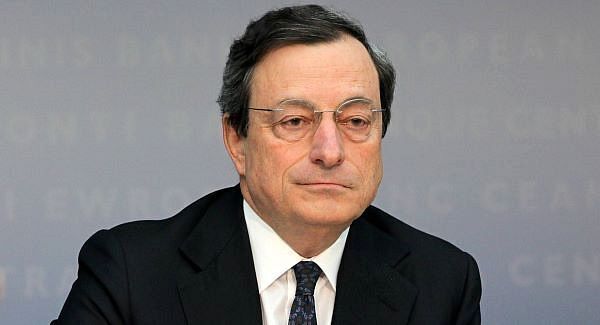
However, he did not shut the door completely on securing a deal in the future or recapitalising the additional €32bn Ireland put into its pillar banks, when he was asked after the meeting in Frankfurt.
And Finance Minister Michael Noonan said he’s “pretty confident” of reaching an agreement to allow the State avoid a €3.1bn payment due to the former Anglo Irish Bank next year.
“It’s not done yet,” he told Pat Kenney on RTÉ yesterday. “I don’t want to pre-announce or anything like that.”
Mr Draghi welcomed Mr Noonan’s budget, repeating the words of the European Commission by saying it “was a reaffirmation of the successful commitment of the Irish Government in restoring sound economic and fiscal, and more broadly structural conditions”.
But on the IOUs — that have been the subject of on-off discussions between the ECB and the Government for more than a year — he said: “The ECB cannot undertake any agreement that is being viewed as monetary financing and it is forbidden by the treaties”.
He added: “There is plenty of goodwill”, but would not go any further.
Asked if the EU’s loan facility, the European Stability Mechanism, will lend directly to banks to cover past or legacy debts, he said that it was important that legacy assets were carefully defined.
“We all want to know exactly what it means. It’s very important for all of us, for the markets and the banks, so when a position was taken that the new ESM could not be used to fill holes created by legacy assets that went sour, you have to define what they are. So far it is just a name,” he said.
Member states, and Germany in particular, does not want the ESM to cover any debts incurred in the past but Ireland is making the case that its situation is different as it bailed out the banks before the EU had a bailout fund in place, and so would qualify to swap the money it put in with a cheap, long-term loan from the ESM.
Mr Draghi was equally difficult to read on what kind of single supervisory mechanism the ECB would accept.
Germany has been pushing for a light version, with the ECB leaving most of the work and supervision of smaller banks to national supervisors.
The ECB president said that whatever they are asked to do, they will do to the best of their capacity and that the form of the single supervisory mechanism will be decided by the member states and the legal constraints.
However he added: “I made it clear we must be in a position to carry it out in a complete, decisive manner, without any reputational risk and that the new task would not be mixed with monetary policy tasks. The rest is in the hands of others”.











