Euro confidence tumbles in August
EUROPEAN confidence in the economic outlook in August plunged the most since December 2008 as a persistent debt crisis roiled markets and clouded growth prospects across the 17-nation eurozone.

Euro confidence tumbles in August

An index of executive and consumer sentiment in the single-currency region fell to 98.3 from a revised 103 in July, the European Commission in Brussels said yesterday.

That is the lowest level since May 2010. Economists had forecast a decline to 100.2.

The eurozone’s economic prospects are deteriorating as national governments cut spending to narrow fiscal deficits amid the sovereign debt crisis.

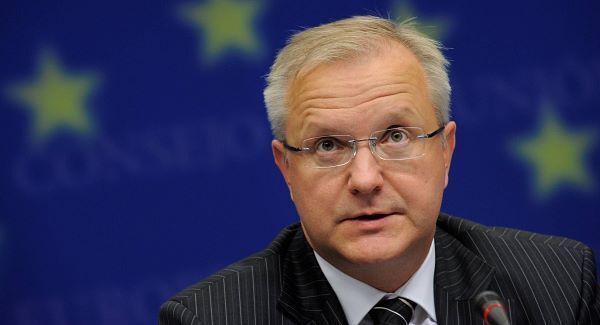
Economic and Monetary Affairs Commissioner Olli Rehn signalled on Monday that the EU may cut its 2011 growth forecast from 1.6% on concerns that financial turbulence could spill into the broader economy.

“Concerns about euro-area fiscal deficits and the global slowdown are aggravating economic confidence,” said Christoph Weil, a senior econ-omist at Commerzbank in Frankfurt.

“I expect the indicator to fall further in the months to come.”

A gauge of sentiment among European manufacturers dropped to minus 2.9 from 0.9 in the previous month, yesterday’s report showed.

An indicator of services confidence fell to 3.7 from 7.9, while a measure of consumer confidence declined to minus 16.5 from minus 11.2.

European leaders have struggled to contain a debt crisis that originated in Greece and has forced Ireland and Portugal to seek bailouts as well.

The European Central Bank began buying Spanish and Italian government bonds on August 8 to stop the debt crisis from spreading to the eurozone’s third- and fourth-biggest economies.

The purchases brought the countries’ 10-year bond yields down to about 5% from euro-era records, even as leaders disagreed over how to contain the turmoil.

ECB president Jean-Claude Trichet said on Monday that central bank is reviewing its assessment of inflation risks on the “modest pace” of growth in the eurozone. The region’s growth slowed to 0.2% in the second quarter, its worst showing since emerging from recession in 2009.

Slowing growth may prompt the ECB to refrain from increasing borrowing costs further after it raised its benchmark rate twice this year. The bank will hold its next rate meeting on September 8.

With tougher austerity measures undermining consumer demand, companies have relied on exports to bolster sales.

German carmaker Audi last week said it is hiring staff to increase car production.

International Consolidated Airlines Group, formed from the merger of British Airways and Iberia, last month posted a second-quarter profit as North Atlantic business travel surged.

More in this section

The Business Hub

Newsletter

News and analysis on business, money and jobs from Munster and beyond by our expert team of business writers.

Cookie Policy Privacy Policy Brand Safety FAQ Help Contact Us Terms and Conditions

© Examiner Echo Group Limited










