NAMA cracks down on defaulting borrowers
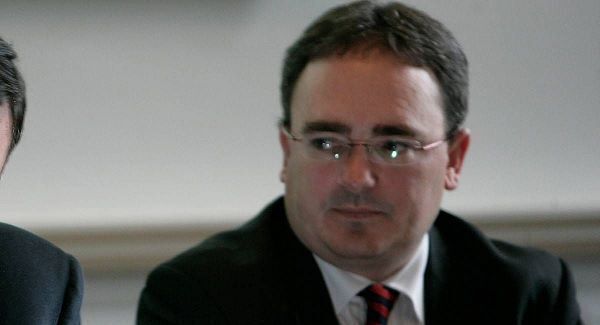
This was revealed by NAMA chief executive Brendan McDonagh, who warned that if borrowers are incapable, or unwilling, to pay, NAMA would move quickly with enforcement action.
Mr McDonagh also said he expects the agency’s first €500 million worth of assets to be sold at the discounted transfer price or in some cases “considerably higher”.
“NAMA’s business plan anticipates that 25% (about €20 billion) of the outstanding loans will be paid off by 2013, and we are determined to meet that target,” he said.
Speaking at the Cantillon economics school in Tralee, he said NAMA was hastening the resolution of the banking crisis by forcing banks to recognise losses on their balance sheets more quickly than alternative schemes in other European countries.
“At the moment, we’re in the middle of the storm but, by February next year, NAMA will have reviewed, valued and acquired €81bn worth of problem loans,” Mr McDonagh said.
“This is key to their speedy return to lending to the real economy and the key to us drawing a line under the cost of the bank rescue scheme.” He said prices being paid for assets were “very realistic”, with some of the land being acquired discounted by anything from 60% to 90%.
Daniel Barr, head of Bank Support at the Swedish National Debt Office, drew comparisons between the banks crisis in Sweden, after the property bubble burst there in the early 1990s, and the situation in Ireland.
He listed many similarities, but there were also differences, with bank losses in Ireland being much larger.
Mr Barr also said the Government was more generous with its blanket guarantee to the banks.
Government intervention had to be strong, prompt and transparent, whilst banks “had to recognise that if there’s a hole in the balance sheet, there’s a hole in the balance sheet”.
And the Swedish government was not afraid to nationalise troubled banks, he said.
Mr Barr said other factors which favoured recovery in Sweden were a 20% devaluation of the Krona, interest rate cuts and the global boom, which aided Swedish exports.
Other important elements of the Swedish recovery included large cuts in public spending, tax increases and the swift handling of the banking crisis. “There were also lots of structural reforms which made the Swedish economy much more competitive,” he said.
In contrast to Ireland, the Swedish NAMA equivalent was open to a Freedom Information Act, which is not so in the case of NAMA. Asked from the floor if the FoI caused any problems in Sweden, Mr Barr replied that it did not.

CONNECT WITH US TODAY



Be the first to know the latest news and updates