John Whelan: Smaller pharma firms to be impacted by new US tariffs
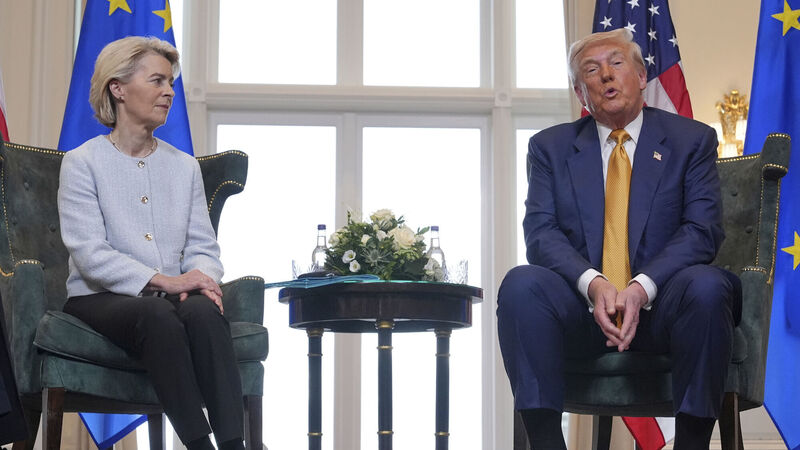
EU pharmaceutical exports will receive a 15% tariff while 100% pharma tariffs will be applied to other countries. Picture: Jacquelyn Martin/AP
Despite the Iran war raging on, US president Donald Trump found time in April to roll out the 100% tariff rate on patented pharmaceutical products and ingredients under Section 232 of the Trade Expansion Act of 1962, according to the official White House “fact sheet”.
The high tariff will start in 120 days for large companies and 180 days for smaller drugmakers.
The tariffs follow the administration’s move to launch a department of commerce probe into the pharmaceutical industry a year ago. According to its April 2 fact sheet, the Section 232 probe found that pharmaceuticals “are being imported into the US in such quantities and under such circumstances as to threaten to impair our national security’’.
On the same day, the White House released a UK-US pharmaceutical partnership deal, under which British drugs exports to the US are exempt from tariffs.
The White House statement made it clear that the current 15% tariff remains on EU and Ireland’s pharmaceutical exports to the US. It also suggests several ways for countries and companies to lower the tariff rate and avoid the 100% tariff which will apply at the end of this period.
A clear example is offered in the UK-US agreement where, in exchange for the tariff reprieve, the NHS will have to pay an added 25% for global branded drugs to pharmaceutical manufacturers, effectively supporting the US most favoured nation drug pricing initiative. The deal will also secure preferential terms for Britain’s medtech exports.
The British government’s press release states that the 0% tariff partnership deal with the US, confirmed on April 3, will encourage pharmaceutical companies from around the world to prioritise Britain for early launches of their medicines, ensuring that British patients could be among the first globally to access breakthrough treatments.
The move has secured the confidence of the pharmaceutical industry, with major firms such as Moderna, Bristol Myers Squibb, and BioNTech commenting on renewed confidence for investing in Britain and supporting the government’s ambition for Britain to become Europe’s leading life sciences economy by 2030.
Many of the large drugmakers with manufacturing bases in Ireland, such as Pfizer, Eli Lilly, Amgen, and Merck, have already entered into pricing agreements and on-shoring investment commitments with the US administration, hence gaining the zero tariff exemption.
The aim of these agreements is to bring US drug prices in line with lower prices in other developed countries internationally, but it also commits these companies to investing in the US and providing ingredients for the strategic pharmaceutical reserve.
While nearly all the world’s largest biopharma companies have made most favoured nation deals with the US, many smaller-sized Irish manufacturing companies have neither the financial or staffing capability to negotiate on most favoured nation pricing or on-shoring deals, and are likely to be significantly impacted by the 100% tariff rate.
The department of commerce provides pathways for companies to enter into “on-shoring” and most favoured nation pricing deals with the Trump administration. However, the information available suggests that for companies that only enter into “on-shoring” agreements with the department of commerce, a 20% tariff will apply. For those that only enter into pricing agreements, a 80% tariff will apply.
The road ahead looks bleak for many of the medium and smaller companies who see the US as their main export market. Many of these companies may opt to move operations to Britain as the only viable way to continue exporting their products to the US.
Reprieve may come if a deal can be struck by the EU with the US to provide a range of special concessions, similar to those negotiated by Britain, inclusive of full acceptance of most favoured nation pricing across all member states. But there seems to be little appetite for entering into such negotiations, as many in Brussels are increasingly distrustful of Mr Trump.