David McNamara: Middle East conflict raises inflation, reshaping central bank policy for 2026
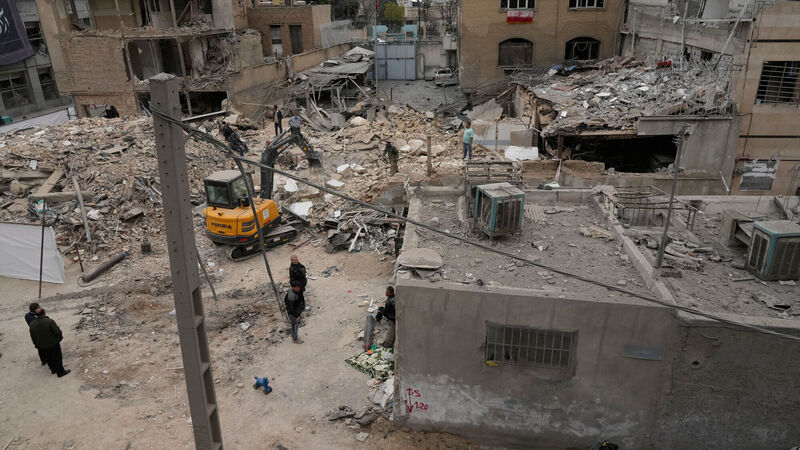
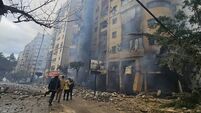
Interest rate expectations have risen in response to the conflict, as the risk of another inflation shock emerges due to higher energy prices. Picture: AP/Vahid Salemi

The ongoing conflict in the Middle East and its impact on energy markets raises significant uncertainty in the outlook for inflation and growth in 2026.
However, it should be said the current shock, so far, is not near that experienced in 2022 following the invasion of Ukraine in terms of energy price levels and prevailing economic conditions.
Over a longer period, the correlation between GDP growth and fossil fuel use has diminished, meaning an energy shock today is damaging, but nowhere near that of the oil crises of the 1970s, which also emanated from the Gulf region.
However, Brent crude has traded above the key $100/barrel consistently over the past week. In percentage terms, the ramp-up in oil prices is akin to the shock in 2022, but back then, oil peaked at about $130 per barrel.
European gas prices, which are contained right now at about €50/kwh, are another important point of difference to 2022, when prices peaked at about €350.
This week, the war will remain front and centre, with markets keeping a close eye on several central bank meetings, as the US Federal Reserve, Bank of England, and European Central Bank announce their latest policy decisions. Interest rate expectations have risen in response to the conflict, as the risk of another inflation shock emerges due to higher energy prices.
While markets are still pricing in a single 25 basis point (bp) cut for the Fed, nearly 50 bps of hikes are now expected from the ECB in 2026, a sharp pivot from the ‘no-change’ position ahead of the war. For the Bank of England, a 25bp hike is now priced in over the next year, a reversal from the 25-50bps of cuts that had been expected before the war.
However, no changes to policy are anticipated this week, as policymakers play for time. Instead, the focus will be on what guidance, if any, central bank officials provide on the future path of policy, and how they see the recent surge in oil and gas prices impacting their respective economies.
Thus, the post-meeting press conferences with US Fed chair Jerome Powell and ECB president Christine Lagarde will be in the spotlight. Bank of England governor Andrew Bailey is not scheduled to hold a press conference, although he may give media comments amid the current uncertainty.
Meanwhile, both the Fed and ECB are due to release updated economic projections. However, the assumptions used in the ECB baseline projections will have been set prior to the war starting, meaning the forecasts are likely to be stale on arrival.
However, any alternative ‘back-of-the-envelope’ scenarios may be of more significance. Previous ECB analysis in 2023, which factored in a partial closure of the Strait of Hormuz, indicated eurozone growth would be 0.6 percentage points lower, and inflation 0.8 percentage points higher compared to the baseline one year after the shock.
While not quite enough to knock the European economy into recession, this would be a material shock to growth if replicated in 2026.