Eoghan O'Mara Walsh: Irish tourism is exposed to Iran war
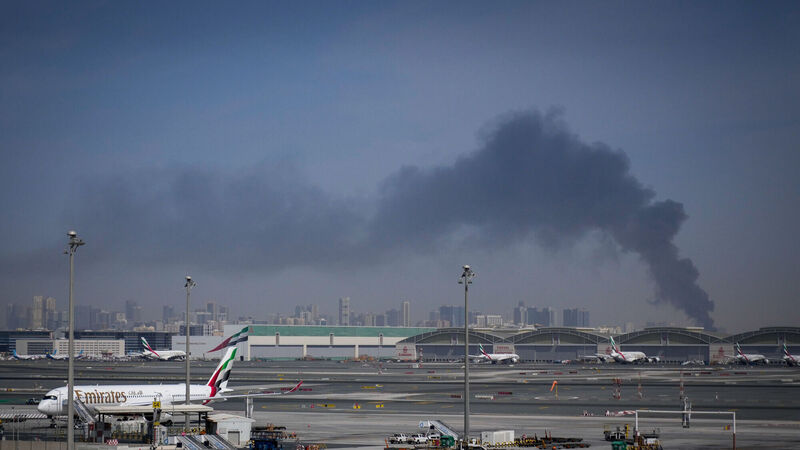
The most immediate risk is the €450 million of tourism revenue that comes to Ireland annually from the Middle East or via the Middle East.
The Saint Patrick’s Day festivities traditionally act as the unofficial kick-off for the Irish tourism season.
At the start of the month, tourism leaders were cautiously optimistic about the year ahead – strong air connectivity into Ireland, particularly across the Atlantic, allied to a stable global economy, suggested that visitor numbers would recover from the dip that was experienced last year. Now, however, with bombs raining down on the Middle East, industry chiefs are understandably more nervous about what lies ahead.
Irish tourism is one of those sectors uniquely vulnerable to external events. With 70% of the tourism economy here dependent on international visitation, any geopolitical or macroeconomic uncertainty is unwelcome. The continuing US-Israel-Iran war has a number of consequences.
The most immediate risk is the €450 million of tourism revenue that comes to Ireland annually from the Middle East or via the Middle East. How much of this is in jeopardy depends on how long the conflict goes on for and how it ends. But it is the economic fallout that is probably more concerning. With oil prices surging, air fares are likely to rise, thereby threatening demand from all markets. And the longer the war goes on, the more consumer confidence amongst travellers gets spooked.
At a meeting of tourism leaders last week, the only consensus was that the evolving situation in the Middle East was not a positive one and would need to be monitored carefully. A silver lining of sorts in this most threatening of clouds is that Ireland, on the Western edge of Europe and geographically well-away from the conflict, might be seen as a safe haven for international visitors.
What is clear is that Ireland’s tourism industry is exposed. Tourism and hospitality greatly matter to the country as it is Ireland’s largest indigenous industry and biggest regional employer. In fact, it is one of the few sectors that can provide regional economic balance – look across swathes of the Wild Atlantic Way from Dingle to Donegal and tourism is the main driver of employment and economic activity. With 29c of every euro a visitor spends going straight back to the exchequer in tourism-related taxes, it is also a hefty contributor to the national coffers.
This Government has delivered some positive pro-tourism initiatives, including a new national tourism policy, the return of the 9% VAT rate for food businesses from July, and the Cabinet decision to legislatively intervene to lift the Dublin Airport passenger cap. However, the macroeconomic and geopolitical factors currently at play mean that the government needs to double down on mitigating the cost of business rises. Ireland is an undeniably high-cost economy, with Eurostat ranking us as the 2nd most expensive country in the EU. Already tight profit margins are being squeezed for tourism and hospitality enterprises, the vast majority of which are SMEs.
Capacity blockages must also be addressed. The commitment to lift the Dublin Airport passenger cap, the island’s largest gateway, is welcome but needs to be acted on with urgency. And tourism accommodation shortages, from hotels to self-catering properties, must be tackled. Many parts of regional Ireland do not have an adequate stock of visitor beds due to the unviability of hotel development. Fiscal incentives will be needed to stimulate new construction.
But it is improved competitiveness that we must focus on in this time of economic uncertainty. Water, energy, insurance, legal, and so many other business costs are well out of line with our European peers and need to be reined in. There is a strong argument that the lower hospitality VAT rate should be extended to visitor attractions and adventure operators, key players in the Irish tourism eco-system. An independent analysis last year by economist Jim Power estimated the cost of such a measure as being very modest, with a significant benefit for sectors that are labour-intensive, regionally based, and operate with low margins.
Tourism has now moved to an economic portfolio and sits within the Department of Enterprise, Tourism and Employment. This has been welcomed by industry leaders who had long campaigned for tourism to be treated like the economic powerhouse that it is. Minister for Tourism Peter Burke has set a laudable target of a 50% increase in tourism revenue by 2031. Industry welcomes the ambition and is up for the challenge. Let’s hope, from a humanitarian and economic context, that a calmer geopolitical outlook lies ahead.


CONNECT WITH US TODAY



Be the first to know the latest news and updates