David McNamara: AI's unprecedented impact eclipses Trump's trade war
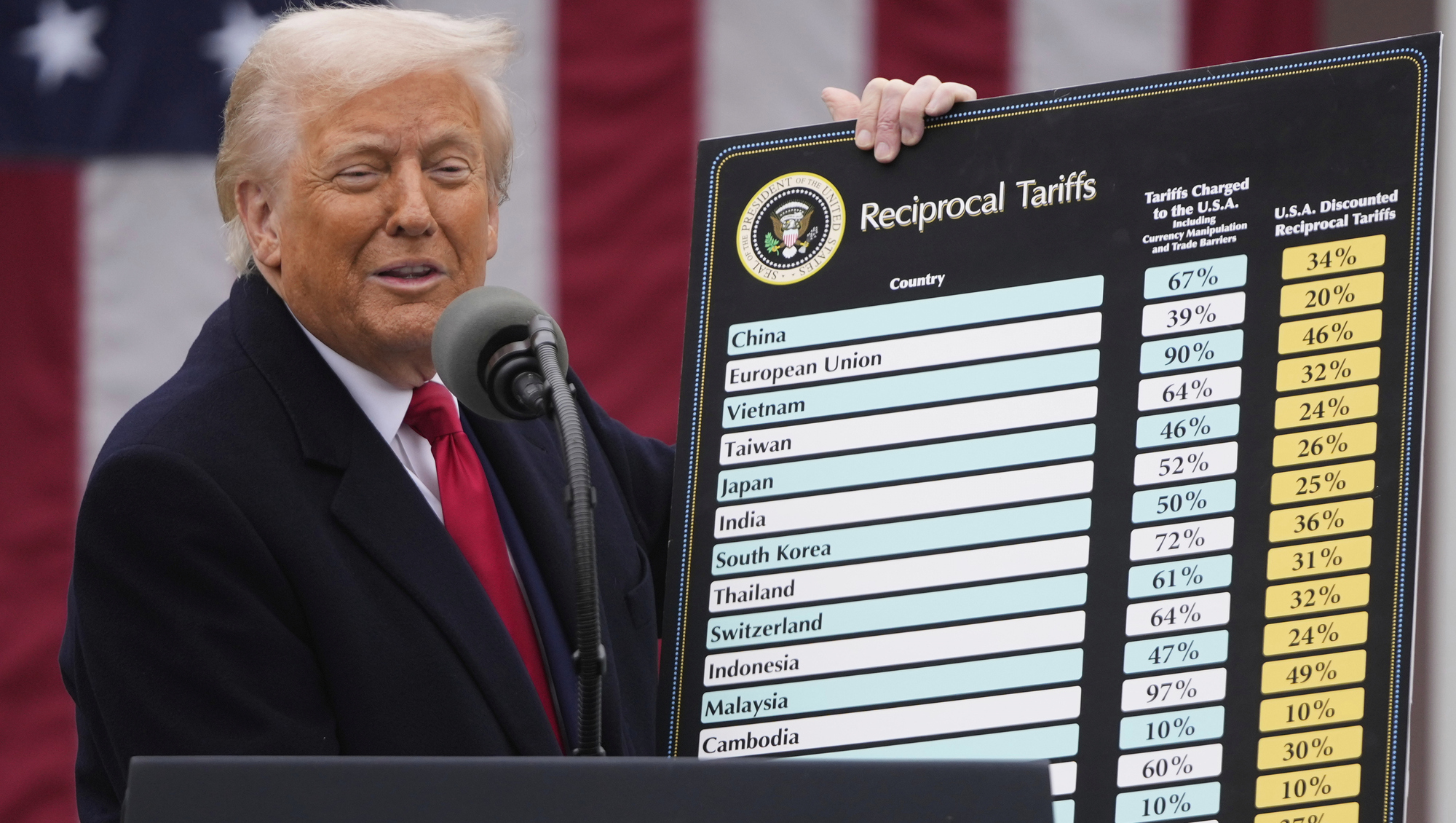
US president Donald Trump announcing new tariffs in the Rose Garden at the White House last April. Picture: AP /Mark Schiefelbein

At the turn of the year, it is worth looking back at key market events in 2025. While the first half of the year was dominated by US president Donald Trump’s trade war, in the end, it paled in comparison to the impact of AI on both financial markets and the real economy.
On US tariffs, the impact appears to have been limited so far. Indeed, many of the threatened tariffs were subsequently reduced or shelved.
US firms also undertook a stockpiling spree ahead of expected tariffs, including those producing pharmaceuticals in Ireland. This sugar rush of activity boosted global GDP in 2025, with a potential hangover to come in the new year.
Other countries have found ways around US tariffs, through transshipments via third countries (China) or administrative loopholes, which Canadian exporters have used to push a greater share of their products through low-tariff channels still subject to the USMCA agreement.
Nevertheless, there are already signs the tariffs have negatively hit the US economy. The disinflationary trend, evident throughout 2024, stalled in 2025 as tariff hikes were largely passed through to US consumers, while the labour market has been buffeted by weak trends in the US manufacturing sector, which is most exposed to trade barriers.
This combination of sticky inflation and a weaker jobs environment has placed the Fed in an invidious policy position heading into 2026. On markets, the most long-lasting effect of tariffs has been the reversal in the dollar from early April. In 2025, the trade-weighted dollar index lost nearly 10% of its value, its worst year since 2017.
The attack on Venezuela has so far been shrugged off by markets in early trading this week, but the threat of further regional escalation is a further risk for markets in 2026.
In Europe, a surge of optimism followed the announcement of major fiscal stimulus in infrastructure and defence by the new German government in March 2025. While this is still expected to boost growth, the details of the infrastructure plan have disappointed expectations.
The EU has also predictably lauded then largely ignored the 2024 Draghi and Letta reports, which laid out plans to boost single market integration, productivity and GDP growth. Analysis suggests about 10% of the recommendations have been implemented so far. Nevertheless, the euro gained 14% against the dollar, and the broad Euro Stoxx 600 posted 16% growth last year.
However, despite its laggard position in the AI development race, even the European economy is being boosted by the rapid deployment of AI technology, as firms invest heavily in AI tools. The rollout of AI has had little discernible impact on labour markets thus far, but there are some signs sectors most exposed to AI replacement have seen job losses, while graduates are experiencing a more challenging labour market.
Despite the negativity around tariffs, AI continued to underpin US equity markets in 2025, with the S&P 500 up 17%, driven by the ‘Magnificent 7’ stocks. The exceptional investment boom in AI infrastructure, including energy and data centres, is now a key driver of US GDP growth. This concentration within the US economy is a significant risk if markets begin to sour on the AI theme in 2026.
- David McNamara is chief economist with AIB