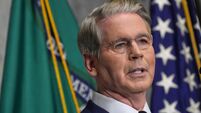
David McNamara: Fed embarks on an uneasy path of rate cuts

One outlier Fed member saw 150bps of rate cuts for 2025 as most appropriate, which most observers have attributed to the President’s man, Governor Stephen Miran.

Last week’s US Federal Reserve and Bank of England decisions were as expected, with the former cutting by 25bps and the latter holding.
With the Fed’s first cut in 2025, both central banks have now reduced rates by 125 basis points (bps) since they started to ease policy in Q3 2024. While the outcome of the Fed meeting was in line with the consensus, there was no unanimity on the magnitude of the rate cut.
Eleven of the 12 members voted for a 25bps cut to 4.00%-4.25%. However, the newly appointed Governor, Stephen Miran (who is on leave but remains a member of the White House Council of Economic Advisers), preferred a 50bps cut.
Two further members, Bowman and Waller, had already voted for a 25bps cut in July, so it is perhaps a little surprising they did not also plum for a 50bps cut, given the deterioration in the US labour market data since that time.
It looks like a solid majority on the Fed is in favour of a cautious approach to rate cuts from here but there remains a wide divergence on the exact path.
Indeed, in the post-meeting press conference, Chair Jerome Powell described the decision to ease as a “risk management cut” and that the Fed would maintain a “meeting-by-meeting” approach to its monetary policy decisions.
Nonetheless, the latest rate projections (“dot-plot”) show a slightly more dovish stance within the Fed compared to the June dot-plot.
The median projection for 2025 was lowered to 3.50%-3.75% by year-end, which would see a total of 75bps of easing this year. This entails 25bps of additional easing compared to the June ‘dots’, which anticipated 50bps of cuts.
One outlier Fed member saw 150bps of rate cuts for 2025 as most appropriate, which most observers have attributed to the President’s man, Governor Stephen Miran.
This would imply implausible 50bp cuts in each of the September, October and December meetings, an aggressive rate-cutting path last seen during the pandemic in 2020 and the global financial crisis in 2008.
Meanwhile, the median view for 2026 remained for one 25bp rate cut, to 3.25%-3.50%. Further out, the “longer run” view was unchanged at 3%.
For the Bank of England holding its rate at 4%, the only notable development was the continued split in voting.
External members, Dhingra and Taylor maintained their recent dovish positions by dissenting in favour of a 25bps rate cut. For them, a cut was warranted “to insure against an increased risk of recession”.
However, the majority continue to view the upside risks to inflation as paramount at present, despite signs of weaker economic activity in the UK.
The decision to slow the pace of quantitative tightening and focus less on the long end of the yield curve by the BoE was also notable and might come as a welcome reprieve for Britain's under-fire chancellor ahead of the Budget in November.
- David McNamara is Chief Economist with AIB