John Whelan: Ireland behind the curve in pharma R&D amid Pfizer call
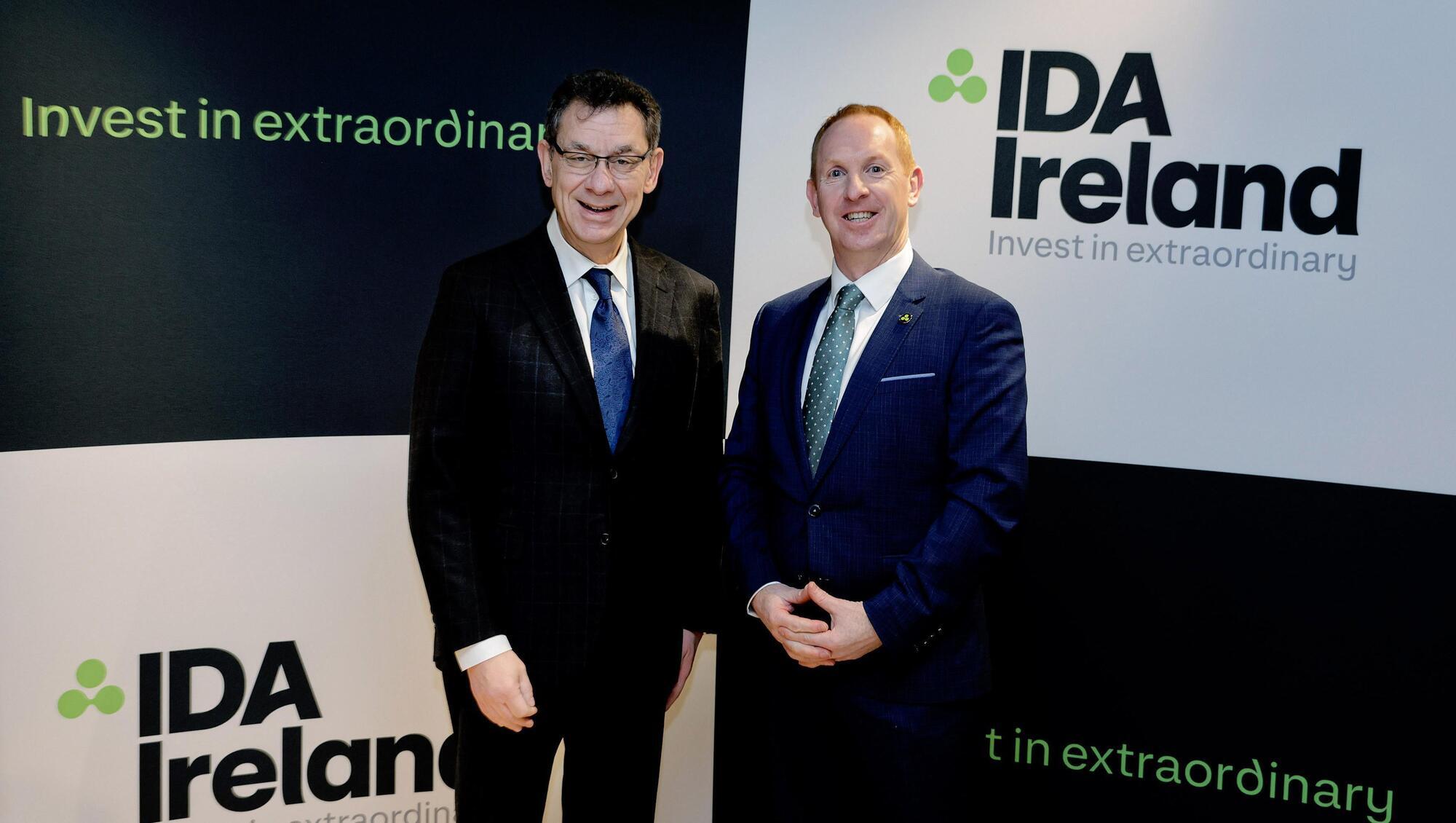
Pfizer chief Albert Bourla and IDA boss Michael Lohan. Mr Bourla wants European companies to raise their investment in pharmaceutical R&D. Picture: Maxwells

Pharma companies met with the Trump administration earlier this month to try and defer implementation of the executive order signed by President Trump on May 12, effectively forcing drug companies to commit to aligning their US prices with “the lowest price of a set of economic peer countries’’.
At the meeting of the Pharmaceutical Research and Manufacturers of America (PhRMA) with the Trump administration, Pfizer chief executive Albert Bourla called for the US government to lead an initiative to increase overall drug spending outside the US.
While the exact mechanism of implementing the Trump executive order to reduce drug prices in the US remains unclear, the Pfizer chief proposed an alternative solution, suggesting that other countries should spend a certain percentage of their GDP per capita on innovative medicines.
In an attempt to lead on the recommendation, he added that Pfizer could consider not making its drugs available for government reimbursement in some countries if the US carries through on its price control and other countries don't increase their prices.
Effectively, Mr Bourla, who chairs the pharma industry lobby group PhRMA, suggested the US should push for a Nato-type agreement, which commits each country to a minimum 2% of their national GDP on defence spending.
And whereas there may be good logic in the Pfizer proposal, any commitment of this nature will likely create major challenges for Ireland, as OECD and World Bank figures show Ireland lagging well behind other countries in research and development expenditure.
In 2022, the last year for which finalised figures have been released, US pharmaceutical companies' R&D spending amounted to 2.33% of the nation's GDP.
There is no comparable figures for the Irish market, in terms of pharmaceutical industry expenditure in research and development. However, the figures available from the World Bank and the OECD for years 2022/2023 show that total R&D for all industry as a percentage of GDP, in Ireland was 0.9%. This is well below the EU average of 2.29%, and even further below countries like the US at 3.6% and Israel at 6.3% who invest more heavily in R&D than Ireland.
Economists have inferred that Trump is leveraging unfavourable policies such as drastically lowering prices points of US drugs and tariffs on imports, to coerce the pharmaceutical industry to increase investments in the US.
Several large pharma companies, including Eli Lilly, Merck & Co, and Bristol Myers Squibb, have unveiled major US investments planned for the next few years in attempt to curry favour with the Trump administration. But noticeably Pfizer remains an exception to that trend.
However, Mr Bourla stated that Pfizer has invested in US manufacturing and will continue to do so, but risks from those Trump policies are making it difficult for the company to commit further. "I don’t think it makes sense to make announcements of future investments in an environment that is very fluid,” Mr Bourla said.
That suggests Pfizer, one of our largest and longest-term investors in the pharmaceuticals space, is unlikely to back off its Irish investments anytime soon. However , we need to heed the Pfizer CEO’s call for more R&D support in Europe, which clearly includes Ireland.
Besides Pfizer, many pharma companies are leveraging the United States’ threat of tariffs on drug imports to push for policy changes in the EU. In a letter sent on April 11 to European Commission President Ursula von der Leyen, 32 pharma companies demanded more favourable policies in order for them to maintain operations in the EU . In the same letter they say that policy changes are needed to ensure Europe remains a location to research, develop, and manufacture medicines.
The CEOs also included in their letter that European countries should rethink their drug pricing policies and enable a better commercial environment for innovative medicines.
Ireland’s Research and Innovation Act 2024 , replaces Science Foundation Ireland in an attempt to fast forward the provision for the funding of research and innovation, but this caters for all fields of activity and neither commits to double the level of funding to €2bn per year needed to reach EU level, nor does it commit to meet the specific requirements of the pharma industry.