John Whelan: US strategic blind spot is Ireland's biggest worry
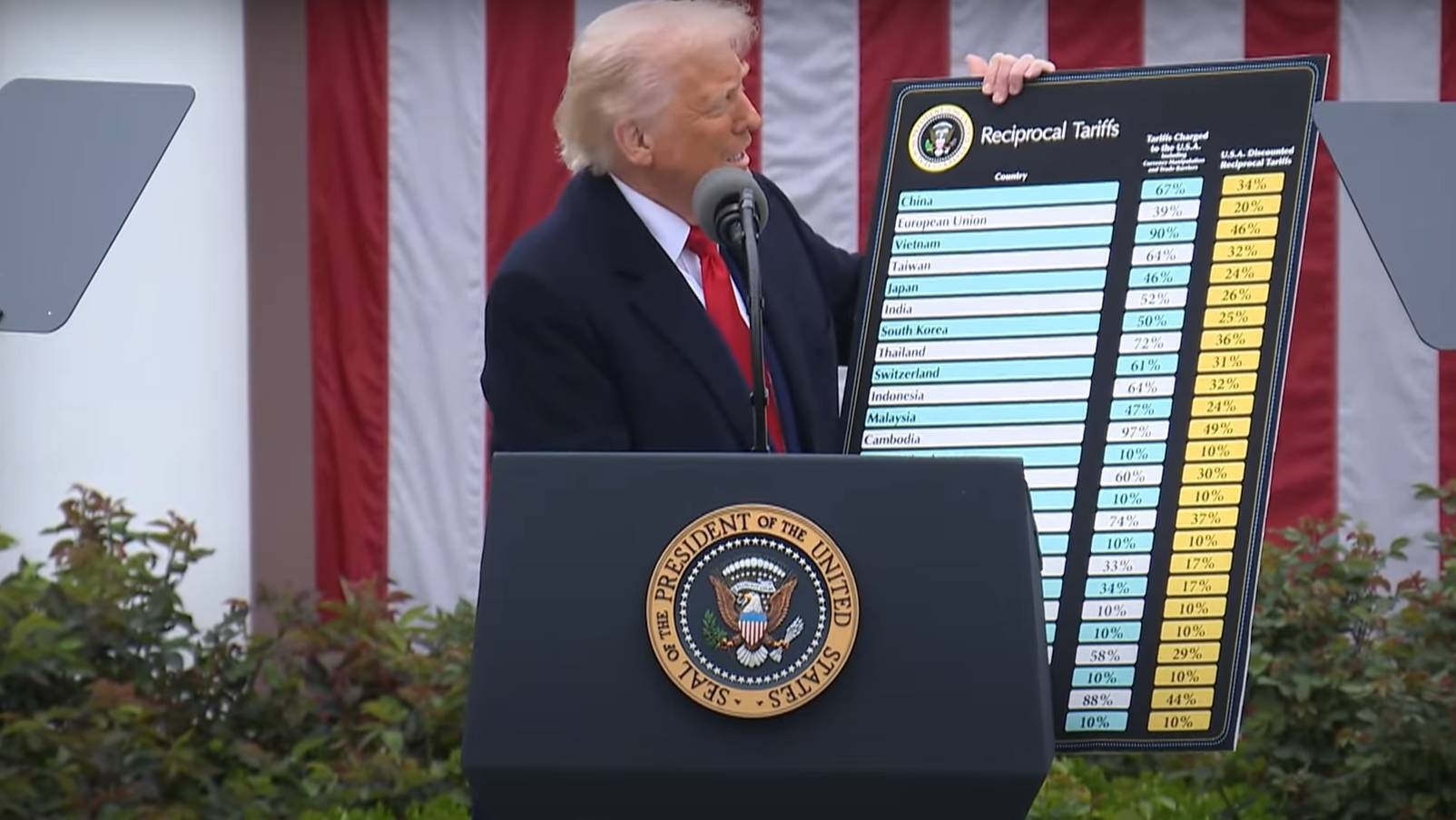
Donald Trump's tariff plans largely ignore the fact that the US is now a service-based economy — a sector in which the country has a large trade surplus.

Revenues from these digital companies are difficult to track, often go untaxed, and are underreported in international trade statistics.
US president Donald Trump ignores the export services sales of these companies, choosing to focus on the exporting of steel, aluminium, cars and trucks, butter and drinks, pharmaceuticals, and medical devices.
This selective accounting distorts real economic balance and fuels false claims about the American decline. Trade deficits, when measured only in goods, make for easy headlines. They provide ammunition for nationalist agendas, especially under administrations like Mr Trump’s, which equate trade deficits with economic weakness or strategic failure.
For Ireland, the implications are significant. Ireland’s trade with the US is heavily scrutinised by Mr Trump and his senior team, focusing exclusively on surplus exports of goods, such as pharmaceuticals and medical devices.
The omission of services is not merely a technical quirk — it is a strategic blind spot, with very damaging consequences for international trade and political stability. By refusing to account for its services surplus, Washington perpetuates outdated trade assumptions, ignoring how value is now added not just in factories, but in data centres, virtual classrooms, and multimedia platforms.
The Trump blind spot is the refusal to accept that the US economy is now service-based. As of 2025, services constitute 77% of US gross domestic product (GDP). This includes high-margin sectors, like finance, insurance, intellectual property licensing, legal consulting, education, and, largest of all, digital media services.
In 2024, US global direct services exports exceeded $1tn (€950tn), resulting in a trade surplus of $300bn (€285bn). But, in addition, US foreign affiliates recorded revenues of $2.1tn (€1.8bn) on their services trade, adding an estimated further surplus of $800bn (€703bn).
The US economy has a balance in international trade, when the trade deficit in goods trade and the services surplus are added together.
American services firms with extensive foreign affiliates — Google, Microsoft, Meta, X, Amazon, and Netflix — generate billions in digital service revenues abroad from advertising, cloud storage, and software subscriptions. Their revenues often go untracked, underreported in international trade statistics and, as a consequence, under-taxed, which was the cause of the EU €13bn penalty on Apple last year.
The Trump tariffs have not affected the core services revenues of these companies, so far.
Reflecting this is Google’s first-quarter earnings report, which breezed past $90.2bn (€79bn) in revenue and $34.5bn (€30bn) in net profit — a 46% year-over-year jump.
The main revenue growth comes from the company’s cloud computing, AI businesses, and advertising revenue.
However, if current EU-US tariff negotiations fail to be resolved, these digital services companies may see their sales and profits severely hit. The EU backstop threat of taxing sales of these digital services — referred to as the ‘bazooka’ solution, or the digital services tax — if applied, could answer many of the EU economic worries, as well as defend the EU against the US tariffs, without too much inflationary damage.
The European Commission estimated that a 10% digital services tax would bring in €75bn in tax revenue to the EU, which would account for 38% of the EU 2025 budget. The EU’s financial needs have escalated due to global crises, including Russia’s invasion of Ukraine, and shifting US policy, making it imperative for the EU to secure funding for defence, economic resilience, as well as the green and digital transitions.
The US has raised concerns that the digital services tax would unfairly target American companies and could lead to further retaliatory tariffs on goods trade.
While the EU is keen on creating a unified stance on digital services tax, if it has to use it to counter US tariffs, Ireland’s economic dependence on the US tech sector exposes it to substantial tax revenue contraction and job losses and so it has expressed its opposition to a digital services tax.
Read More