Fast growth in cross border trade highlights dilemma of NI Protocol
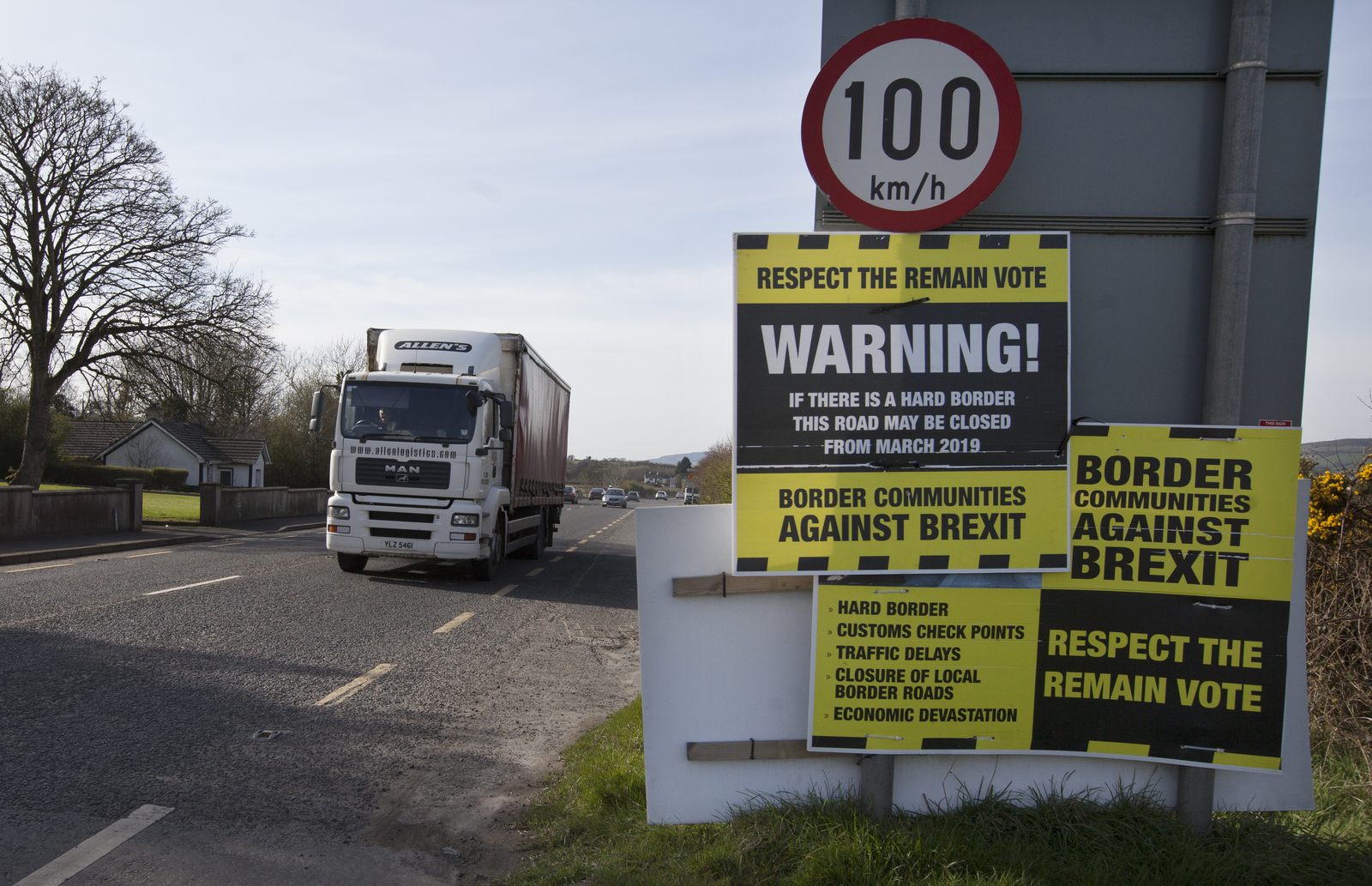
Total cross border trade increased by one-third in the first three months to €1.4bn. File picture: Eamonn Farrell/RollingNews.ie
Despite the many reservations about the Northern Ireland Protocol and incoming DUP leader Edwin Poots recent statement that it was "undeliverable", it has delivered for cross border traders in the first quarter of the year.
Total cross border trade increased by one-third in the first three months to €1.4bn.
The impressive growth in trade was mainly driven by a surge in exports from the North to the Republic, increasing by 48% in the first three months compared to the first quarter last year, as indicated in the latest Central Statistics Office release.
Some of the increase may be attributed to a bounce-back in trade associated with the successful rollout of the vaccine. And some of the growth in imports from Northern Ireland may be due to the fall in the value of sterling in the current year.
However, pushing the trade regulatory border into the Irish sea has undoubtedly provided an escape outlet for many Irish traders, particularly food and drink producers, suggesting more firms here may be using the North as a route to export into the British market, reflected in the increase of total exports to Northern Ireland of 22% in the quarter.
However, trading regulatory difficulties increased on April 1 when the grace period from the requirement to provide export health certificates (EHCs) on food supplies from Britain to Northern Ireland ended.
This has already prompted Marks & Spencer (M&S) to point to a £30m administrative burden on its island of Ireland operation due to Brexit.
Like many other British fast-moving consumer goods companies M&S are looking to reconfigure its operations post Brexit, in response to the new checks and controls on goods moving across the Irish Sea.
The British retailer stated that food products, in particular, have become more expensive to move from Britain into the island of Ireland due to new certification requirements around products of animal origin.
Announcing its full-year results, M&S advised a group-wide loss of £201m (€234m), including a £30m (€34.9m) cost incurred due to the enduring impact of Brexit, stating that the Brexit challenges were “unlikely to improve in the near term and we therefore need to reconfigure trading with our EU businesses”.
Michael Bell, chief executive of the Northern Ireland Food and Drink Association, stated that the impact on the sector would become exponentially worse on July 1 when the EU Prohibitions and Restrictions, the so-called PNR list, would be applied to imports from GB into NI.
He said the PNR listing extending to 300 products would affect the full range of agri-food products which must be presented for a physical veterinary inspection at an EU-approved Border Control post on being imported into the EU.
The British Retail Consortium, the trade body which represents the supermarkets, told MPs that current trading arrangements with the EU were “pretty much unworkable”.
On a more upbeat note, Lidl Northern Ireland, in a statement said they did not have any significant supply chain issues related to Brexit, partly thanks to its decision to work with more than 50 local Northern Irish suppliers, who supply their everyday range, which makes up more than £290m worth of produce in the region annually.
"This advanced local sourcing network and detailed preparation has meant that we do not have any significant supply issues in relation to Brexit at present, and as such we are confident that our customers will be able to continue to shop all of their trusted Lidl products in our stores across the region," the statement from Lidl said.
However, DUP leader Edwin Poots was adamant that supermarkets like “Sainsbury’s, Tesco and local convenience stores should not have their products checked”, adding that animals being “sold back and forward” between the North and Britain should also be uninhibited by extra inspections.
- John Whelan is managing partner at trade consultancy, The Linkage-Partnership