Jim Power: Why these are not good times for banking and finance in Ireland
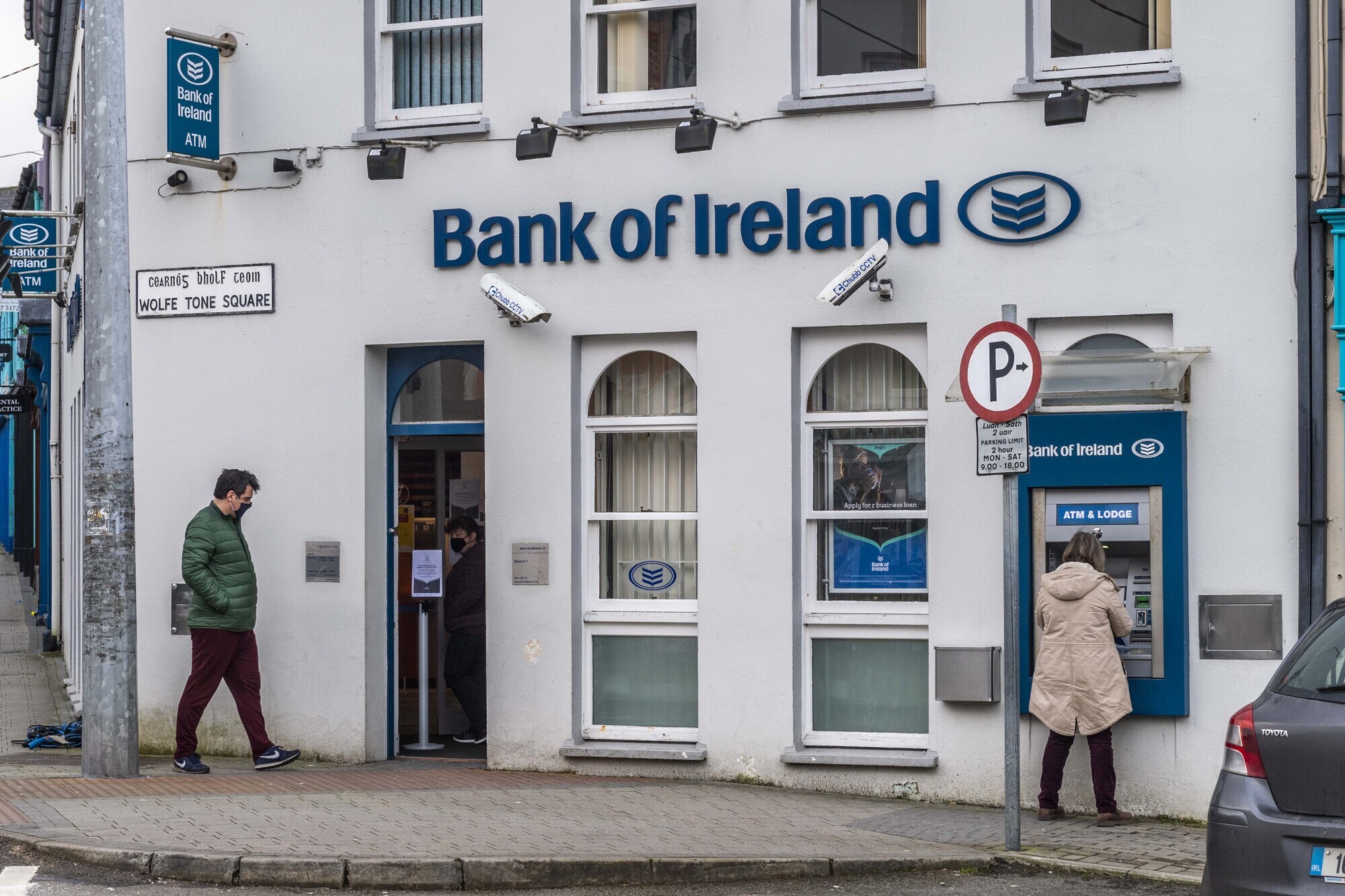
The Bank of Ireland branch in Bantry, Co Cork, is to close later this year — just one of the 88 of the Bank's branches set to close in the Republic. Picture: Andy Gibson.

For businesses and individuals who use the Irish banking and financial system, these are not good times.
The decision of Ulster Bank to wind down its operations in the Republic of Ireland over the next few years will effectively leave Ireland with a two-and-a-bit sized banking system, which is not exactly a recipe for healthy competition.
AIB is also acquiring a chunk of Ulster Bank’s loan book which is further eroding competition.
Then we get the news that AIB has taken over an independent stockbroking firm thereby creating further concentration in the overall market.
This was quickly followed up with revelations about Davy Stockbrokers.
Then to top it all Bank of Ireland announced that it is closing 88 of its branches in the Republic.
The Bank of Ireland chief executive justified this based on much lower footfall in the branches because of digitisation; there is truth in this justification as more and more people are moving online.
One can certainly question if a sustainable long-term business model can be successful by just concentrating on cutting costs and ignoring customer service and small business relationships.
The public will increasingly face into a banking system with fewer outlets, fewer and less qualified staff, and a serious diminution of the concept of customer service.
The notion of relationship banking is now an archaic concept. We are being pushed into online banking, which would be fine if the IT platforms were adequate, and if broadband of sufficient quality is available.
In addition one should spare a thought for our older generation who may not feel comfortable or confident enough to transact banking online.
Spare a thought also for those of us who like to pick up the phone or drop into our local branch to discuss our banking issues with somebody we know and who might care.
Dealing with a bank is now a similar experience as dealing with a telecoms company, and that by any stretch of the imagination, is not a pleasant experience.
The closure of branches will further damage already poor customer service and further damage competition in the market and will impact our towns and villages.
I have been accused of being an old-fashioned dinosaur and told to get with the times and move on from an unsustainable banking model.
Maybe I am old-fashioned, and a dinosaur, but I believe that in relation to something as fundamentally important as one’s finances, customer service and relationships do matter.
The recent announcements by Ulster Bank and Bank of Ireland should encourage our policymakers to think outside the box, if that is possible, and consider alternative banking structures.
I have in the past spoken about creating something out of the Post Office network, the Credit Union movement, and PTSB, of which the Irish taxpayer owns a large chunk.
It would create more competition for the incumbent giants, provide banking services to SMEs and less well-off customers, and not be driven primarily by shareholder value and profitability.
I think that it is important to reiterate the point that the way our banking system is evolving in a way that could be detrimental to our already pressurised small business sector.
Larger businesses generally have few concerns as banks are delighted to service them, but for vital smaller businesses, this is not always the case and the situation is likely to get worse.
Meanwhile, I never again want to hear a banking institution advertising based on how important customer relationships are — or indeed stockbroking firms for that matter.
That day is well gone, and we are all the poorer for it.