Oliver Mangan: Sterling cannot rely on Brexit deal for boost
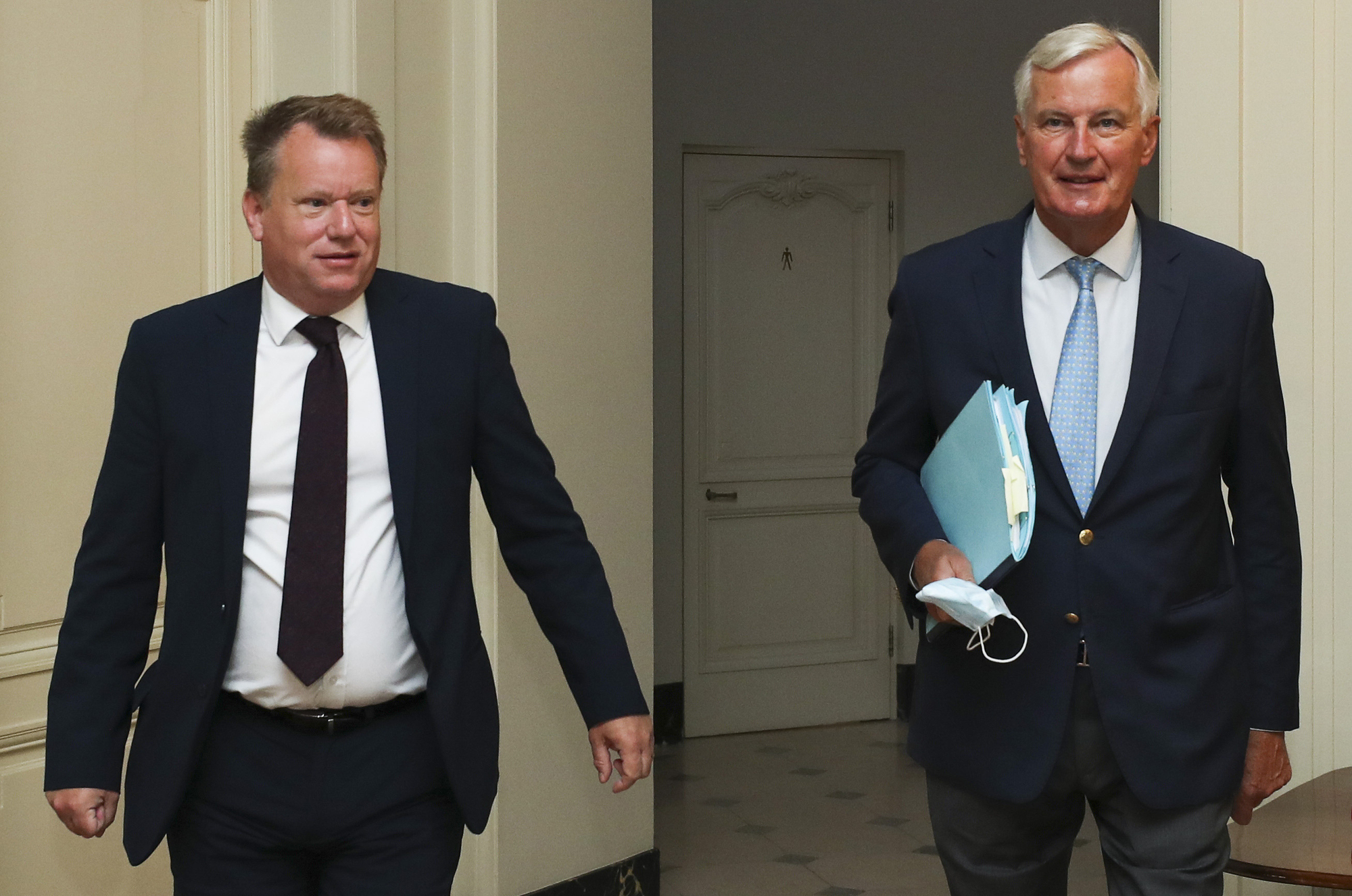
The UK's chief negotiator on Brexit David Frost with the EU's negotiator Michel Barnier at last month's trade talks.

Little progress is being made in the EU-UK trade talks even as the clock ticks down towards the end of the Brexit transition period in December.
It is generally agreed that a deal needs to be in place by the end of October to allow time for it to be ratified and come into effect at the start of 2021.
The EU’s chief negotiator, Michel Barnier, provided a very downbeat assessment at the conclusion of the August round of talks, saying “too often this week, it felt as if we were going backwards more than forwards”, adding that at this stage an agreement seems unlikely. David Frost, the UK’s chief negotiator, also acknowledged that little progress has been made and that an agreement “will not be easy to achieve”.
The two sides remain far apart on the key issues of regulatory alignment - especially on state aid rules, a dispute resolution mechanism and fisheries. The next round of face-to-face talks are scheduled for next week.
A failure to reach a trade deal and a move in 2021 to trading under WTO rules involving tariffs, quotas and non-tariff barriers would deal another severe blow to the UK economy in the aftermath of a forecast 10% fall in GDP in 2020.
Quite surprisingly, sterling seems unperturbed by the lack of progress in the talks. The currency has strengthened over the past two months.
Meanwhile, there is little sign of significant hedging against a sterling fall later in the year should the trade talks end in failure. It may be that markets believe that a trade deal will be agreed.
However, the grounds for optimism on sterling look slim. Markets expect a further cut in UK rates, bringing them to zero, in the coming year, and the Bank of England is no longer ruling out negative rates, which would pose a considerable downside risk for the pound. The recession caused by Covid has also been much deeper in the UK than the other major economies.
The likelihood, at this stage, is that if a trade deal is agreed, it will be a very limited agreement and far inferior to the EU Single Market. Hence, sterling may not gain that much ground if an agreement is reached, with the euro dropping back to around the 87p level.
On the other hand, history has shown as recently as the Brexit referendum in 2016 and the start of the pandemic, that sterling can fall very sharply and very quickly at times of crisis.
The foreign exchange market may feel once bitten, twice shy towards sterling, given the effect of last year's Brexit talks. However, it should also remember the harsh lesson of 2016 when it was far too sanguine about the outcome of the referendum.