Oliver Mangan: Euro could well be heading for parity against the dollar
This is only the second time in the last 10 years that US rates have been increased, with the previous hike coming last December.
The Fed’s post-meeting statement referenced improving labour market conditions and inflation as underpinning the decision to increase interest rates.
The statement also noted that market based measures of inflation have moved up considerably, although they still remain low.
In her post-meeting press conference, Fed chair Janet Yellen, said that the interest rate increase was in recognition of the considerable progress the economy has made towards the Fed’s twin objectives of maximum employment and price stability.
She added that the Fed expects the economy will continue to perform well over the next couple of years.
While the Fed economic projections were largely unchanged, it is now indicating a slightly faster pace of interest rate increases than it was in September.
The median rate projection for end-2017 is now 1.38% compared with 1.13% back in September, which is consistent with three rather than two rate hikes next year.
The Fed now envisages rates rising to 2.17% by the end of 2018 and to 2.88% by the end of 2019, higher than in September.
In the aftermath of the surprise US presidential election win for Donald Trump, the market had come more into line with the Fed’s September rate projections.
However, following last week’s change to interest rate projections, the Fed is now guiding a more aggressive pace of rate increases than the market is expecting.
Current futures pricing indicates the market is looking for roughly two hikes of 25 basis points per year out to 2019, whereas the Fed’s projections are consistent with three 25 basis-point increases per annum.
The Fed continues to emphasise it expects economic conditions will evolve in a manner that will warrant only gradual albeit steady increases in official rates. However, as Ms Yellen noted, the outlook is highly uncertain.
A key aspect to this uncertainty is the policies of incoming president Trump and the impact these will have on the US economy. Mr Trump is promising a major fiscal stimulus in the form of tax cuts and spending increases to boost US growth.
His proposals have not been embodied in the Fed’s forecasts as they have to be first approved by Congress.
In this regard, Ms Yellen noted that changes in fiscal policy or other economic policies could potentially affect the economic outlook but that it is far too early to know how these policies will unfold.
The OECD recently estimated that Mr Trump’s proposals could boost US GDP by around a 0.4 percentage point in 2017 and by a 0.8 percentage point in 2018.
That would boost growth to 2.3% and 3% in 2017 and 2018. With the US unemployment rate now down at 4.6%, such a boost to the economy is likely to increase inflationary pressures.
It should be noted that the Fed has failed to deliver on previous projections for significant rate hikes in the past couple of years.
However, if Mr Trump’s policies are implemented, the chances of the Fed delivering on its latest rate projections will increase.
Indeed, the Fed could revise its rate projections higher again. Market reaction to the Fed’s higher interest rate projections has seen the dollar rally and US bond yields rise.
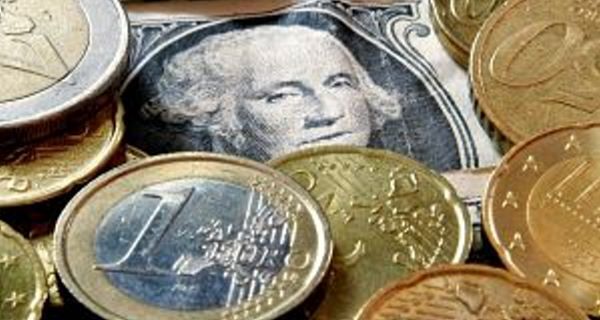
Dollar strength is reflected in the euro and dollar rate falling to around the $1.04 level, its lowest level since 2003.
Meanwhile, the policy-sensitive yield on the two-year US Treasury paper has risen to almost 1.3%, its highest level since 2009, while 10-year yields have risen to 2.6%.
If Mr Trump’s fiscal policies are implemented next year, US bond yields are likely to rise even further.
The dollar is also likely to make more gains and parity could well be in store for the euro and dollar rate, in 2017.