Fianna Fáil and an election - Time is just not right for a vote
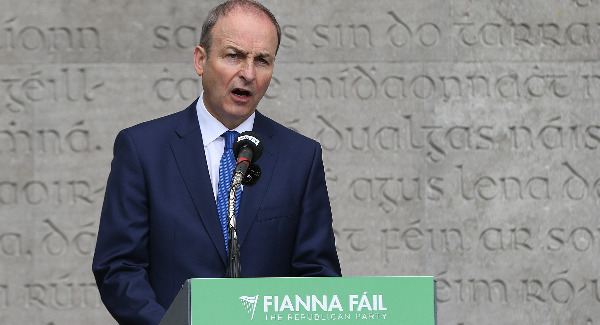
Fianna Fáil activists and voters are understandably impatient for a general election. That Ireland is far from alone in Europe in having a government dependent on arrangements with reluctant oppositions is scant consolation. Their party has been out of power for eight years, and they see a Government that on many fronts has passed or is fast approaching its use-by date.

Fianna Fáil and an election - Time is just not right for a vote

Fianna Fáil activists and voters are understandably impatient for a general election. That Ireland is far from alone in Europe in having a government dependent on arrangements with reluctant oppositions is scant consolation. Their party has been out of power for eight years, and they see a Government that on many fronts has passed or is fast approaching its use-by date.

One of the Government’s few tangible achievements has been the modest budget surplus — the first in a decade, though almost 40% of corporate tax payments came from just 10 mega-multinationals. On the debit side of the ledger, there are capital cost overruns and legitimate concerns about low-pay levels for workers in essential public services. There is a housing crisis and a carbon tax is coming down the line, along with a hike in residential property taxes. The national broadband programme hasn’t worked out quite as planned.

There are questions to be asked and arguments to be made in a general election campaign about the competence and integrity of a governing party that has appeared to be more interested in spin than substance, a smug Government that isn’t nearly as competent as it thinks it is.

Is it the moment, then, for Fianna Fáil to pull the plug on the confidence and supply agreement that keeps Leo Varadkar in office? In most years, given a government that has its back to the wall and not very much to look forward to, the answer would be yes. Why wait? The right answer now — and the one Micheál Martin has given — must be no.

Politicians have been known to cite the national interest when it suits them, and often for reasons that have much more to do with their own interests or those of their parties than those of the nation. But the continuing UK/EU crisis really does mean, in the national interest, holding Fianna Fáil’s natural instincts in check. Our country, even with the benefit of EU solidarity on the north-south border question post-Brexit, is in stormy waters. It is, manifestly, not the time for a debate and a vote on changing the crew.

Which is not to say, as Mr Martin has pointed out, that Mr Varadkar’s language as the Brexit negotiations have rolled back and forth has been beyond reproach. What was to be gained, in pursuit of a settlement, by telling Westminster that it was the “mother of parliaments but not the boss of other parliaments”?

Did this soundbite help in the search for a way out of the backstop deadlock? “The European Parliament’s role in this is at least equal to that of Westminster. That needs to be understood in Westminster,” said Mr Varadkar.

We don’t doubt that members of the UK’s parliament are fully aware, as Mr Varadkar says, that the Strasbourg/ Brussels parliament represents almost 500m people. They will also be aware, as will our TDs, that the number of people who bother turning out to vote for MEPs has fallen unfailingly since 1979. Turnout in 2014 fell to a tad more than 43%.

The Taoiseach might want to consider whether headline-friendly discourse of this kind does much to assist the quest for an amicable end to the impasse.

x

More in this section

Revoiced

Newsletter

Sign up to the best reads of the week from irishexaminer.com selected just for you.

Cookie Policy Privacy Policy Brand Safety FAQ Help Contact Us Terms and Conditions

© Examiner Echo Group Limited