Irish Examiner view: Two clarifications in one week for Varadkar
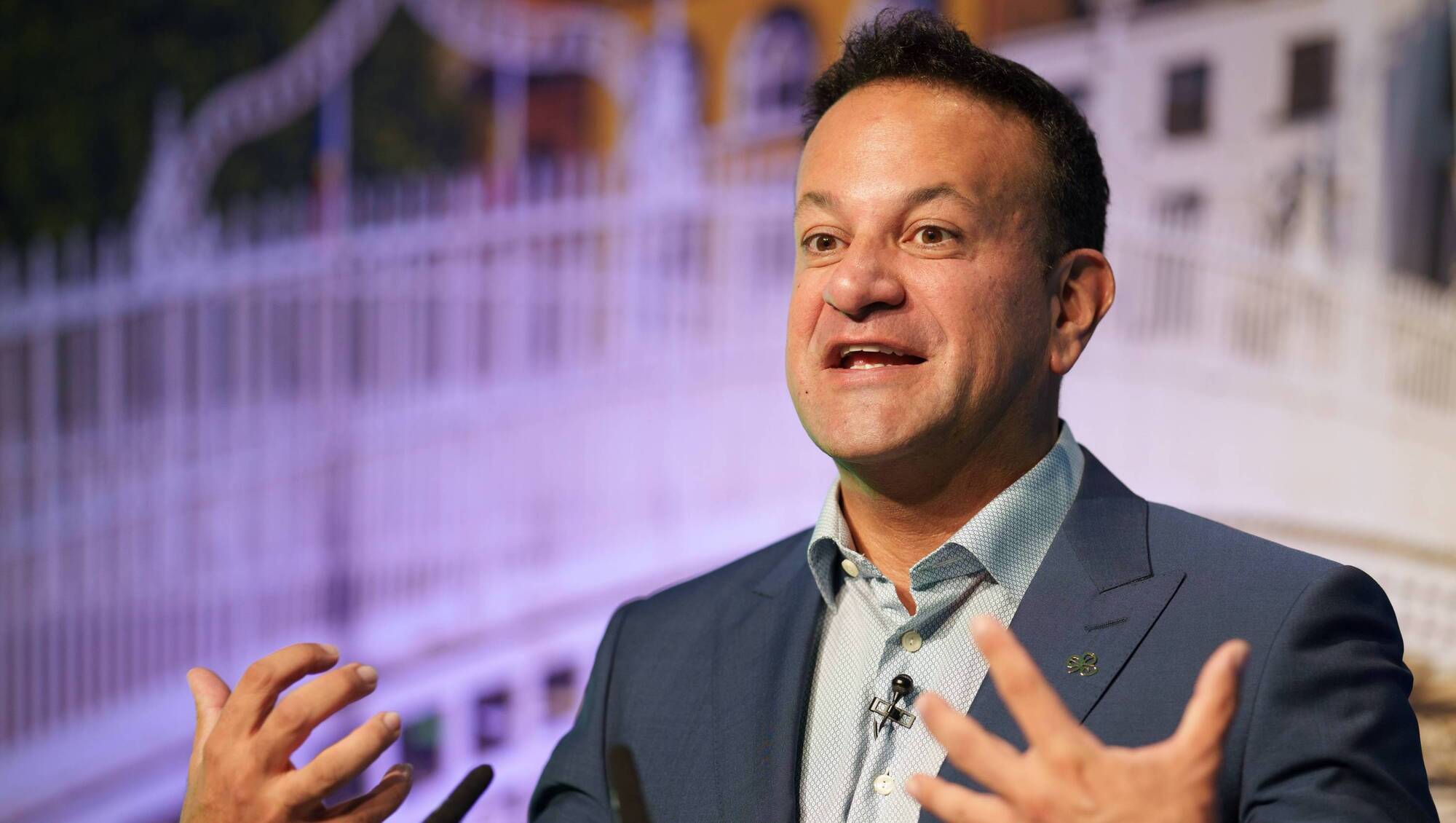
Yesterday, Mr Varadkar issued an apology for comments on rural Ireland, though that is not the only controversy he has been involved in this week as a result of past statements. Picture:Â Fran Veale/Julien Behal Photography
Former taoiseach Leo Varadkar has been in the headlines in recent days, though in the firing line might be a more accurate description.
Readers will be aware of his comments on urban and rural Ireland, when he said people in rural Ireland were quick to declare themselves the “real workers ... the ones paying all the bills ... feeding the country”. He then added that people in urban Ireland needed to say: “Actually, that’s not the case, we’re the ones paying all the bills.”
There was an understandably angry reaction to those comments, which were all the more baffling given that in 2021, Mr Varadkar, as reported here, warned against “creating an artificial divide” between rural and urban Ireland and “playing one off against the other”.
That is exactly how his most recent comments are being interpreted. They were deeply unhelpful at a time when events such as the fuel protests illustrate how differences in our society can be weaponised into division, and they were surprisingly careless musings from someone who held high office. Mr Varadkar was surely aware of the likely impact of such comments, while his former colleagues in Government must be pining for the days of quietly retired taoisigh like Seán Lemass and Liam Cosgrave.
Yesterday, Mr Varadkar issued an apology for those comments, though that is not the only controversy he has been involved in this week as a result of past statements.
In a podcast interview last year, Mr Varadkar discussed the appointment of Drew Harris as Garda Commissioner in 2018 and said: “We made a deliberate decision to appoint somebody from outside the GardaĂ.”
The Garda Representative Association has since questioned whether the appointment process was compromised because those selecting the commissioner had decided in advance not to appoint a serving garda.
Mr Varadkar has since defended that appointment process, which makes two clarifications of past comments in one week. A period of emulating some of his more taciturn predecessors surely beckons.
Appointment is unsatisfactory
The work of the Dublin city task force, which completed its appointed tasks and reported within six months of its creation back in 2024, is to be carried on by a new organisation in the capital.
The Dublin City Regeneration Authority is to put the task force’s findings into effect, and the man to lead it is former secretary general of the Department of Health, Robert Watt. He was appointed chief executive of the new authority at an annual salary of €280,000, a decision confirmed by the Cabinet this week.
However, there was no competitive process undertaken to fill the role. A Government spokesperson said the role was a secondment and therefore not open to competition.
This is unsatisfactory for several different reasons.
First, open competition for such roles is always preferable — not just on the grounds of basic fairness, but because those competitions attract more competition and thus draw more people towards public service.
It is also unsatisfactory because it contributes to a sense of cynicism about those in privileged positions. The Government view may be that this is not technically an open competition to fill a post, but many observers will have a view which does not rely on such technicalities but which frames this situation quite differently. They will see it as the Cabinet giving someone well known to them a job paying over €250,000 a year without the fuss of a competitive process.
Such secondments and transfers also have a troubled recent history. Take the controversy about Dr Tony Holohan’s “open-ended secondment” to Trinity College in 2022, when the Department of Health was to pay his salary while he worked at the college.
Or the Government plan last year to move Nama chief Brendan McDonagh from that position to head a new Housing Activation Office. At the time, the Department of Public Expenditure sought to block approval of the position due to concerns about the appointment process, among other issues.
The fact that neither Holohan nor McDonagh took up those roles in the end is hardly an endorsement of this approach.
'Disco pigs' returning to its roots
One of the most significant plays in the last 30 years of Irish theatre returns to its roots this autumn.
Disco Pigs by Enda Walsh, the 1996 two-hander set in Cork, has been announced as part of the Everyman Theatre’s new season.
Originally staged by the Corcadorca theatre company, the play was one of the first glimpses the general public had of a young Cork actor called Cillian Murphy, who of course went on to win the Best Actor Oscar for Oppenheimer last year. His co-star Eileen Walsh also went on a hugely successful career in TV series such as Catastrophe and Pure Mule, eventually reuniting with Murphy to star in the movie Small Things Like These in 2024.
They will not be reprising their roles in this production, but playwright Enda Walsh is returning to Cork to direct the work that kickstarted his own career: he has since scripted the movie Hunger, starring Michael Fassbender, and co-wrote the show Lazarus with David Bowie.
Tickets for the first preview show on October 31 are available, and there is sure to be huge demand for the show. In a nice touch, those tickets commemorate the anniversary involved: some are priced at €19.96.

Cancel anytime
CONNECT WITH US TODAY
Be the first to know the latest news and updates