Perhaps it’s time to reduce Facebook’s role in your life
I remember joining Bebo in college. I am not sure we used the term social media to describe the platform.
It was 2005 and the term “platform” was still primarily used to describe boarding areas at train stations.
The only images that ever went up on Bebo were of nights out.
Back then, there were no flat-lay images of fanned avocados on sourdough toast and there were no mirror selfies of lycra-clad students lifting barbells in the gym.
It would be another eight years before the term “selfie” was even coined.
In order to upload photos, you needed a digital camera, a USB cable and a computer with a reliable internet connection.
At the time, I was studying for a mixed degree, so while the majority of my lectures took place in the main theatres, for my minor subject I would traverse the university’s grounds to the language labs on the perimeter of the campus.
It was an underpopulated area of the university, which meant you were, more or less, guaranteed to find a free computer to surf the internet on. Once a week, I would have an hour to spare in between language tutorials and I’d slip into a hard plastic seat in front of one of these free computers and while away the 60 minutes on Bebo.
I would click from photo to photo, enviously leering at every party I hadn’t been invited to. I was chasing memories made by other people, but which I, myself, had not born witness to.
My friends and I have this expression we call “sandwiches”. If someone asks how you are and you aren’t feeling at your finest, but nothing specific has occurred to justify this low feeling, you will answer by saying: “I am feeling a bit sandwiches.” Holly Golightly in Breakfast at Tiffany’s referred to it as the “mean reds.”
After an hour spent sightseeing the lives of others on Bebo I would always, without exception, feel “sandwiches.” And because the platform and the concept of social media was so new, I was acutely aware of the effects this ill-spent hour had on my mood.
I could categorically attribute the “sandwiches” feeling to the hour spent comparing my life to the lives of others. My energy had dipped considerably. I felt “less than” and I felt “left out.” I also felt my life and the events in it, paled in comparison to what I had just witnessed online.
Social comparison theory states that we determine our own worth based on how we stack up against others. I was able to get so laser-focused on the lives of others, that my own life, filled with sport and drama and college and friends became all but irrelevant, perhaps even invisible to me.
But still, I was able to log out, get up and walk back into the real world where such sites were not at my fingertips while I waited in line for my hot chicken fillet roll.
Thirteen years later, being able to categorically attribute a low mood or an agitated mental state to social media is not so easy. We are now “always on”.
According to a global mobile phone survey carried out by consultancy firm Deloitte in 2016, 40% of Irish people check their phone within five minutes of waking.
While on public transport, 86% of us are staring into our devices. When we are talking to our friends 80% of people in Ireland are using their smartphone at the same time. While having dinner with family, 73% of us are on our phones.
And when we settle in for the evening and turn on the television, 88% of us are using our smartphones while watching TV.
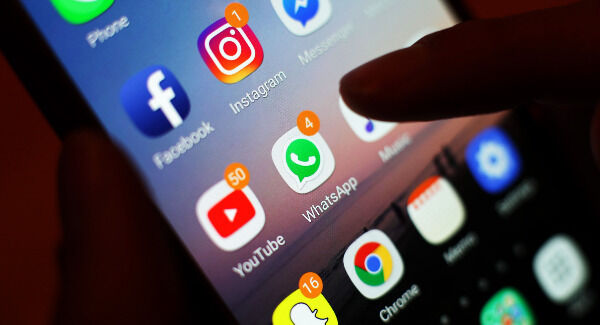
On Instagram you can see when someone was “last active” by simply going to your direct messages and checking beneath a person’s profile.
With WhatsApp you get the blue tick, therefore confirming that your intended recipient has not only received, but actually consumed your correspondence. Again with WhatsApp and so too with Facebook messenger, you can see when someone is “typing.”
The anticipation is seductive and you simply must wait to see what they will reply.
Smartphones and social media have infiltrated our lives to such an extent that we can no longer clearly identify the effects they are having on our health. Us humans are social animals and relationships are critical to our wellbeing.
American psychiatrist Dr Bruce Perry argues that digital communication and social media means we have “invented a world that is relationally different to the one our brain prefers.”
The human brain is not designed for the modern world, he says, because for thousands of generations we lived in small, multi-generational family groups, where there was more touch, more eye contact and more conversation and these all fed the brain in a “rich way”.
Dr Perry explains that humans feel most rewarded and safest when they are with people they love and respect.
Today, while I am not a prolific social media user, I still scan through various timelines. Twitter allows me to rate my professional success or failings. Facebook reminds me that I’ve yet to procreate.
And Instagram takes social comparison to a whole other level, where my boring old life, where it’s always porridge for breakfast, could never possibly compete.
This week when the data scandal broke, whereby 50m Facebook users had their personal data allegedly harvested by a company called Cambridge Analytica, people began deleting their accounts.
Mark Zuckerberg’s net wealth fell from approximately €61bn to €54bn. Facebook’s share price fell by more than 10%.
But what does all of this mean for the rest of us? Maybe it’s time we took stock and ask who’s really in control here?
It’s time to sit back and take a look at how many minutes of your day you give to other people’s online lives to the detriment of your very own real life.


CONNECT WITH US TODAY



Be the first to know the latest news and updates