Liz Dunphy: Perfect storm of drugs and neglect blamed for upsurge of violence
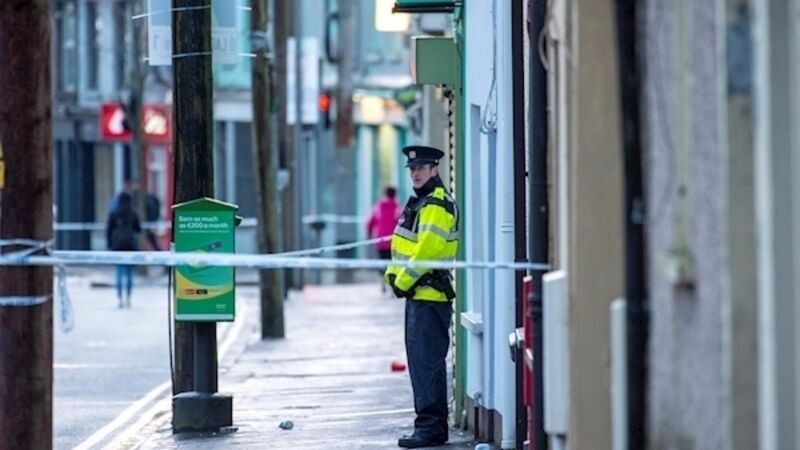
Local policing knowledge was lost when garda stations were closed in 2013, officers tell
Cork has been left reeling after an outbreak of violent crimes hit the city in recent days.
Engineering student and promising athlete Cameron Blair was stabbed to death at a house party on Bandon Rd in the city on Thursday night.
A young father is in a coma after he was beaten, doused in petrol and set alight by intruders at his home in Mayfield on Monday morning.
A man suffered a fractured skull in a hammer and baseball attack and another was beaten by a gang armed with hurleys in the northside of the city at the weekend.
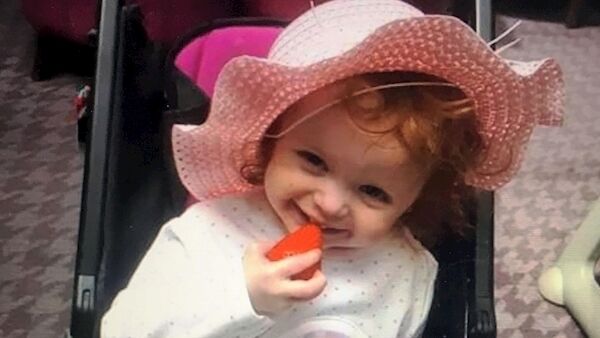
However, the spike in violence really started in the summer, with the death of two-year-old Santina Cawley, who died on July 5 after she was rushed to hospital with serious injuries from an apartment on Boreenmanna Rd.
Five other people have been violently killed in Cork since her death.
Paul Jones, 55, was found dead in his home on Bandon Rd in September. James Duncan, from Knocknaheeny, died in October, six weeks after he was injured in an assault on St Patrick’s St on September 12.
Timmy Hourihane, 53, a former chef who was homeless at the time of his death, was killed in a violent assault on October 13.
Frankie Dunne’s dismembered body was found inthe grounds of a vacant house on Boreenmanna Road on December 28.
And Mr Blair, 20, became the sixth person to suffer a violent death in Cork since July, when he was stabbed in the neck during an altercation at a house party on Bandon Rd in Cork City on Thursday night.
A Garda source told the Irish Examiner that lack of garda resources is allowing violence to fester in the city.
And they said that having gardaí on the beat around Bandon Rd on Thursday night may have prevented Mr Blair’s violent death.
The source said: “In the last six to seven months we’ve had six murders inthe same district which is serviced by 16 detectives. There were 30 detectives there in 2011.
“We’re just firefighting. If you have six murders in one district in seven months, you’d have to ask if the district is being policed properly. And the problem is due to lack of resources.
“We may not have been able to prevent the beheading [Mr Dunne], but if a fight broke out on Bandon Rd, gardaí on the beat may have stopped that.

“There were two recent murders on Bandon Rd but we have no policing on Barrack’s St. Unless we are called up there to respond to something, guards generally don’t go.”
The source said that when the garda station on Barrack’s St closed in 2013, a lot of local knowledge was lost. And maintaining local knowledge — and links with the community — are vital if we are to curb the escalating violence, much of whichis caused by drugs, they believe.
They said: “It all boils down to drugs. Certain elements are fighting each other, they may owe money for drugs and carry knives for their own protection.
“But if there were more guards on the beat, we would stop and search them, we’d know the guys. And if you catch a fellow once or twice with a knife, they may think twice before bringing it out again.
“The city is awash with drugs while areas are not being policed properly due to lack of resources. And there is an element of addiction in the vast majority of cases.”
Orla Lynch, a senior lecturer in criminology and head of the Graduate School at UCC, also said addiction is a major driver of crime in Cork. And in order to understand the surge in violence, you need to “look at thespecific factors in Cork”, she said.
“A big thing to bear in mind in Cork is that there’s a significant amount of addiction involved with people who end up in prison,” she said.
It’s not just about crime being a cultural thing, or a gang thing. Addiction is huge.
She said a mix of complex factors can lead to criminal behaviour, and that individual and societal contexts need to be examined when trying to understand it.
She said: “You have individual factors and societal factors, and the interaction of the two is what we know to be relevant.”
The clustering of these individual and societal factors such as poor socio-economic status, poor educational attainment, regions of the city that are badly funded — can point to an increase in crime.
However those factors are not causal, she cautioned, but a part of the overall picture.
However, the “moral panic” that children’s exposure to violent content on screens could be stoking violence in real life was not backed-up by research.
“There’s very little evidence to show that it’s impactful,” said Ms Lynch.
“If a young child is exposed to violent content, you also have to look at what else is going on in their life, do they have a history of abuse? What’s going on in their schooling or social environment? You can’t necessarily isolate that one aspect of the child’s experience.

“Each person is different and has different levels of resilience. Exposure to violence, whether in the media or first person, doesn’t mean that an individual goes and repeats that behaviour. Witnessing violence does not necessarily breed violence.”
She said those caught-up in crime often tend to be the victims of crime themselves, and that multiple interventions are needed to break that chain.
“The types of interventions range from at the parenting level, funding support for communities, housing support, ensuring local areas are not neglected, that there are activities for kids, all the way up to the type of interventions that happen in prison and post-prison,” said Ms Lynch.
“There are interventions at every level because there’s not one causal factor that causes crime and offending.”
She said a reduction in funds for community initiatives, lack of policing,or poor community engagement with policing can come together to provide a breeding ground for crime.
And “wrap-around” services are needed for children who may be in danger of falling victim to crime to provide the support needed and divert them from that path.
Former lord mayor of Cork and community worker Chris O’Leary believes government cuts to youth and community workers has been a major problem in Cork City.
He said: “Cuts to services mean that a lot of youth workers are not on full time hours and many are working out of facilities that are not fit for purpose.
"The State has done a disservice to communities by cutting funding to these groups.
Trying to retain talented youth workers with low pay and insecure contracts is a big problem. Youth workers are committed but they need to be able to maintain a home themselves. Many are falling through the cracks and are forced out of the area they qualified in and are taking up other jobs instead.
“The sector has been neglected and you’re now seeing problems in violent crime and criminality from that lack of funding. But early intervention can break that cycle.”
Spending plans on youth and community workers and Garda resources will be a question for politicians on the doorsteps.
As of January 2, four probationer gardaí were assigned to Anglesea Street Garda Station and four were assigned to Mayfield Garda Station. These eight gardaí were part of the group of 32 who were temporarily stationed in Cork at Christmas.
Barry McPolin, chief superintendent of Cork told the Irish Examiner in December that Garda Commissioner Drew Harris “was aware of resource issues in the city” and that he wasconfident that Cork would receive significantly more gardaí in 2020.
The next group of probationer gardaí are due to finish in Templemore Garda College at the end of February.
A Garda spokesperson said that “all of the relevant factors including population, crime trends and the policing needs of each individual division are taken into consideration,” in regard to the deployment of Garda personnel.
“Garda personnel assigned throughout the Country, together with overall policing arrangements and operational strategy, are continually monitored and reviewed. Such monitoring ensures that optimum use is made of Garda resources, and the best possible Garda service is provided to the general public,” they said.
Meanwhile, some senior gardaí believe that drugs are fuelling violence in Cork.
Mick Comyns, superintendent of serious crime in Cork, previously told the Irish Examiner that “cocaine fuels violent criminality and there’s been a huge increase in its use”.
Cocaine use dropped with the economic recession but use of the drug has returned to Celtic Tiger levels.
He said that although gardaí seize cannabis, cocaine, and heroin every week in the city, “where there’s demand, the supply will come”. He urged users to take responsibility for the violence they sponsor by buying illegal drugs.
Chris Luke, adjunct senior lecturer in Public Health at University College Cork, last week warned that cocaine can be “synonymous with grotesque violence”.
He told the Irish Examiner that cocaine is, “without a shadow of a doubt”, the drug most commonly associated with extreme violence in emergency departments.
And drugs are more readily available then ever before. The dark web provides easy access for anyone with an internet connection.
And cannabis grow houses and Breaking Bad-style cook houses mean that drug dealers and users no longer need to rely on imports to this country on an island.
CONNECT WITH US TODAY



Be the first to know the latest news and updates