Daniel McConnell: Fine Gael accused of running a ‘Trump-style operation fear’
Now that we’re heading into the third week of the campaign, the temperature has been turned up, with the two biggest parties squabbling endlessly.
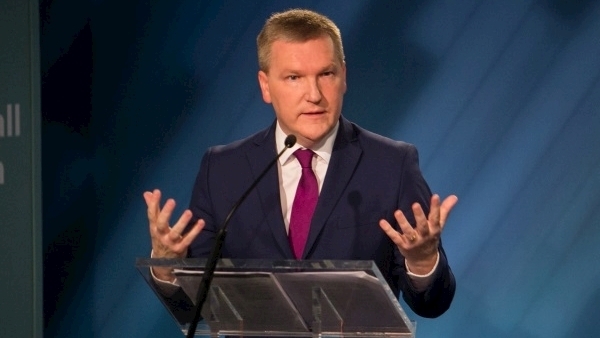
At his briefing on insurance costs yesterday, Fianna Fáil’s finance spokesman Michael McGrath lashed out at Fine Gael’s decision to go so negative in their attacks on his party.
For days, Fine Gael TD after Fine Gael TD has been lining up to demand accurate costings from McGrath and his party related to their manifesto promises.
At the weekend, the party published a dummy Fianna Fáil manifesto accusing the party of having “no costings” and “no credibility”.
Finance Minister Paschal Donohoe said Fianna Fáil had not provided adequate resources for a new public pay deal.
At his briefing, McGrath accused Fine Gael of running a “Trump-style operation fear” campaign, saying such attacks were “desperate”.
He said Donohoe, his opposite number, had erred in outlining how much funding he would make available for a renegotiated public pay deal.
McGrath said the party stands over all aspects of its manifesto and the costings included.
“I think what we are seeing from Fine Gael now is project fear, they are becoming increasingly desperate that their message is not resonating with the Irish people,” he said.
“What Paschal Donohoe has put forward will be seen as an opening offer from Fine Gael.
"We have allowed adequate headroom in relation to our figures for a new public service pay deal.
"What we have not done is factor in additional revenue from compliance and taxation measures on tobacco for example.
“These measures will of course, be options for Government in respect of the budgets to come in the next years.”
Behind the scenes, Fianna Fáil said the decision by Fine Gael to go for ‘Project Fear’ was “predictable” and “smacks of desperation”.
“They think scaring the shit out of people will win, it won’t. People want change, that is clear,” said one senior figure.
While the Fine Gael attacks on a lack of numbers is not yet doing any tangible harm, it has the potential to become an issue.
Party sources said they are also likely to highlight what one person called the “game of footsie” Leo Varadkar is playing with Sinn Féin leader Mary Lou McDonald, a signal that a Fine Gael-Sinn Féin coalition could actually possible once the votes are counted.
What has not gotten enough attention is just how poor Fine Gael’s position is, if the four opinion polls are to be believed.
If the Sunday Times poll, which had Fine Gael on 20%, the party would be decimated, akin to what happened in 2002, and you would see some of its heaviest hitters lose out.
If the Business Post’s Red C Poll predictions come true, predictions from the likes of Ivan Yates of the party winning 40 seats would begin to appear optimistic.
Fine Gael bosses, for their part, are not giving up hope just yet, despite the danger of utter disaster looming large.
For the next stage of the campaign, they plan on stressing the idea of who can be trusted to run the country, clearly believing they can gain some traction on that.
Micheál Martin and Leo Varadkar argue while responding to a question from the audience on what they will do to ensure young people will be able to afford a house #cblive #GE2020 pic.twitter.com/IgAeYJHT62
— RTÉ News (@rtenews) January 27, 2020
It is clear the party cannot win any ground in terms of housing and health, as a result of the numbers in both areas going the wrong way and two rookie ministers who have become lightning rods for government discontent.
While they are not seeing much benefit yet from it, the Fine Gael strategy of continually highlighting Micheál Martin’s time in office is contributing to the Fianna Fáil to open up a decent gap over Varadkar’s team.
The big surprise of the first half of the campaign has been the surge in the Sinn Féin support, as reflected by all four polls published so far during the campaign.
Following heavy defeats in the local and Europeans last year, it had been predicted that the party could lose up to half of its Dáil seats, but if the poll predictions materialise, not only are those seats safe, they could actually gain.
So what has changed?
It is not clear, but what is apparent is that Sinn Fein are polling very strongly among young voters, 18- to 24-year-olds, and working-class people.
Experience would suggest that support from these two groups is fickle and unreliable as they tend to fail to mobilise on polling day.
Therefore the Sinn Féin surge may not be as great as suggested.
There is also a sense that the party may have peaked too soon and could fall back as the campaign hots up
The other big takeaway from the polls is that the Green resurgence has stagnated somewhat and while the party will make gains, talk of 15 seats for them is simply fanciful.
The campaign, in truth, has failed to take hold properly and therefore the large number of undecided voters who have yet to make up their mind have not yet been given a reason to swing one way or the other yet.
It will be that proportion of the 20% of voters who are not yet decided who turn up will decide the outcome of Election 2020.
It is advantage Micheál, but plenty to play for still.
CONNECT WITH US TODAY



Be the first to know the latest news and updates