'Beware of false dawn', says charity as homelessness sees largest fall ever
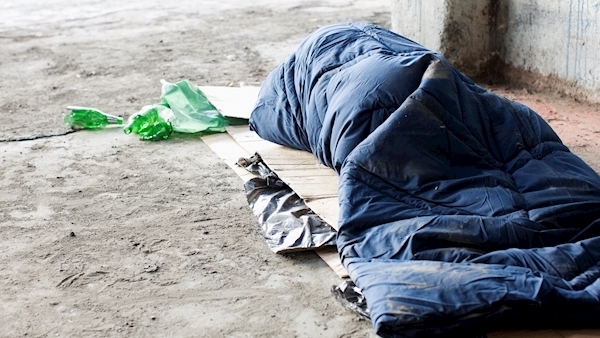
The Government has hailed a significant drop in homelessness after new figures showed the number of people in emergency accommodation fell below 10,000 for the first time since last February.
The Department of Housing said there were 9,731 people homeless in December, down 717 on the figure for November. The news was welcomed by charities, although a senior figure in one organisation said "it's too soon to say we have turned the corner".
The Department said December saw the largest decrease recorded over a single month since reporting began in its current format and that 2019 was the first year since reporting commenced in the current format that the overall homeless numbers were lower than the previous December.
According to the figures, there were 6,309 adult individuals using State-funded emergency accommodation in December - down 5.78% on November and up 1.86% on December 2018.
There were 1,548 families in emergency accommodation in December, down 8.13% compared to November 2019 and down almost 4% on December 2018.
There were 3,422 homeless children last month, down 8.8% from November and a modest decrease on December 2018.
Housing Minister Eoghan Murphy, said: "I know that this decrease is not enough and the number of people in crisis is unacceptably high, but the change in 2019 is a move in the right direction."
Depaul CEO David Carroll said: “We are happy to see a decrease in homeless numbers. We hope this illustrates a deeper change in trends when it comes to people presenting as homeless.
"However, for any incoming Government Depaul's priorities remain the same. We need to see a large increase in social housing output and increased investment in health interventions for those who are experiencing homelessness. In particular those presenting with complex needs."
Inner City Helping Homeless gave a cautious welcome to the drop.
ICHH said: “While we obviously welcome a substantial drop in the number of people that are homeless we would also air on the side of caution.
Every year we see a decline in the figures in December as many families made homeless in December choose to stay with family or friends over the Christmas period rather than spend the holidays in emergency accommodation.
"This has been a year-on-year trend and figures that come out in March usually see the spike begin again and by the summer the numbers continue to rise."
The homelessness charity said its outreach volunteers helped 131 people on the streets of Dublin last night.
It said: "We also cannot lose sight of the fact that people sleeping on the streets, in parks and squats are not counted nor are families in domestic abuse shelters, people in direct provision, people couch surfing or living in overcrowded family homes.
"Beware of the false dawn with the general election a week away, until we see serious reductions month after month we cannot allow the department to gloss over the seasonal declines.
"As long as the government rely on the private rental market and private developers to address homelessness this crisis will continue to escalate throughout 2020.”
Housing officials said while some of the decrease last month could be seasonal, with people staying with friends or family for the festive period, a more significant factor was likely to be an increase in available beds and the completion of housing units in the last quarter of the year.
An accompanying Summary Analysis of Homelessness Quarterly Performance Reports - Quarter 4 2019, said: "During Quarter 4, a total of 1,582 adults and their dependents exited homelessness into tenancies.
"This is a 14% increase on the comparable period last year when 1,383 exits were achieved. It is also the highest number of exits recorded in any single quarter since 2016."
It also said there was a total of 5,971 exits from homelessness last year, up 16% on that achieved in 2018. These included 1,199 exits to local authority-owned properties, up 49% on the corresponding period in 2018, 954 exits to Approved Housing Body (AHB) lettings or Long Term Supported Accommodation, up 44%, and 3,818 exits to the private rental market, a 4% rise.
The vast majority of those exits were in Dublin.
The report also included data from the Dublin Region Homeless Executive (DRHE) which said family presentations in the Dublin region had fallen by 11% last year and the number of families entering emergency accommodation had also fallen over the same period by 7.3%.
"Of the families presenting to homeless services in the Dublin Region, 49.4% were prevented from having to enter emergency accommodation and 1,113 families have exited emergency accommodation into a tenancy, a 43% increase on the 778 family exits achieved in the Dublin region in 2018," it said.
By the end of last year, 58% of those in emergency accommodation had been accessing it for more than six months, while 184 (16%) families and 443 (17%) of children had been homeless for more than two years.
The figures came shortly after a Policy Brief on Affordable Housing published by the Organisation for Economic Co-operation and Development noted a 107% rise in homelessness in Ireland between 2014 and 2018.

CONNECT WITH US TODAY



Be the first to know the latest news and updates