A national shame: Another Christmas for thousands in emergency accommodation
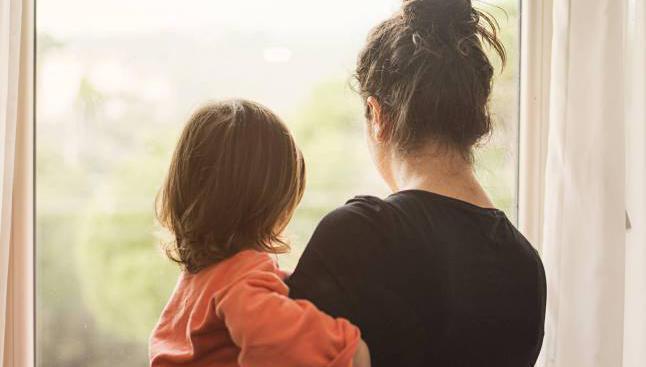
Dublin has a total of nearly 12,000 people using different forms of private emergency accommodation. This is part of the special report published in the 'Irish Examiner' in print and online on Monday, December 22.
Thousands of people and families will spend this Christmas living in hotels and B&Bs across Ireland.
The same as last year. And the year before that. And the year before that. And much of the decade before that.
There were a record-breaking 16,766 people in emergency accommodation at the end of October, including 11,492 adults and 5,274 children.
The latest figures from the Department of Housing also show that 2,484 families were in emergency accommodation.
Those figures make a February 2014 RTÉ online article look almost quaint in a way.
At the time, the broadcaster reported that “there are 131 homeless families in Dublin being booked into hotels because of an accommodation crisis in the capital”.
Case study: Mother living in B&B with her family on housing list for 19 years;
Case study: Young mother forced to live in a mobile home after 50% rent rise;
Case study: 'My family has been moved from county to county for two years'.
Over a decade later, the capital has a total of nearly 12,000 people — including nearly 4,000 children — using different forms of what is officially called private emergency accommodation (PEA).
It’s a catch-all term for hotels, B&Bs, and other facilities.
Working out exactly how many people are in what type of accommodation, though, is difficult.
Asked for a breakdown, Dublin Region Homelessness Executive (DRHE) directed a query to its website which carries a page entitled 'Trends'.
This page, while useful, is focused on the numbers and does not break down the accommodation into types.
The October homeless report, which covers the entire country, shows that around 8,000 adults are in private emergency accommodation, which it says include hotels, B&Bs, and other residential facilities that are used on an emergency basis.
In private emergency accommodation, the department says: “Supports are provided to services users on a visiting supports basis”.
This is distinct from supported temporary accommodation — which includes family hubs and hostels, with onsite professional support.
There are around 3,300 adults in supported temporary accommodation, with just 118 in temporary emergency accommodation — which is emergency accommodation with no (or minimal) support.
However, whereas in 2014 the idea of families living in hotels was seen as a national shame, it is now just what the public thinks of when presented every month.
In 2014, rising rents in Dublin had begun to see families made homeless in the shadow of the financial crash. It became a political and media fixture.
In May of that year, in a Dáil debate, Sinn Féin’s Dublin North West TD Dessie Ellis told the chamber of a figure his Cork East colleague Sandra McClellan called “shocking”.
“At present in Dublin, 174 families are in hotels — which costs more than €14,000 a day,” Mr Ellis said, asking if it would be possible for the government to meet its target of ending homelessness by 2016.
By the end of that year, DRHE said its projected spend on hotel accommodation for 2014 would be €4.5m — more than three times the €1.3m spent the year previous, and multiples of the €455,000 spent in 2012.
A lot of public money is spent on temporary accommodation, which is not just a statement of the obvious.
That is the assessment of Mary Hayes, the director of the Dublin Region Homelessness Executive (DRHE) — which oversees homeless services for the capital’s four local authorities.
The DRHE’s recently published action plan for 2025 says that expenditure on emergency accommodation has risen from €194m in 2022 to €305m in 2024.
- Around €8.5m on prevention of homelessness and Housing First (which provides an holistic approach to addressing homelessness for people experiencing mental health, physical health, and substance misuse issues);
- €12.6m for supported family facilities;
- €46m on supported facilities for singles;
- Around €26m for family hubs.
But it is the sections on use of hotels which show the scale of spending most clearly.
Under a heading listed simply as “Hotel”, DRHE outlines a spend of €41.5 m, while the following section on private contracted accommodation for both families and single people shows a spend of €144m for 2024.
This is not further broken down. Since 2025, Dublin City Council publishes on a quarterly basis the expenditure for provision of emergency accommodation over €20,000.
A look at the most recent publication, for the third quarter of this year, shows over 400 separate payments totalling over €60.8m.
One company, Country Manor Hotels ULC, was paid €3.075m in the quarter.
The same company, according to Dublin City Council’s procurement publications for 2024, started a contract in May of last year. It has been contracted to provide 562 emergency beds until June of 2033.
The total estimated payout by then will be €123m. In total in 2024, 21 contracts over a value of €10m were awarded for provision of emergency accommodation.
While the use of private emergency accommodation is seen as very much a Dublin issue, and it largely is, other areas are not immune.
There are nine regional areas, each with their own responsibilities around homeless provision.
In the South-West, which takes in Cork and Kerry’s councils, more than €33m was spent in 2024 on homelessness services. €21m of that was on commercial hotels and B&Bs.
The Department of Housing, for its part, says that it “does not fund any homeless service directly, but provides funding to housing authorities towards the operational costs of homeless accommodation and related services under Section 10 of the Housing Act 1988”.
“Under exchequer funding arrangements, housing authorities must provide at least 10% of the cost of services from their own resources.
“Furthermore, housing authorities may also incur additional expenditure on homeless related services outside of the exchequer funding arrangements provided by the department.”
The use of hotels in the first instance wasn’t a bad decision, says DePaul Ireland’s David Carroll.
He tells the that its use was a “pragmatic step that was taken by the local authorities, because they had no other choice but to go out and seek temporary accommodation, because the supply [of housing] just wasn’t there”.
“The whole off the streets initiative of getting people into hotels was a hugely successful initiative. Since then and again, it’s about supply.
“Many of the provisions that were provided at that early stage have not been wound down.
“And that’s for the reason that the properties don’t exist for people to move onto, and then obviously the continued upward trajectory of people coming into homelessness as well.
“We are now in a position where there is this absolute over-reliance on temporary accommodation and absolutely an over-reliance on private emergency as well.”
Part of the issue, says Sinn Féin’s housing spokesman Eoin Ó Broin is that the family hub model was never fully realised.
Brought to then housing minister Simon Coveney by housing body Respond in 2016 after he had pledged the end of hotels by July of the following year, family hubs were intended to see vacant buildings repurposed to provide bedrooms with on-site supports such as cooking and laundry facilities.
The first was opened that year in a former convent next to a Magdalene laundry, and houses 41 families to this day at a cost of over €1m in 2024, according to published records.
There was much comment in 2017 about the use of the former Bargaintown warehouse in Coolock as a hub, but that was eventually delivered and is now run by the Salvation Army for 28 families.
But having seen 22 facilities established in Dublin in the plan’s infancy, along with eight in Louth, three in Limerick, two each in Clare, Galway, Kildare, Monaghan, and Meath, and one in both Cork City and Cavan, numbers have largely stalled.
Part of this is due to resistance based on local objection or, more recently, conflation with International Protection Accommodation Service (Ipas) centres.
In one case in West Dublin, a planned conversion of a local pub was met with protest and rejected by planning authorities.
But the system also stalled because the hubs were widely seen as unsuitable. A 2019 Ombudsman for Children’s Office (OCO) report called No Place Like Home laid this bare.
“Some days, I didn’t even want to wake up because I didn’t want to face this day… I am tired in school. Some days I would just sit there and not even smile,” Rachel, 10, said.
But it wasn’t just the children.
“Parents reported that living in a hub presented a unique set of parenting challenges. In addition to sleeping difficulties, these also included issues with eating, behaviour, and discipline.”
This is not, of course, unique to hubs. A report earlier this year from Barnardos said that it “is hard to under-state the potential impact that moving into emergency accommodation can have on a child”.
“A significant proportion of families we support living in emergency accommodation are forced into very small spaces, compelled to share solitary hotel rooms with parents and siblings.
“Space is extremely restricted. This can limit the areas in which young children can develop physically, for example learn to crawl and walk, and can cause developmental problems.
“For older children, it means there is less space to study ... and less privacy as they get older.”
For the Government’s part, sources have said that housing minister James Browne has been focused on child and family homelessness, adding that he is now pushing for more data and contact with the largest councils.
In a letter sent in the last couple of weeks and seen by the , Mr Browne said: “We are in a housing and homelessness crisis, one that has my full attention as minister for housing, but also one that I am determined to work and engage with you proactively and regularly on — so that we can tackle it across all levels necessary.
“Despite significant investment — Budget 2026 will see the largest capital investment in the history of the State focused on housing, and an uplift in delivery across local authority areas — we know that more can and needs to be done.”
“Homelessness, including child and family homelessness, is a complex issue.
“It is therefore critical that together we take all possible steps to ensure we respond accordingly.
“On that basis, I am seeking direct meetings with the chief executives of local authorities experiencing the most acute issues to further review the matter, to discuss what is currently being dealt with at a more granular level, and to discuss how we can move this urgent matter forward as quickly as possible looking ahead.”
In September, Mr Browne announced that €50m will be used to target the removal of families from long-term emergency accommodation.
The money is to be allocated to the eight city and county councils with the highest numbers of households in emergency accommodation.
In the Dublin region, it will apply to families who are more than 24 months in emergency accommodation and families that are 12 months or more in the remaining four regional authorities.
For Taoiseach Micheál Martin, the focus has in recent months been turnaround times. In comments criticised by Focus Ireland, he told the that the use of emergency accommodation was like another acute problem: Hospital waiting lists.
“What I’m more interested in is, it’s a bit like hospital waiting lists,” Mr Martin said.
“Ideally, we want to prevent people becoming homeless in the first place. But then, if they do get into emergency accommodation, how fast can we get them out.”
DRHE accepts that it won’t end homelessness in Dublin by 2028.
But, it says: “If we see through the actions successfully, it will mean that our collective efforts — elected, voluntary, and statutory — are focused on what makes the most impact on reducing homelessness in the capital”.
Which is a far cry from both Mr Coveney’s pledge to end hotel use in 2017 and Mr Browne’s recent assertion that the housing crisis can be solved in his term.
CONNECT WITH US TODAY



Be the first to know the latest news and updates