UCC’s interdisciplinary mode of problem solving
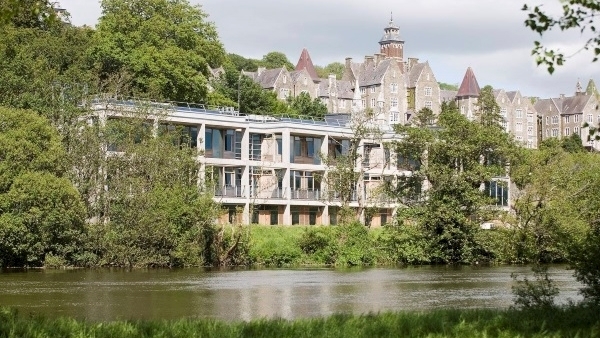
Dr Paul Bolger offers insights into how UCC’s environmental research has won deserved global acclaim.

UCC’s interdisciplinary mode of problem solving

Dr Paul Bolger offers insights into how UCC’s environmental research has won deserved global acclaim.

In 2019, “climate strike” took over from “single use” as the Collins Dictionary phrase of 2019 in a year where awareness on climate change was fired up by young activists.

The Australian bush fires have kept climate change prominent in the news cycle so far in 2020.

Whilst the news cycle can focus on extreme weather events and the impacts of climate change, there is much happening in the world of research, innovation, and technology development that gives us hope that we can adequately respond to climate change and other environmental problems.

Although the challenge is significant and urgent, humans’ ability to invent, innovate, and adapt will serve us well.

In fact, many of the technologies that we need to respond to our sustainability challenges already exist.

Our focus needs to be on implementing the ambitious policies we have in place and supporting societal efforts towards sustainability.

In this regard, our research system and universities need to take a holistic approach which places an increased importance on research for good environmental governance, societal mobilisation, and an economic system which values nature, water, and air.

Universities are uniquely positioned to help address our sustainability challenge but it may require changes in how we undertake research.

Addressing the challenges of climate change, biodiversity loss, or plastic pollution requires knowledge acquired in the separate disciplines of sociology, biology, geography, chemistry, economics, environmental science, history, law, engineering, political science and psychology.

It also requires a concerted cooperative effort from across communities, local authorities, policy makers and industry, who are directly confronted with practical sustainability problems such as inadequate public transport, poor air quality, badly insulated houses, and lack of high quality green spaces.

These approaches are the modus operandi of the Environmental Research Institute (ERI) at University College Cork, which is focused on developing the technologies, tools, services, and policy knowledge to facilitate the necessary transformation to a zero carbon, resource efficient, and sustainable society.

The ERI celebrates its 20th anniversary this year and now integrates more than 400 researchers from different academic disciplines across UCC, all working together.

It hosts six environmental research centres including the MaREI SFI Centre for Energy, Climate, and Marine.

The ERI takes a rather unique “interdisciplinary” approach to problem solving. This is demonstrated by some of its current projects.

One project involves microbiologists, engineers, and biologists using a circular economy approach to dairy processing industry wastewater resulting in a paradigm shift from needing to treat wastewater, to using it as a resource to produce bioplastic, animal food, and biogas.

A different project sees sociologists, governance experts, engineers, and climate scientists engaging with local communities to explore and develop visions of what a zero carbon and climate resilient future might look like for their town.

A different project has atmospheric chemists and public health specialists examining how improved air quality can reduce admissions to hospitals during the winter season.

All these projects involve partnerships with industry, communities and policymakers.

Albert Einstein is reputed to have remarked that “we cannot solve our problems with the same thinking that created them.”

Mitigating and adapting to climate change will involve major transformations and changes in how we generate and use our energy, how we produce and consume food and goods, how we move around — and where we live.

Developing ways to work across disciplines, and involving those who will use and be impacted by the research we generate, will be key to successfully addressing these challenges in the long-term.

x

More in this section

The Business Hub

Newsletter

News and analysis on business, money and jobs from Munster and beyond by our expert team of business writers.

Cookie Policy Privacy Policy Brand Safety FAQ Help Contact Us Terms and Conditions

© Examiner Echo Group Limited