Civilians in Kherson prepare for return of war as localised ceasefire ends
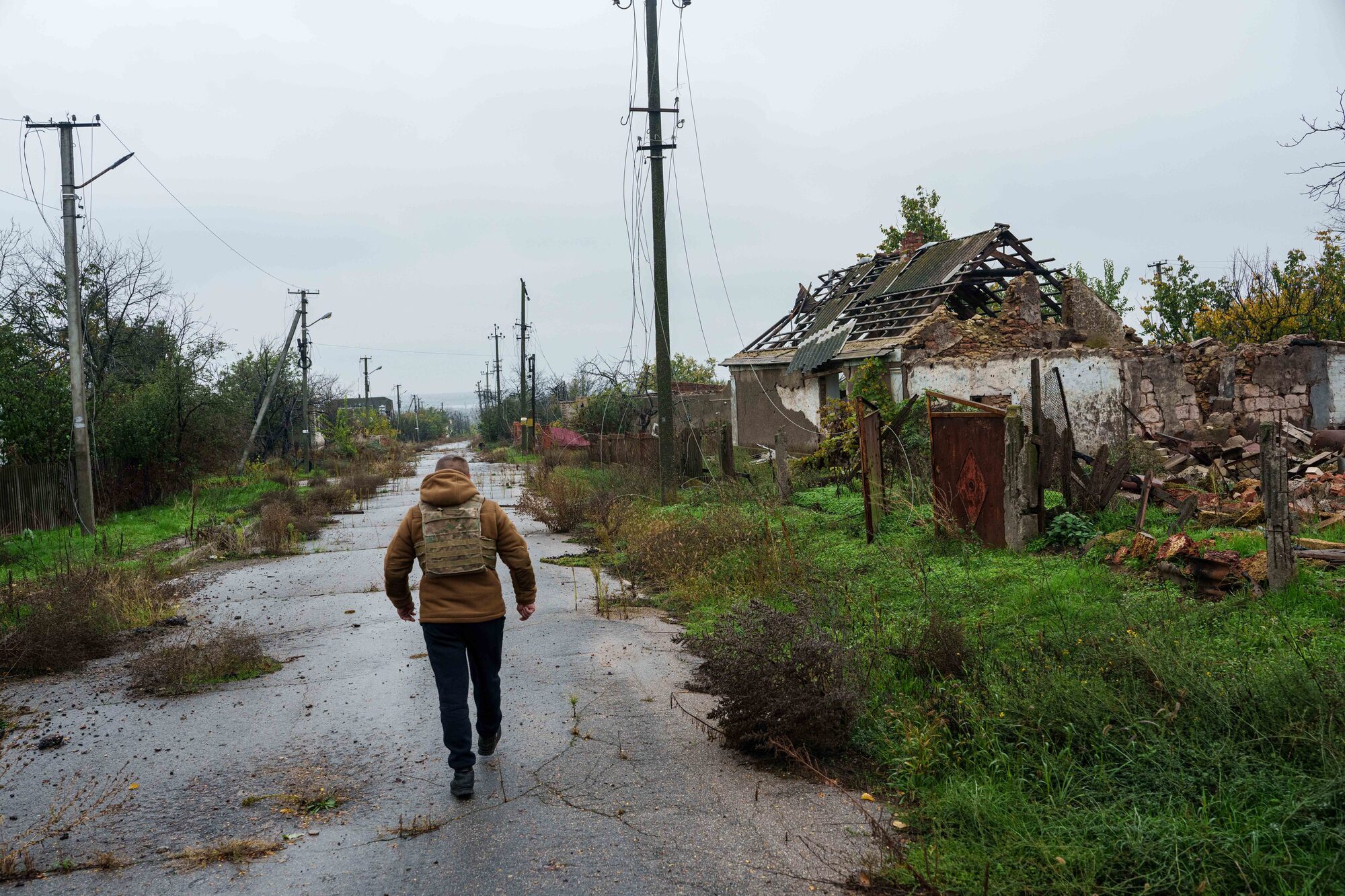
Civilians in Ukraine’s south-eastern Kherson region prepared on Sunday for the end of a localised ceasefire that has marked the most significant truce between Kyiv and Moscow since Russia’s full-scale invasion of Ukraine four and a half years ago.
The White House said US first lady Melania Trump helped to broker the limited truce, which began early Tuesday and is expected to end Sunday evening.
The pause in hostilities allowed besieged residents in the frontline city of Oleshky to be evacuated in a rare joint operation that ended on Saturday.
An estimated 2,000 civilians were in Oleshky when the temporary truce took hold. They were offered the choice of evacuating to territory controlled by Ukraine or Russia, or remaining in the city with replenished food and medical supplies.
For the safety of those who have stayed, exact numbers were not released after the evacuation.
At the Ukrainian border on Saturday, family members waited for a glimpse of their loved ones, while the residents of nearby villages lined the highway waving flags and flashlights to greet the humanitarian convoy.
But Moscow and Kyiv have continued aerial strikes elsewhere, with Ukrainian President Volodymyr Zelenskyy saying on Sunday that Russia continues to target Ukraine’s energy systems ahead of winter.
In a post on social media, Mr Zelensky said that hundreds of thousands of families had been left without power overnight as Moscow sought to exploit Ukraine’s shortage of air defences.
“The intensity of the strikes is extremely high, and the Russians are trying to take maximum advantage of the shortage of ballistic missile interceptors,” he said in a post on X.
Residents in the Ukrainian city of Kherson remained calm on Sunday, despite knowing that the quiet of the localised ceasefire would soon end.
“Don’t be afraid, keep holding on,” Oleksandr Knyha, head of the Mykola Kulish Kherson Regional Academic Music and Drama Theatre, told the audience as he opened a concert.
The theatre performs every Saturday and Sunday. This weekend’s shows fell during the ceasefire, but the company plans to perform next weekend as usual, even as officials warn that Russian forces have brought in more weapons and personnel and some residents expect shelling to intensify.
“Of course, we want peace to finally come,” Mr Knyha said. But “we’ve been working on the front line for four years”, he added, referring to Kherson itself, and the theatre has never cancelled a performance.
“Whatever happens, the show is not cancelled,” he said.
The company now performs in a basement and is equipping an additional bomb shelter. About 100 of the theatre’s 120 staff members work in Kherson, and none has evacuated.
Costume maker Alla Vasylenko, 58, said the silence of the brief truce still frightens her. “Nothing will change. Everything will go back to how it was before the ceasefire, because believing the Russians means not believing yourself,” she said.
She has no plans to leave. “I have 10 dogs, so I can’t leave,” she said. “They urge us to leave, but you need somewhere to go and the means to get there.”
The trip alone would cost 30,000 to 50,000 hryvnias (£492 to £821), a significant sum for her, she said. “Until we liberate the left bank, we have no certainty this will end,” she said, referring to the Russian-occupied part of the region.
For many in Kherson, a city that itself lived through Russian occupation, that belief is the reason they stay.
Mr Knyha is from Oleshky, on the occupied left bank, and used to commute from there to work in Kherson. He has not given up hope of returning home. “That’s also what keeps me here,” he said.
On the last day of the ceasefire, the theatre staged a concert built around a “musical map of Ukraine”, with songs from the Ukrainian peninsula of Crimea, which Russia annexed in 2014, to the Carpathian mountains in Ukraine’s southwest.
“This is also our job – to unite people and give them hope,” Mr Knyha said.
Russian drone attacks continued to target Ukraine’s Kyiv region for a second consecutive day, wounding a woman and damaging homes, energy infrastructure and a retail establishment, regional authorities said.
In its daily report on Sunday, Ukraine’s air force said Moscow’s forces attacked Ukraine with 433 drones overnight, of which 371 were destroyed or suppressed.
Elsewhere, more than 100 Ukrainian drones were shot down over the skies of Russia’s Nizhny Novgorod region east of Moscow, local governor Gleb Nikitin said on Sunday.
Mr Nikitin said an industrial building in the town of Kstovo had sustained “significant damage” but did not give further details. Russian media outlets later reported that the attack sparked a blaze at the Kstovo oil refinery, posting images of black plumes of smoke over the horizon.
Mr Zelensky said on Sunday that Kyiv had also struck a factory used to make missile components and air defence facilities inside Russia’s southern Rostov region.
“We are justly defending ourselves against Russian aggression and doing everything to reduce Russia’s capability to continue it,” Mr Zelensky wrote.

CONNECT WITH US TODAY



Be the first to know the latest news and updates