Three dead and thousands evacuated as Cyclone Arnab hits eastern India
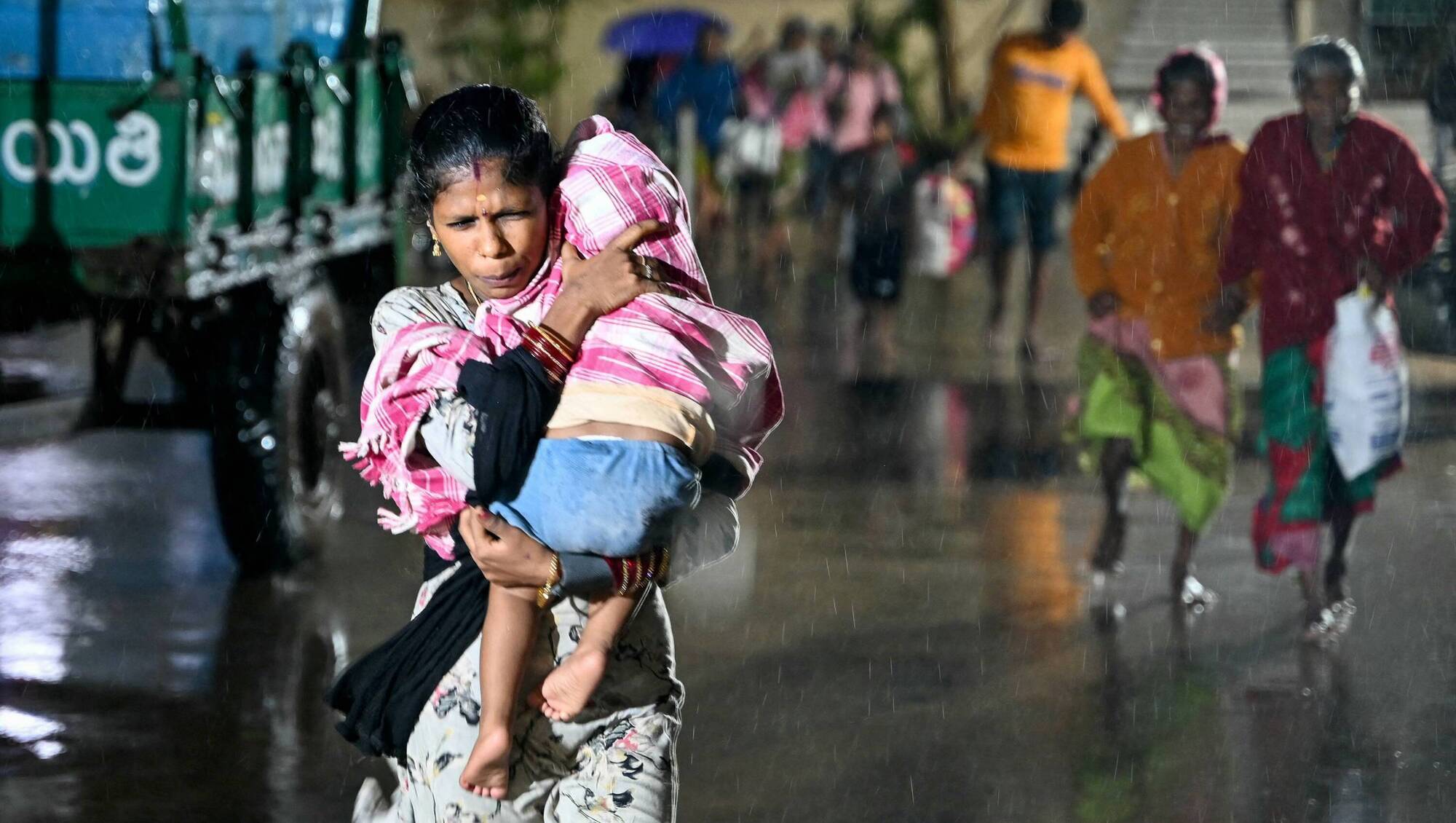
Cyclone Arnab weakened to a “severe” cyclonic storm on Wednesday, the department said in an update. (Photo by Noah SEELAM / AFP via Getty Images)
Three people are reported to have died as Cyclone Arnab dumped heavy rain across India’s eastern state of Andhra Pradesh and caused extensive damage in some parts, after tens of thousands of people were evacuated from vulnerable coastal areas.
Prakhar Jain, head of the state’s disaster management authority, said the cyclone had weakened slightly before landfall earlier on Wednesday but brought heavy rainfall to several coastal districts, triggering widespread disruption in affected areas.
Two women were electrocuted in separate incidents in the port city of Visakhapatnam, while another person was killed when a tree fell in East Godavari district, officials said.
State disaster management officials said on Wednesday morning that wind speeds were up to 84mph.
Officials said the cyclone was expected to weaken further as it moved inland, with wind speeds likely to ease later in the day.
The cyclone left a trail of destruction across the state’s fertile district of Konaseema, which officials said was the worst hit so far.
Banana and coconut plantations suffered extensively and a large number of trees and electricity poles were uprooted, disrupting electricity across the district, officials said.
Fallen trees blocked several roads, and disaster management workers rushed to clear roads and restore connectivity.
About 6,000 electricity poles were uprooted in Konaseema alone, officials said.
The India Meteorological Department said the landfall process was complete and heavy rainfall as well as strong winds would continue under the cyclone’s influence in coastal areas of Andhra Pradesh and parts of southern Odisha.
The rainfall flooded several low-lying areas of the port city of Visakhapatnam.
Cyclone Arnab weakened to a “severe” cyclonic storm on Wednesday, the department said in an update.
Arnab’s outer bands began lashing parts of the Andhra Pradesh coast late Tuesday as the storm intensified over the Bay of Bengal and moved towards an earlier-than-expected landfall.
Authorities began evacuating people from low-lying and flood-prone areas ahead of the cyclone’s landfall.
They also cancelled some train services as heavy rain and gusty winds started lashing parts of the coast.
At least 89,000 people were evacuated in Andhra Pradesh, according to an official statement.
The state’s disaster management authority said more than 12 million people live along the cyclone’s expected path.
Authorities set up more than 2,000 cyclone shelters across 20 districts, while emergency alerts were being sent to the mobile phones of millions of residents, Mr Jain said, according to the Press Trust of India news agency.
More than 30,000 fishing boats were secured along the coast, while nearly 1,100 medical teams were deployed across affected areas to provide emergency assistance, he added.
In the neighbouring state of Odisha, officials planned to evacuate about 48,000 people from areas likely to be affected by the storm.
Meanwhile, Nepal’s disaster agency has warned of heavy rain, lightning and thunderstorms across much of the country, with heavy snowfall, snowstorms and avalanches expected in the northern Himalayan region from late Thursday due to the cyclone affecting neighbouring India.
The National Disaster Risk Reduction and Management Authority advised tourists to avoid high-altitude and Himalayan areas and warned of possible road and air travel disruption.
The warning comes as Nepal continues to recover from devastating flash floods in August that killed more than 1,400 people and left thousands more missing. More flooding was reported earlier this month in northern Nepal.

Check out the Irish Examiner's WEATHER CENTRE for regularly updated short and long range forecasts wherever you are.
CONNECT WITH US TODAY



Be the first to know the latest news and updates