Teenagers confront police as French student protests continue
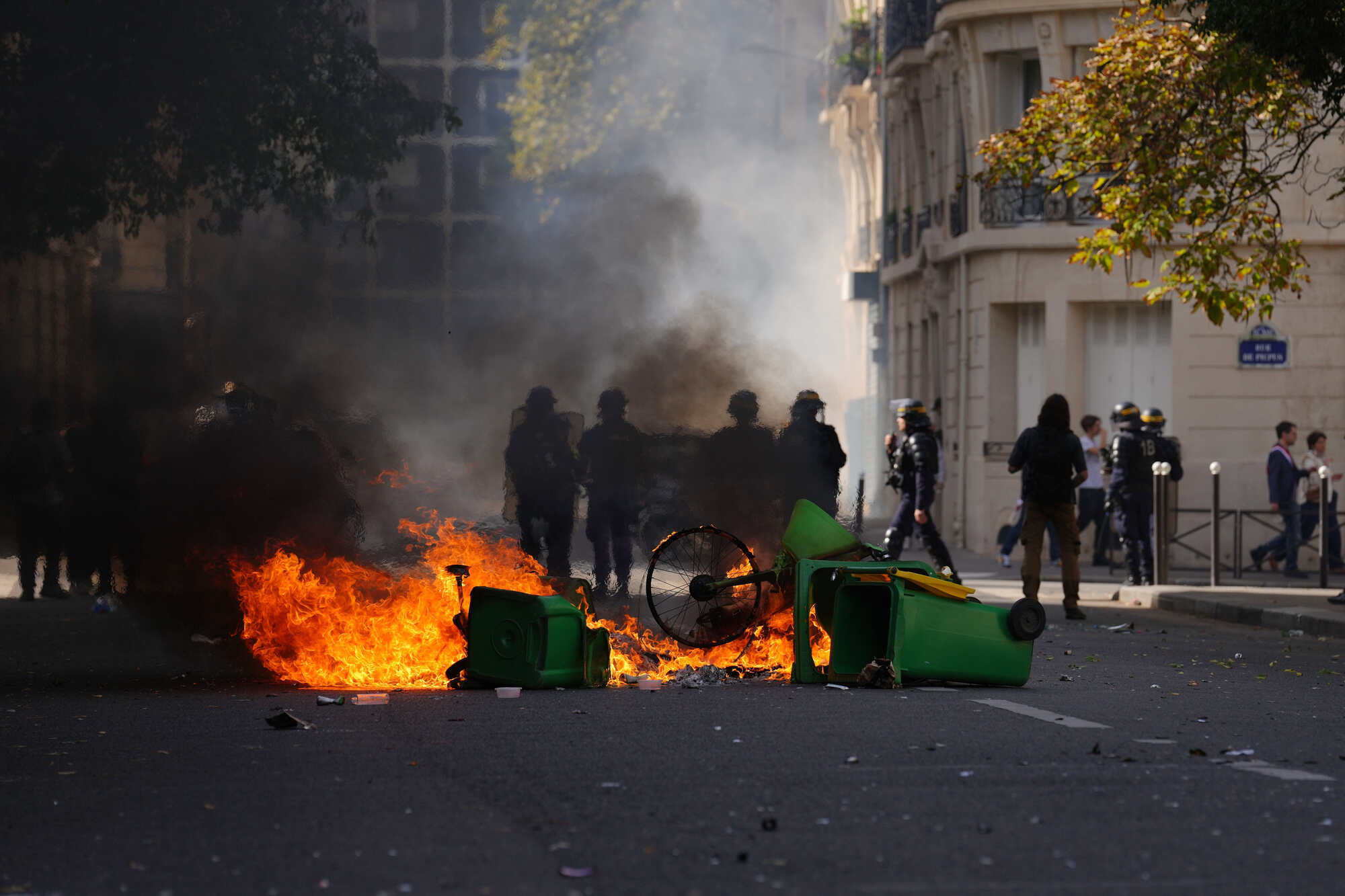
Violent protests involving angry students across France have continued with further scenes of vandalism, fire setting and teenagers confronting police.
Friday brought more of the scenes that have dominated the streets this week, with officers charging, firing tear gas and making more arrests.
By early afternoon, the education ministry reported protests impacting 560 schools.
In a country beset by crises, both foreign and domestic, the eruption and rapid spread of protests by unhappy teenage high schoolers caught France off guard.
The students barricading high-school gates and demonstrating with placards have shown the know-how of veterans, down to wearing masks and googles against police tear gas.
The timing of the protests — with France engaged in a presidential election race — sets them apart. Candidates campaigning to succeed President Emmanuel Macron in May have seized on the demonstrations as a hot political issue.
Although constitutionally barred from seeking a third consecutive term, Mr Macron joined the fray, speaking out against protest violence and political manipulation of the young demonstrators.
The protests first erupted last week in the Paris region and spread nationwide, even to smaller towns.
High schoolers are expressing broad grievances — mainly that schools are under-resourced, with dilapidated facilities and insufficient staff.
Spending on education is one of the costliest items in the state budget that Mr Macron’s government proposed this week, with 65.5 billion euros (£55 billion) set aside for schools in the next year.
Students also complain that school days, which often start at 8am, are too exhausting and the university entrance system too complex. Some university students also joined the protests this week.
Mr Macron’s government has repeatedly said it respects the right to peaceful protest, but it also issued written orders for police to break up protests that block access to schools and to rapidly put a stop to violence and vandalism.
Riot police have liberally used tear gas, wielded batons and made arrests to disperse crowds.
Police and school staff have been targeted with fireworks and other injury-causing projectiles. The interior ministry says acid has been hurled in some cases, and that those intent on destruction and looting have grafted themselves on to the high schoolers’ movement and behaved like “criminals and vandals” instead of “young people legitimately voicing their demands”.
Police made more than 1,900 arrests on Thursday, when 305 officers were hurt, the ministry said.
The protests and confrontations continued on Friday, and unrest spread to neighbouring Belgium where about a dozen schools closed in Liege, a day after violence in the city and six arrests there.
There have been broader concerns in France that the school system is losing ground to those in other countries and failing in its mission to enable children from disadvantaged backgrounds to move up the social ladder.
Performance gaps are growing between highly advantaged and highly disadvantaged students, and overall scores in reading comprehension and maths have plunged, according to the latest Programme for International Student Assessment report, which evaluates students worldwide.
The government banned smartphones from high schools when the school year started in September, with officials arguing that the measure will improve learning. France this year also became the first country in the European Union to ban social media platforms for children under 15, but the country’s top court struck down that measure.
Far-left presidential candidate Jean-Luc Melenchon has positioned himself on the side of the students and has condemned police actions as “savagery” and repressive.
Officers have been suspected of firing crowd-control projectiles which are suspected in some of the injuries that protesters have suffered.
Far-right leader Marine Le Pen has called for broader police powers against rioters, and conservative former prime minister Edouard Philippe, one of Ms Le Pen’s main challengers for the presidency, has condemned people who “break things, burn things or assault people”.


CONNECT WITH US TODAY



Be the first to know the latest news and updates