Pensioner’s eviction sparks mass protest in Madrid over housing crisis
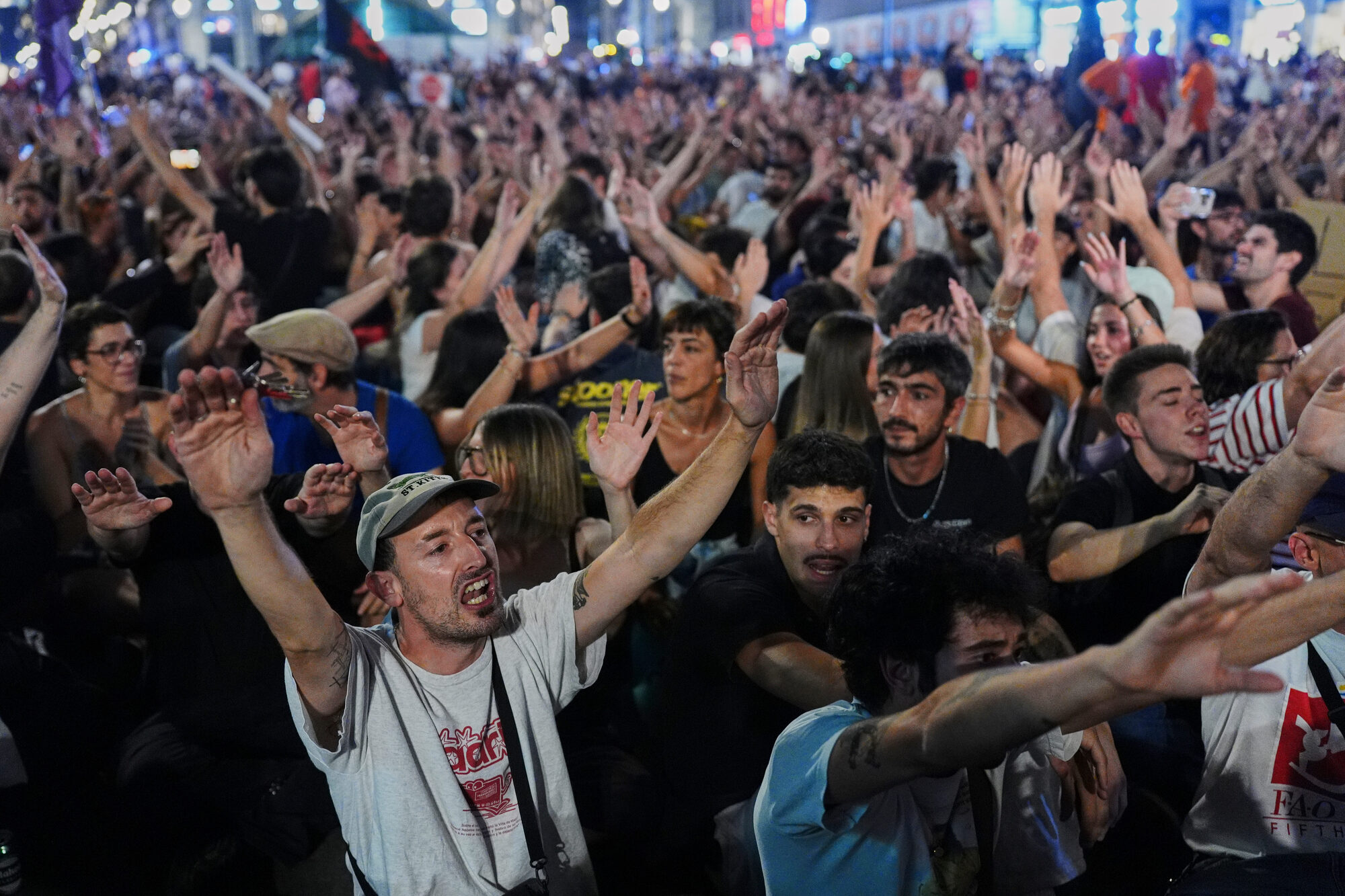
Protesters outraged by the eviction of an 87-year-old woman spent the night camped in Madrid’s historic Puerta del Sol plaza, where more people – including multigenerational families – joined them on Sunday for a second day of demonstrations over Spain’s housing crisis.
Tens of thousands of people marched in Madrid on Saturday to protest against the eviction of María del Carmen Abascal from an apartment in the upscale Retiro neighbourhood which had been her home for decades.
Protesters are demanding protective measures for tenants, anti-fraud rules and a ban on evictions without alternative housing.
Many protesters refused to go home at the end of Saturday’s march, pitching tents in Puerta del Sol to stay through the night.
Alicia del Río, a spokeswoman for the Tenants’ Union, which led the protests, told journalists on Sunday from the plaza that the group “will remain here” until the government passes new laws, including indefinite rental contracts, and stops evictions like that of Ms Abascal.
Ms Del Río said they will camp in the square at least until next Tuesday, when Spain’s Socialist-led government will hold a cabinet meeting and is expected to announce new measures.
Rising costs and a housing shortage are pricing many Spaniards out of the market, despite strong economic growth in Europe’s fourth-largest economy.
Incomes have not kept pace with rising housing costs, and analysts say tourism and immigration-driven population growth in cities have placed further pressure on the limited housing supply.
The Bank of Spain estimated that the country had a shortage of about 550,000 homes last year, with Madrid, Barcelona and Valencia accounting for a substantial share.
The demonstrations in the symbolic Madrid plaza this weekend reminded many in Spain of the historic demonstrations which began on May 15, 2011, when members of the “indignados movement” camped for 28 days, sparking similar sit-ins across the country and the world.
That movement was a reaction to evictions and other economic problems following a global economic crisis, including unemployment, austerity measures and corruption.
Estefania Molina, a political scientist and columnist, said the stakes of popular frustration are growing.
She said in 2011, “people protested because they couldn’t buy an apartment”, but today, “the protest is about not being able to rent a room in someone else’s home”.
Taken out of her apartment on a stretcher, Ms Abascal, referred to by protesters as “Maricarmen”, was greeted by supporters as she was loaded into an ambulance.
Spanish media reported Ms Abascal’s father first rented the apartment in 1956 and that she remained there as a tenant under rent controls after her parents died.
The building changed ownership in 2018, and Ms Abascal was offered the opportunity to buy the apartment but could not afford it, according to the Madrid Tenants’ Union.
Urbagestión, an investment fund that later bought the unit, raised her monthly rent from 500 euro (£430) to 2,650 euro (£2,280). It subsequently lowered the rent to 1,650 euro (£1,420), which Ms Abascal still could not afford on her pension, the union said.
“Maricarmen has been, in a way, the last straw that sparked this social unrest,” said protester Simón de la Riva, 43, a teacher.
Spain ranks near the bottom of countries in the Organization for Economic Co-operation and Development for subsidised public rental housing, which represents less than 2% of the country’s housing stock. The European Union average is 8%.

CONNECT WITH US TODAY



Be the first to know the latest news and updates