Iran warns of military ship ban in Strait of Hormuz under potential Oman deal
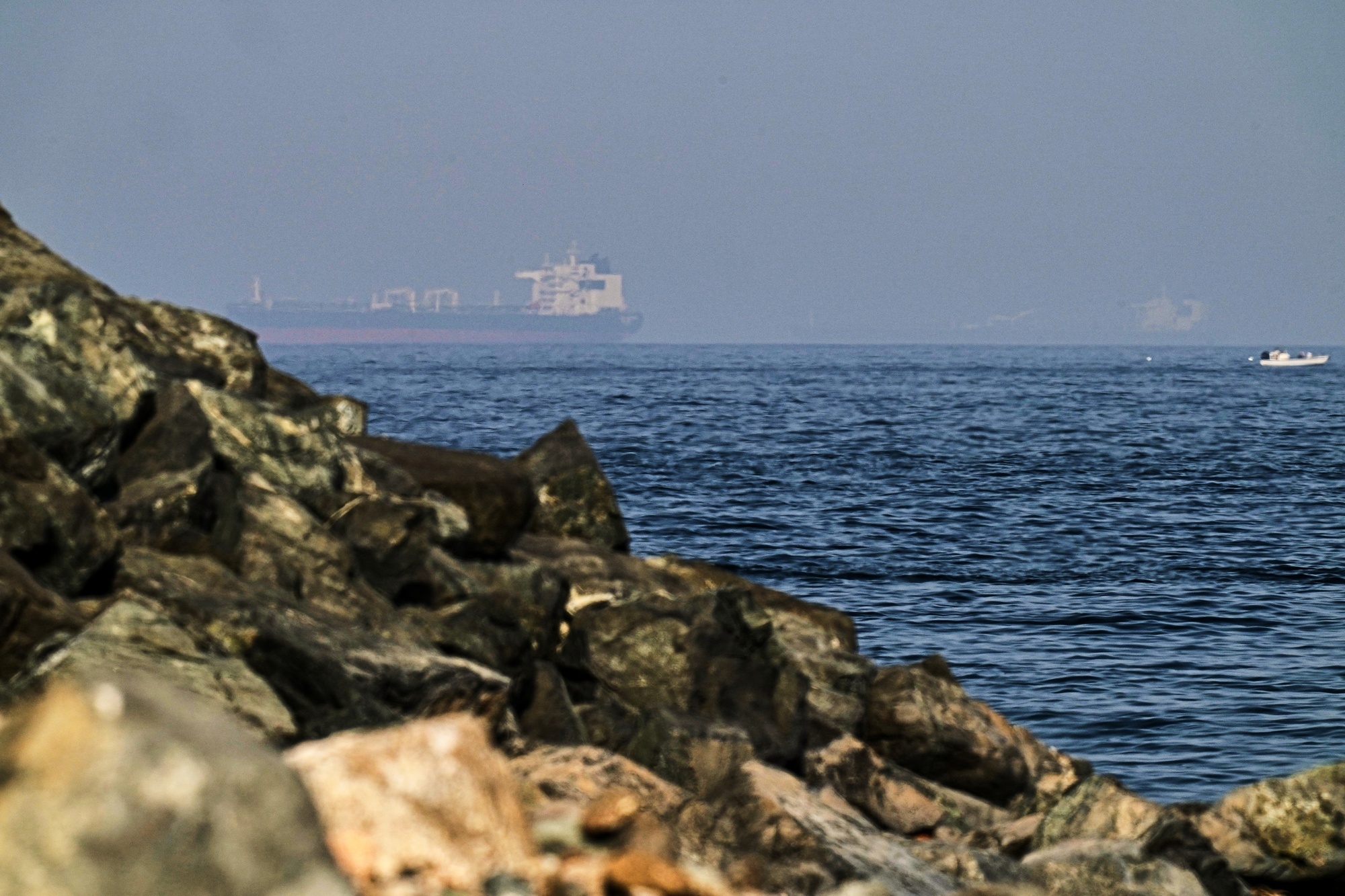
Iran will not allow military vessels to transit through the Strait of Hormuz under an agreement the Islamic Republic is currently negotiating with Oman, Iran’s deputy foreign minister said.
The two countries have reached an understanding on a new framework for managing ship traffic in the Strait that would exclude military vessels, Kazem Gharibabadi told state TV late on Tuesday night.
“If the understanding becomes binding, no military vessel will be permitted to pass through the Strait of Hormuz,” he said.
“No military vessel at all.”
Mr Gharibabadi did not provide further details about military traffic.
He described the proposed commercial route through the vital shipping waterway.
Traffic into the Persian Gulf from the Gulf of Oman would pass entirely through Iranian waters, while the outbound route would pass partly through Iranian waters and partly through Oman’s territorial waters, he said.
The Trump administration told Oman it opposed parts of the evolving deal, including the joint Iranian and Omani management of the exit route out of the passage that is critical to global supplies of oil and natural gas.
US President Donald Trump last week threatened to bomb Oman if it “gets in the way”.
It comes as Dubai International Airport, one of the world’s busiest travel hubs, said on Wednesday it saw a sharp drop in passengers during the second quarter as the war with Iran disrupted air travel and prompted many travellers to choose routes that avoided the Middle East.
The airport recorded 13 million passengers in the second quarter, down 31.3% in passenger traffic in the first-half of 2026 compared to the same period last year, with 31.5 million passengers.
Air traffic in the United Arab Emirates and elsewhere in the Gulf region was disrupted by shutdowns and restrictions since February 28.
The airport itself suffered minor damage in attacks from Iran.
Chief executive Paul Griffiths noted, however, that passenger volume has steadily increased each month in the second quarter, and said the momentum is expected to continue in the second half.
“The trajectory now is universally positive,” he told The Associated Press.
Meanwhile, the US aircraft carrier USS Abraham Lincoln will make a stop in Thailand after its gruelling deployment in the Middle East, Thai officials said, without specifying a date or port for security reasons.
The Lincoln has been deployed during the Iran war.
Its very lengthy deployment, including a record-setting uninterrupted time at sea of more than 250 days, raised concerns about deteriorating mental health among the crew.
A statement from the Royal Thai Navy on Tuesday said a short stopover by US Navy ships was for recuperation and that no military exercises would be carried out during the visit.


CONNECT WITH US TODAY



Be the first to know the latest news and updates