Thousands of French wildfire evacuees return home as cooler weather moves in
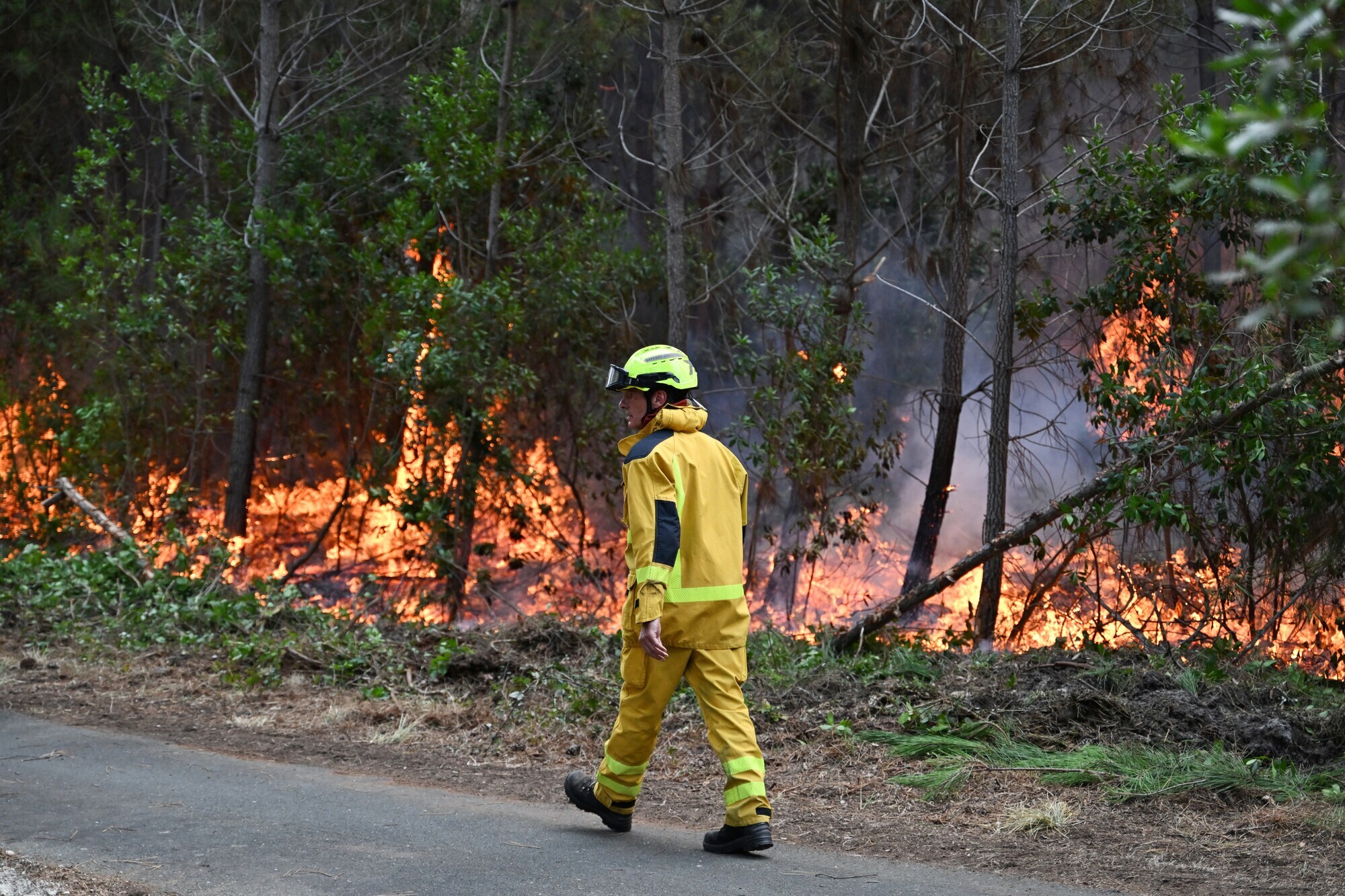
French authorities gave the go-ahead on Thursday for 84,000 evacuees forced out by a huge wildfire to go back to their homes in south-west France.
It is the strongest sign yet that firefighters are turning a corner in their battle against the flames that have burned an area four times the size of Paris.
Europe is enduring one of its hottest summers on record, with wildfires breaking out in areas stretching from the Atlantic coast to the eastern Mediterranean – and hundreds of thousands of people ordered to evacuate from homes and vacation destinations.
Firefighters fanned out to battle infernos in places like England, Spain, and Turkey, while in Romania, officials at the state-owned Cernavoda nuclear power plant shut down both of its reactors because of the low level of Danube River waters used to cool them.
The returns authorised in France covered nine localities that had been evacuated, including several where firefighters and water-dropping planes had battled flare-ups just the day before.
Higher humidity, cooler temperatures and slight rain have raised hopes that Thursday could be a decisive step on the way to vanquishing the fire.
“We’re on the right track,” said Sophie Brocas, prefect of the Gironde region, which includes the city of Bordeaux.
Nearly two-thirds of the 224,000 people initially ordered to evacuate their homes in south-west France have now been allowed to go home.
Some 60,000 people who had been evacuated from three Bordeaux suburbs were given the go-ahead to return on Tuesday.
Evacuees immediately streamed back to emptied towns and villages, among them 50-year-old Sanachit Pho Ne Keo and his wife.
They were relieved to discover that apart from black ash on an outside terrace, their home in Martignas-sur-Jalle had not been damaged or looted.
“Everything seems okay and it’s a good feeling,” he said.
“The fire was pretty close, the last smoking embers are still close … but we could’ve expected worse.”
Local officials reported a “rather calm” night, with a fire that has not grown beyond the 42,000 hectares already affected. Some expressed hope that hard-hit businesses could soon get back to work.
The regional prefecture said returning evacuees must keep their phones on for evacuation alerts and should pack in case they need to leave again.
Authorities also said the A63 highway that has been closed since the weekend was reopening on Thursday afternoon, clearing a major artery for road traffic with Spain and holidaymakers as France enters its peak August holiday period.
Other European countries have sent firefighting resources into the region. French interior minister Laurent Nunez announced further boosts in the number of firefighters engaged — now 3,300 — backed by two dozen planes and helicopters that dump water and fire retardant onto smouldering woodlands.
In a first, police water cannons usually used for riot control have been deployed in to help extinguish embers and flare-ups, Mr Nunez said.
Crews using heavy diggers continued ripping up trees and bushes to carve broad stretches of barren land between woodlands that have burned and those that have been spared, trying to box in the giant blaze with new firebreaks.
Emergency crews have set fires deliberately to fight the blaze to burn away scrub that could fuel the wildfire.
Temperatures that peaked around 40C a day earlier were dropping on Thursday, set to top out at 27C along the coast.
An “orange” heat wave alert — the second-highest level after “red” — was lifted shortly before dawn.
In Spain, which was battling one of its largest wildfires on record this week, firefighters tackled multiple blazes in places like north-western Zamora and eastern Castellon on Thursday, even as they made progress the day before to stabilise the two main fires of concern in the Madrid region and Avila.
Spanish prime minister Pedro Sanchez warned of a new heatwave, saying: “Let us all exercise the utmost caution and prevention, as some of these fires are caused by human recklessness.”
At the peak of the evacuations, a third of a million people were driven from homes and vacation sites in France and Spain.
CONNECT WITH US TODAY



Be the first to know the latest news and updates