Twelve dead in Spanish wildfire as Europe continues to suffer record heatwaves
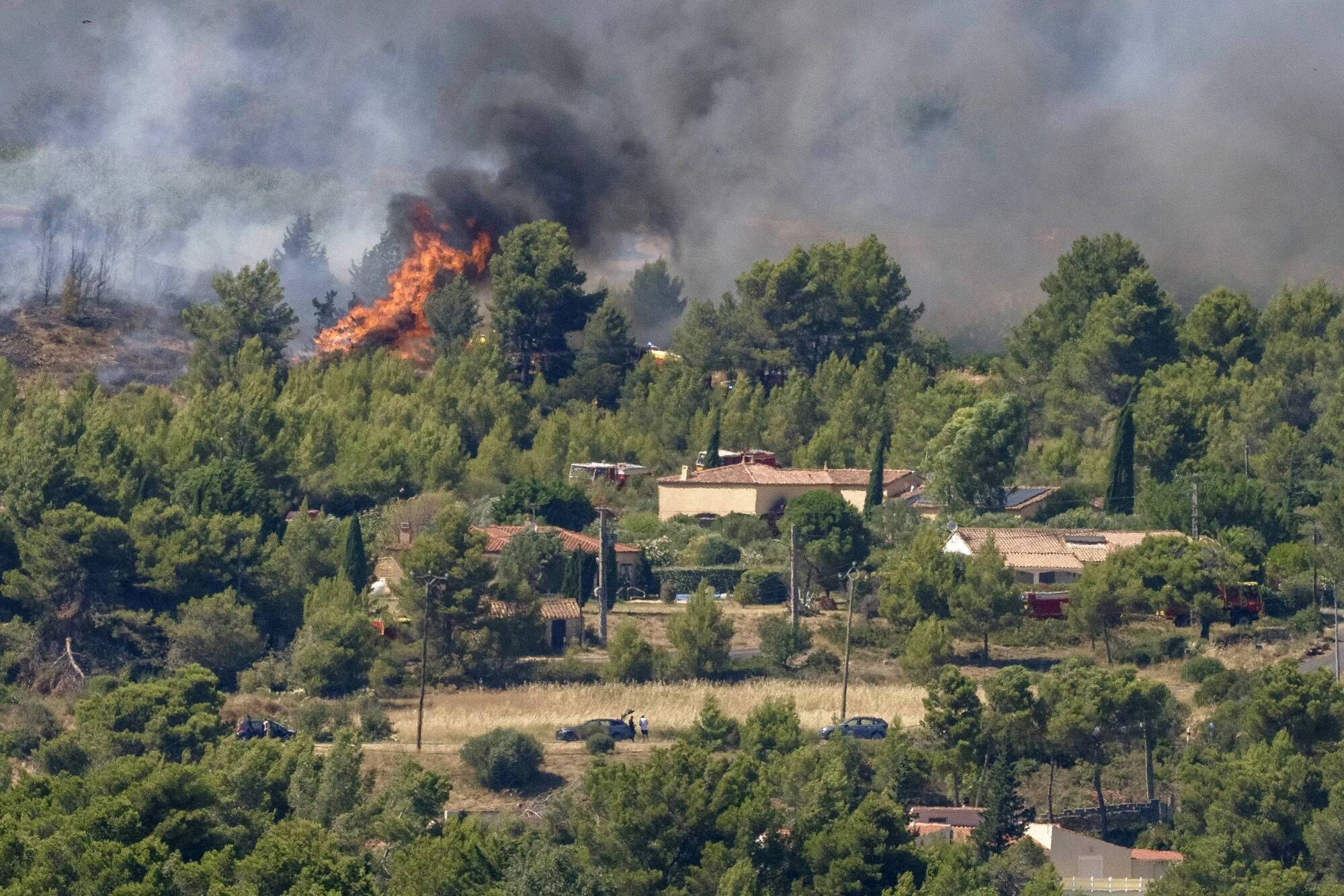
Wildfires have impacted Spain and France in recent weeks. (Photo by Idriss Bigou-Gilles / AFP via Getty Images)
Twelve people were reported killed in a wildfire in Almeria in southern Spain, as about 150 firefighters battled the blaze, which broke out amid soaring temperatures.
“The number of people who died in the fire in Los Gallardos has risen to 12 after the confirmation of six more deaths,” the regional government of Andalusia said in a statement.
The deaths took place in the hamlet of Bedar, the regional government said in a statement, adding that the fire injured at least six people, including a woman who suffered burns and another person with smoke inhalation who was taken to hospital.
Read More
Four others were treated at the scene for minor burns and respiratory problems caused by heavy smoke.
Authorities have not confirmed the cause of the fire, but witnesses told officials the blaze may have started after a power line fell, igniting dry vegetation before spreading rapidly through surrounding woodland.
Roads were closed and residents evacuated as the fire spread, with about 50 people housed in a cultural centre.
Spain’s military emergency unit, which is deployed in major emergencies, was due to join firefighting efforts in the coming hours.
Inflamed by carbon pollution, the deadly June heatwave helped push surface air temperatures for the region 3.06C above their average from recent decades, according to the EU’s Copernicus climate monitoring service.
Globally, June 2026 was 0.56C hotter than the 1991-2020 average and 1.39C hotter than pre-industrial levels, making it the second-warmest June on record, the agency found. The planet’s oceans were hotter than scientists had ever seen.
“Together, these records reflect a climate system continuing to accumulate heat,” said Samantha Burgess, a climate scientist at Copernicus. “The result is increasingly intense heatwaves, a persistently warm ocean, and growing risks for people, ecosystems and infrastructure.”
Western Europe is facing its third heatwave in six weeks and widespread dryness is helping small wildfires explode into unchecked blazes. Copernicus said the succession of heatwaves illustrated “the growing challenge” posed by worsening heat extremes.
Raging infernos have laid waste to large areas of southern Europe in recent days, prompting the EU to scramble firefighters and water-bearing planes to help national services overwhelmed by simultaneous blazes. Data published on Tuesday shows EU wildfires have burned 56% more land than usual.
Deirdre Lowe, meteorologist with Met Éireann, said the country will see “heatwave conditions” following five consecutive days of temperatures in excess of the mid to high 20s.
With a weather advisory in place until early next week, the public has been warned of the potential for uncomfortable sleeping conditions, heat stress, and dehydration, especially for the vulnerable and elderly, and animal welfare issues.
The UV index is expected to be high to very high, Met Éireann warned.
At Fota Wildlife Park, staff are feeding the animals frozen food to help them stay cool.

Blocks of sugar-free cordial and grapes are thrown into the enclosures to help some animals.
Liam McConville, senior ranger at Fota Wildlife Park, said: “Giving them iced treats, freezing their food into blocks of ice, also gives them extra water without them even realising they’re keeping themselves cool and hydrated.”

Barcelona set a new heat record on Wednesday with temperatures of 40.5C, Spanish meteorologists said, while in France a 22-year-old firefighter died after tackling a blaze in the Alps, the French interior ministry reported.
In Britain, where Met Office scientists warned seas are facing an “extreme” marine heatwave on Wednesday, daytime temperatures on land were expected to reach highs of 34C yesterday. While not as scorching as June’s record-breaking heat, the high temperatures are expected to drag out over a sweltering 10 days.
The Met Office said a defining feature of last month’s heatwave was “exceptionally warm” overnight temperatures, with frequent tropical nights helping to drive the highest average June minimums on record.
On Tuesday, a poll found it led to “mass sleep deprivation”, with two in three people struggling to sleep.
“To see temperatures like this in the UK in June is sobering,” said Stephen Belcher, chief scientist of the Met Office. “Events like this bring home the implications of climate change.”
Heatwaves have grown hotter and stronger as fossil fuel pollution and the destruction of nature have baked the planet. Scientists have urged a quick shift to a clean economy as well as adaptation to increasingly violent weather extremes.
Additional reporting from The Guardian

Check out the Irish Examiner's WEATHER CENTRE for regularly updated short and long range forecasts wherever you are.
CONNECT WITH US TODAY



Be the first to know the latest news and updates