Italy’s top diplomat tells Rubio that Europe needs America and vice versa
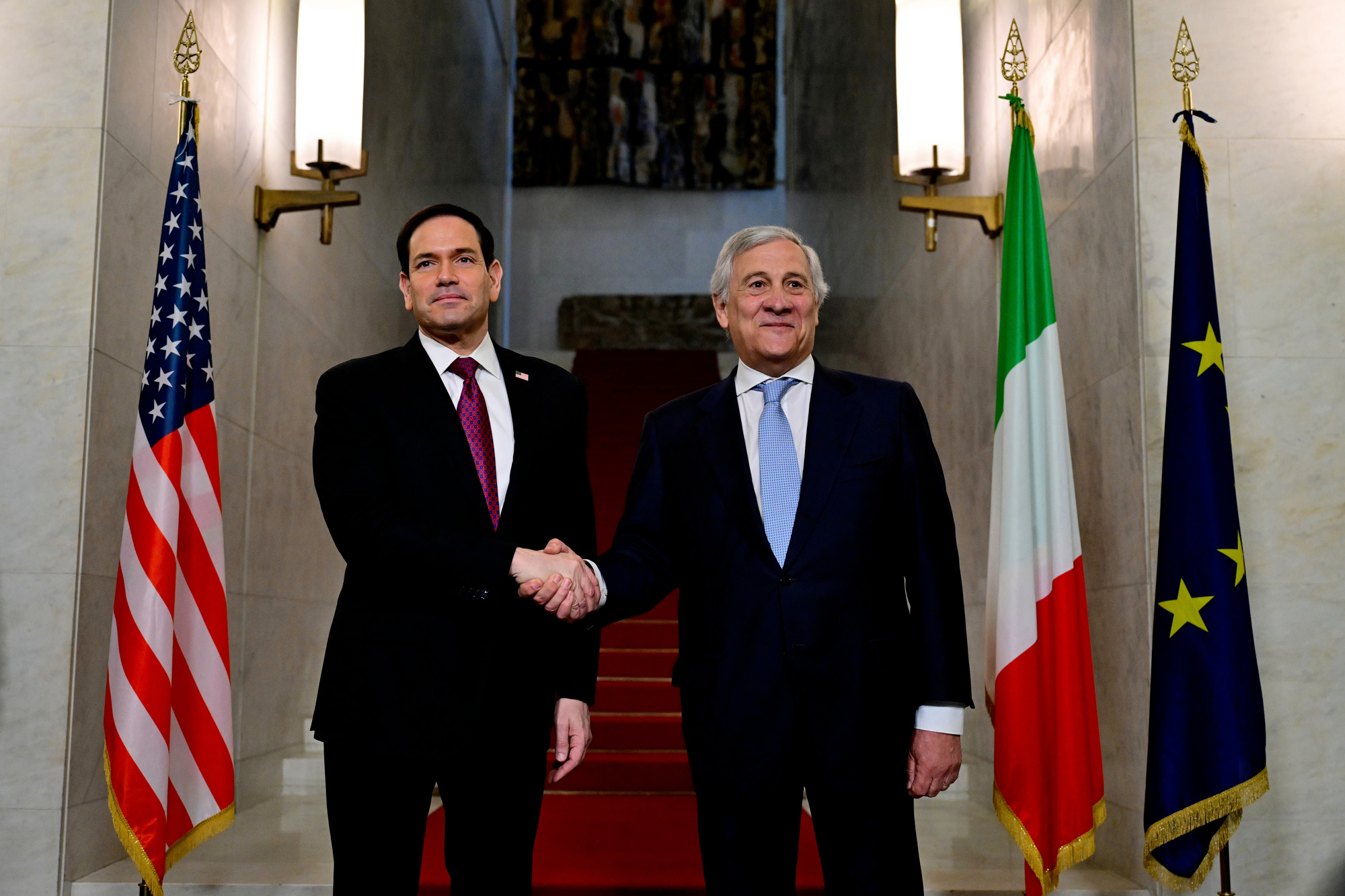
Italian foreign minister Antonio Tajani said he told US secretary of state Marco Rubio that Europe needs the United States, and vice versa, as America’s top diplomat wrapped up two days of fence-mending talks in Italy and the Vatican following weeks of tensions over the US-Israeli war in Iran.
Mr Tajani reaffirmed strong transatlantic ties and said he hoped “tensions have been calmed” with Mr Rubio’s visit.

He said the two had discussed the Iran war and spillover into Lebanon, as well as the situation in Venezuela and Cuba. The US secretary of state is also meeting Italian Premier Giorgia Meloni.
“I believe things can go in the right direction,” Mr Tajani said.
“I am convinced Europe needs America – Italy needs America – and the United States also needs Europe and Italy.”
American president Donald Trump’s tariffs, his complaints about Europe’s unwillingness to help the US with the Iran war and his attacks on Pope Leo XIV have fuelled weeks of sharp disagreements over trade and defence cooperation between the two traditionally strong allies.
Mr Tajani reaffirmed that Italy stood ready to send in its navy to help de-mine the Strait of Hormuz once a permanent ceasefire is reached with Iran, and to maintain its already strong presence in Lebanon with the UN peacekeeping mission.
He said he told Mr Rubio that Italy considers the presence of US troops in Europe to reinforce Nato as important – a reference to Mr Trump’s threats to pull back America’s troops.
Mr Trump has criticised both the Pope and Italy’s government for opposing the Iran war. Ms Meloni has called the US-Israeli bombing “illegal” and said Mr Trump’s remarks about the pontiff were “unacceptable”.
Met with @Pontifex to underscore our shared commitment to promoting peace and human dignity. pic.twitter.com/BIZ9SfW5nY
— Secretary Marco Rubio (@SecRubio) May 7, 2026
The US leader responded by accusing Ms Meloni of lacking courage and being “negative” on helping the US with the war. Ms Meloni had long been seen as one of Mr Trump’s top allies in Europe, but Mr Trump has openly said their relationship has cooled.
The US has announced a decision to pull 5,000 military personnel from Germany and Mr Trump has threatened to withdraw more troops from Italy and Spain over their stance on the war.
Italy, a key logistics hub for US and allied operations in the Mediterranean, the Middle East and North Africa, could see its role affected if troop levels are reduced, raising concerns about Nato’s posture in southern Europe.
Defence cooperation had already been already tested in late March, when Italy declined to allow US bombers bound for the Middle East to land at Sigonella base in Sicily without parliamentary approval.
Italy’s Constitution and treaties lay out the precise ways in which the bases can be used: They allow logistics and training operations within a Nato framework, but generally exclude direct offensive operations, such as bombing, unless specifically authorised.
Ms Meloni and Mr Tajani have repeatedly said Italy does not want to participate in the Iran conflict, and that if the US seeks permission to use Italian bases for offensive purposes, any decision must be approved by the Italian parliament, where opposition to the war is strong.
At stake for Rome are both its security partnership with Washington and the economic impact of the war. Ms Meloni has warned the closure of the Strait of Hormuz is driving up energy costs and squeezing household purchasing power, while potential US tariff threats have raised concerns for Italy’s export-driven economy.
Ms Meloni is reeling from a referendum defeat in March and faces domestic opposition to the war, complicating her position.