Iranian foreign minister leaves Pakistan without meeting US envoys
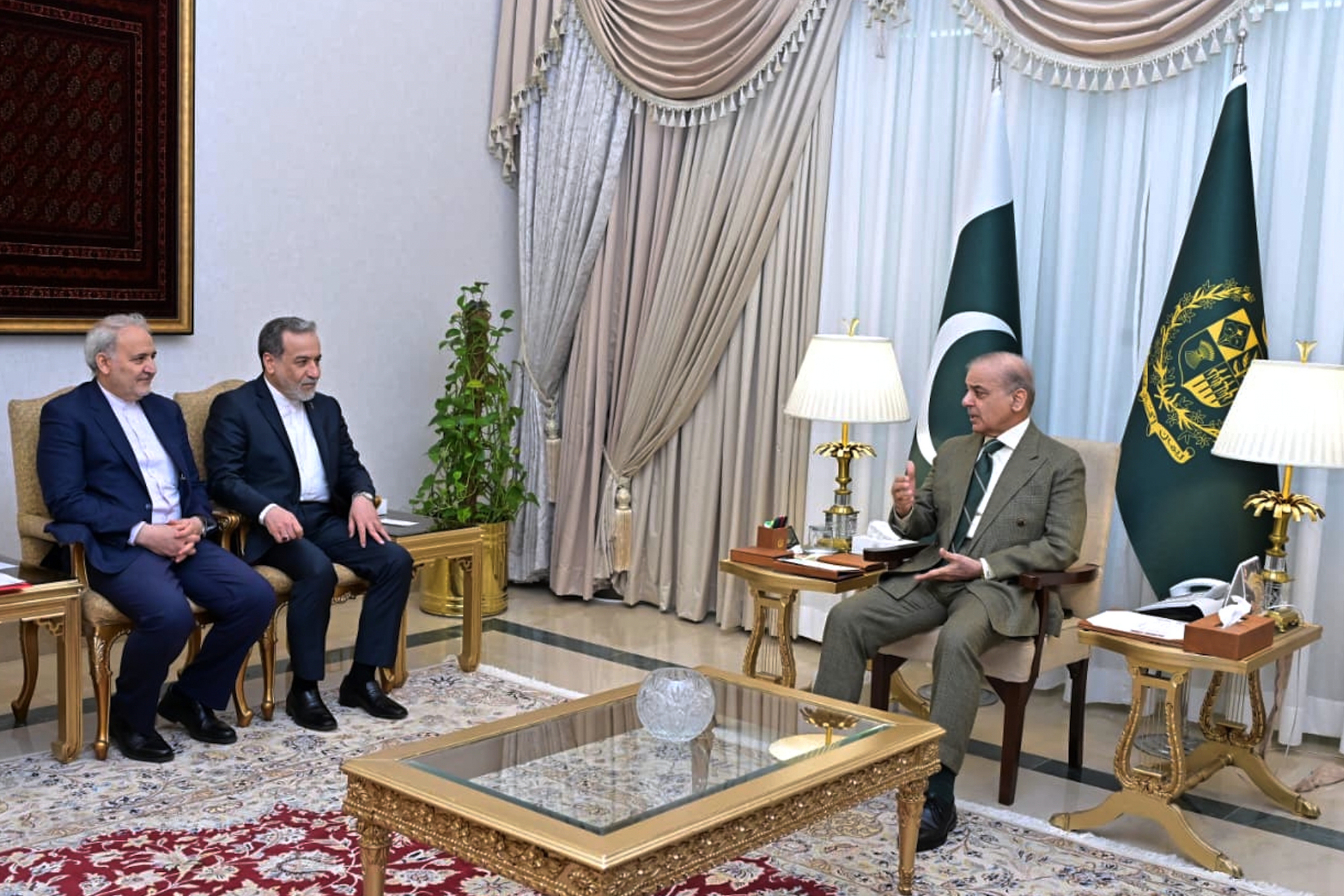
Iranian foreign minister Abbas Araghchi left Pakistan on Saturday evening as officials in Islamabad attempted to facilitate a second round of talks between the United States and Iran.
Mr Araghchi met Prime Minister Shehbaz Sharif, Army Chief Field Marshal Asim Munir and other senior officials, two Pakistani officials said.
The Iranian minister wrote on Telegram that they spoke about regional developments, including Iran’s red lines for negotiations.
He did not offer details but said Tehran would continue engaging with Pakistan’s mediation efforts “until a result is achieved”.

It is unclear when US President Donald Trump’s envoys Steve Witkoff and Jared Kushner, expected to lead a US negotiation team, were due to arrive in Islamabad or if they have even left Washington, DC.
An open-ended ceasefire has paused most fighting but the economic fallout grows, with global shipments of oil, liquefied natural gas, fertiliser and other supplies disrupted by the near-closure of the Strait of Hormuz.
Also on Saturday, Iran resumed commercial flights from Tehran’s international airport for the first time since the war began with US and Israeli strikes two months ago.
Flights were scheduled to depart for Istanbul, Oman’s capital of Muscat and the Saudi city of Medina, according to Iran’s state-run television.
Iran partly reopened its airspace earlier this month due to the ceasefire.
Islamabad was in near-lockdown ahead of the expected talks and residents struggled to commute even short distances due to checkpoints, road closures and diversions.
Pakistan has been trying to get the US and Iran back to the table since Mr Trump this week announced an indefinite extension of the ceasefire, honouring Islamabad’s request for more diplomatic outreach.
The White House on Friday said Mr Trump was sending Mr Witkoff and Mr Kushner to meet with Mr Araghchi. But Iran’s foreign ministry said any talks would be indirect and Pakistani officials would convey messages.
The first round of talks in Pakistan, led on the US side by Vice President JD Vance, lasted more than 20 hours and were face to face, the highest-level direct talks between the long-time adversaries since the Islamic Revolution in 1979.

Iranian officials have openly asked how they can trust the US after talks last year and early this year over Tehran’s nuclear programme ended with it being attacked by the US and Israel.
Mr Araghchi and Mr Trump’s envoys held hours of indirect talks in Geneva on February 27 but walked away without a deal. The next day, Israel and the United States started the war.
The price of Brent crude oil, the international standard, is still nearly 50% higher than when the war began because of Iran’s grip on the Strait of Hormuz, a strategic waterway through which a fifth of the world’s oil passes in peacetime.
Iran attacked three ships this week while the US maintains a blockade on Iranian ports. Mr Trump has ordered the military to “shoot and kill” small boats that could be placing mines.
German defence minister Boris Pistorius said on Saturday his country is sending minesweeper ships to the Mediterranean to help remove Iranian mines from the Strait of Hormuz once hostilities end.
The squeeze on shipments through the strait has rippled through global maritime trade, including through the Panama Canal nearly halfway around the world.
Since the war began, authorities say at least 3,375 people have been killed in Iran and more than 2,490 people in Lebanon, where new fighting between Israel and the Iran-backed militant group Hezbollah broke out two days after the Iran war started.
Additionally, 23 people have been killed in Israel and more than a dozen in Gulf Arab states. Fifteen Israeli soldiers in Lebanon, 13 US service members in the region and six members of the UN peacekeeping force in southern Lebanon have been killed.
Mr Trump announced on Thursday that Israel and Lebanon had agreed to extend a ceasefire between Israel and Hezbollah by three weeks. Hezbollah has not participated in the Washington-brokered diplomacy.
CONNECT WITH US TODAY



Be the first to know the latest news and updates