LIVETrump announces two-week ceasefire as Iran says talks to begin soon
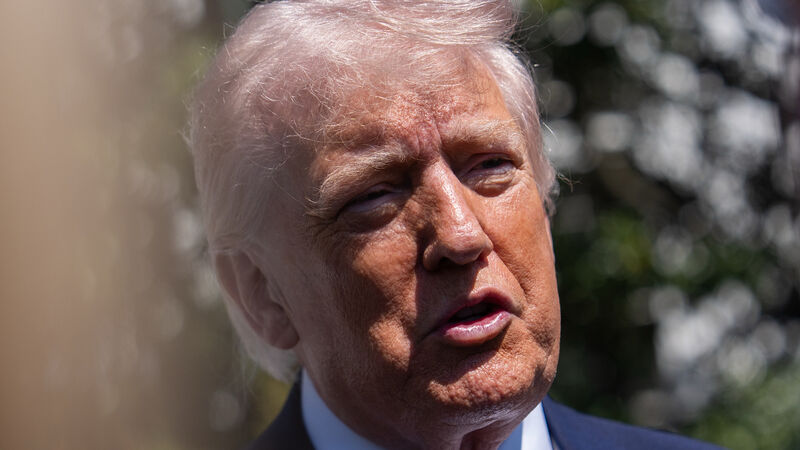
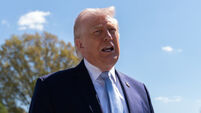
Donald Trump announced that a ceasefire agreement had been mediated through Pakistan. Picture: AP Photo/Julia Demaree Nikhinson.
Donald Trump says the US has won a "total and complete victory" after agreeing to a two-week ceasefire deal with Iran.
"Total and complete victory. 100 percent. No question about it," Mr Trump told the AFP in a brief call when asked if he was claiming victory with the ceasefire.
This comes as the US and Iran agreed to a two-week conditional ceasefire on Tuesday evening after a last-minute diplomatic intervention led by Pakistan, canceling an ultimatum from Donald Trump for Iran to surrender or face widespread destruction.
He also insisted that Iran's remaining nuclear material would be covered by any peace deal, the report said.
"That will be perfectly taken care of, or I wouldn't have settled," Mr Trump told AFP without giving any specifics about what would happen to the uranium.
Read More
Mr Trump indicated in his latest post that the United States will help with the buildup of shipping traffic in the Strait of Hormuz.
A temporary halt in fighting and the reopening of Hormuz would allow Middle Eastern exporters to ship significant volumes of oil that have been trapped inside the Gulf since hostilities began.
Around 130 million barrels of crude oil and 46 million barrels of refined fuels are currently floating on roughly 200 tankers in the region, according to data from analytics firm Kpler.
Oil fell below $100 per barrel on Wednesday after Mr Trump said he had agreed to a two-week ceasefire with Iran that was subject to the immediate and safe reopening of the Strait of Hormuz.
A spokesperson for the office of Israeli Prime Minister Benjamin Netanyahu said on social media: "Israel supports President Trump's decision to suspend strikes against Iran for two weeks subject to Iran immediately opening the straits and stopping all attacks on the US, Israel and countries in the region.
"Israel also supports the US effort to ensure that Iran no longer poses a nuclear, missile and terror threat to America, Israel, Iran's Arab neighbors and the world.
The United States has told Israel that it is committed to achieving these goals, shares by the US, Israel and Israel's regional allies, in the upcoming negotiations.
"The two-weeks ceasefire does not include Lebanon."
Just hours before the announcement of the ceasefire, Mr Trump had written on Truth Social: “A whole civilization will die tonight, never to be brought back again. I don’t want that to happen, but it probably will.” B-52 bombers were reported to be en route to Iran before the ceasefire agreement was announced.
But by Tuesday evening, Trump announced that a ceasefire agreement had been mediated through Pakistan, whose prime minister Shehbaz Sharif had requested the two-week peace in order to “allow diplomacy to run its course”.
Read More
Trump wrote in a post that “subject to the Islamic Republic of Iran agreeing to the COMPLETE, IMMEDIATE, and SAFE OPENING of the Strait of Hormuz, I agree to suspend the bombing and attack of Iran for a period of two weeks”.
In the two weeks, Trump said, he believed the US and Iran could negotiate over a 10-point proposal made by Tehran that would allow an armistice to be “finalized and consummated”.
“This will be a double sided CEASEFIRE!” he continued.
Iran’s foreign minister, Abbas Araghchi, issued a statement shortly after Trump’s announcement saying Iran had agreed to the ceasefire.
“For a period of two weeks, safe passage through the Strait of Hormuz will be possible via coordinating with Iran’s Armed Forces,” he wrote.
The sudden about-face will allow Trump to step back as the US war in Iran has dragged on for five weeks with little sign that Tehran is ready to surrender or release its hold on the strait of Hormuz, a conduit for a fifth of the global energy supply, where traffic has slowed to a trickle.
Israel will also agree to the two-week ceasefire, Axios reported, citing an Israeli official, adding that the ceasefire would enter effect as soon as the blockade of the strait of Hormuz ceased.
Trump had earlier rejected the 10-point plan as “not good enough” but the president has set deadlines before and allowed them to pass over the five weeks of the conflict. Yet he insisted on Tuesday the ensuing hours would be “one of the most important moments in the long and complex history of the World” unless “something revolutionarily wonderful” happened, with “less radicalized minds” in Iran’s leadership.
Amir-Saeid Iravani, Iran’s representative at the UN, said that Trump’s threats constituted “incitement to war crimes – and potentially genocide”.
During a security council session on the strait of Hormuz, Iravani said: “Iran will not stand idle in the face of such egregious war crimes. It will exercise, without hesitation, its inherent right of self-defence and will take immediate and proportionate reciprocal measures.” Through his spokesperson, the UN secretary-general, António Guterres, issued a reminder on Monday that attacking civilian infrastructure is banned under international law, but Trump declared on the same day he was “not at all” concerned about being called a war criminal.
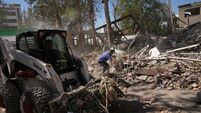
In the hours before Trump’s deadline, Israel mounted its own attacks on Iran’s infrastructure. A rail bridge in the central city of Kashan was one of the first reported bombed on Tuesday by Iranian state media, with two people reportedly killed as Israel’s military said it had launched “a wide-scale wave of strikes targeting dozens of infrastructure sites”.
A bridge over a railway line near Karaj, to the north-west of Tehran, was hit, according to Iranian media, and power outages were reported in the same city after a substation and transmission lines were bombed. Bridges near Qom and Tabriz were also reportedly hit.
The US also struck 50 military targets on Iran’s Kharg Island, the home to its main oil export terminal, while Iran’s Revolutionary Guards said they had attacked Saudi Arabia’s Jubail petrochemical complex in retaliation for strikes on an Iranian petrochemical facility the night before.


CONNECT WITH US TODAY



Be the first to know the latest news and updates