Artemis II astronauts now closer to the moon than the Earth
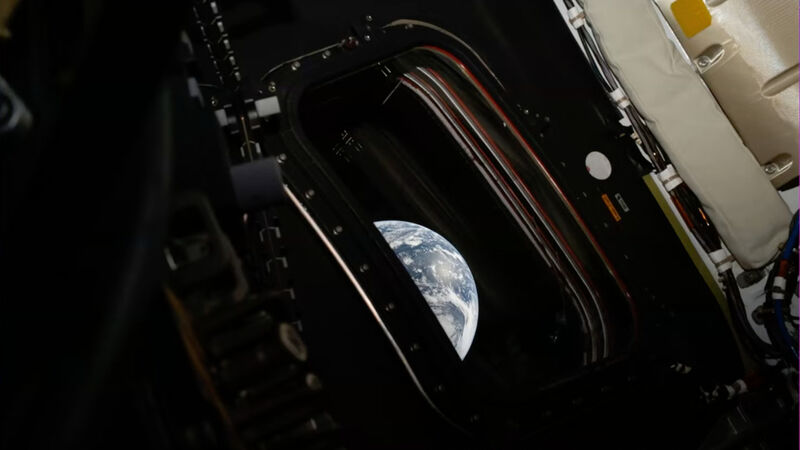
This image provided by NASA shows a downlink image of Earth taken by NASA’s Artemis II astronaut commander Reid Wiseman inside the Orion capsule on Friday, April 3, 2026. (NASA via AP)
The Artemis II crew are now closer to the moon than the Earth, Nasa said on Saturday morning, as the four astronauts completed the third day of their flight to the moon.
“We can see the moon out of the docking hatch right now. It’s a beautiful sight,” said an unnamed member of the crew, which Nasa shared in a post on X.
By 11am Saturday, the Orion spacecraft had travelled more than 152,000 miles away from Earth since its launch on Wednesday.
Nasa released the crew’s first downlinked images on Friday, just one-and-a-half days into the first astronaut moonshot in more than half a century.
Read More
The first photo taken by commander Reid Wiseman showed a curved slice of Earth in one of the capsule’s windows. The second showed the entire globe with the oceans topped by swirling white tendrils of clouds. A green aurora even glows, according to Nasa.
“It’s great to think that, with the exception of our four friends, all of us are represented in this image,” said Nasa’s Lakiesha Hawkins, an exploration systems leader. She added the mission was going well.
The space agency also shared the menu for the trip, which includes tortillas, vegetable quiche, mango salad and barbecued beef brisket. As there is no refrigeration onboard, all meals are carefully selected to remain safe, shelf-stable and easy to prepare.
Wiseman and his crew should reach their destination on Monday.
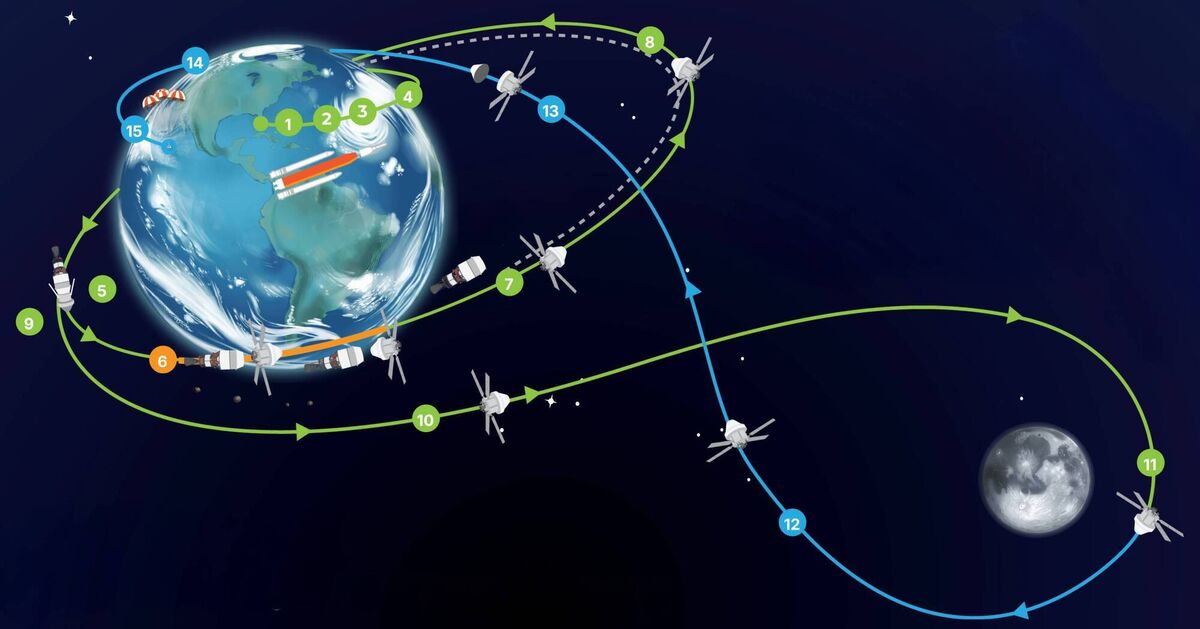
The three Americans and one Canadian will swing around the moon in their Orion capsule, hang a U-turn and then head straight back home without stopping. They fired Orion’s main engine on Thursday night, which set them on their course.
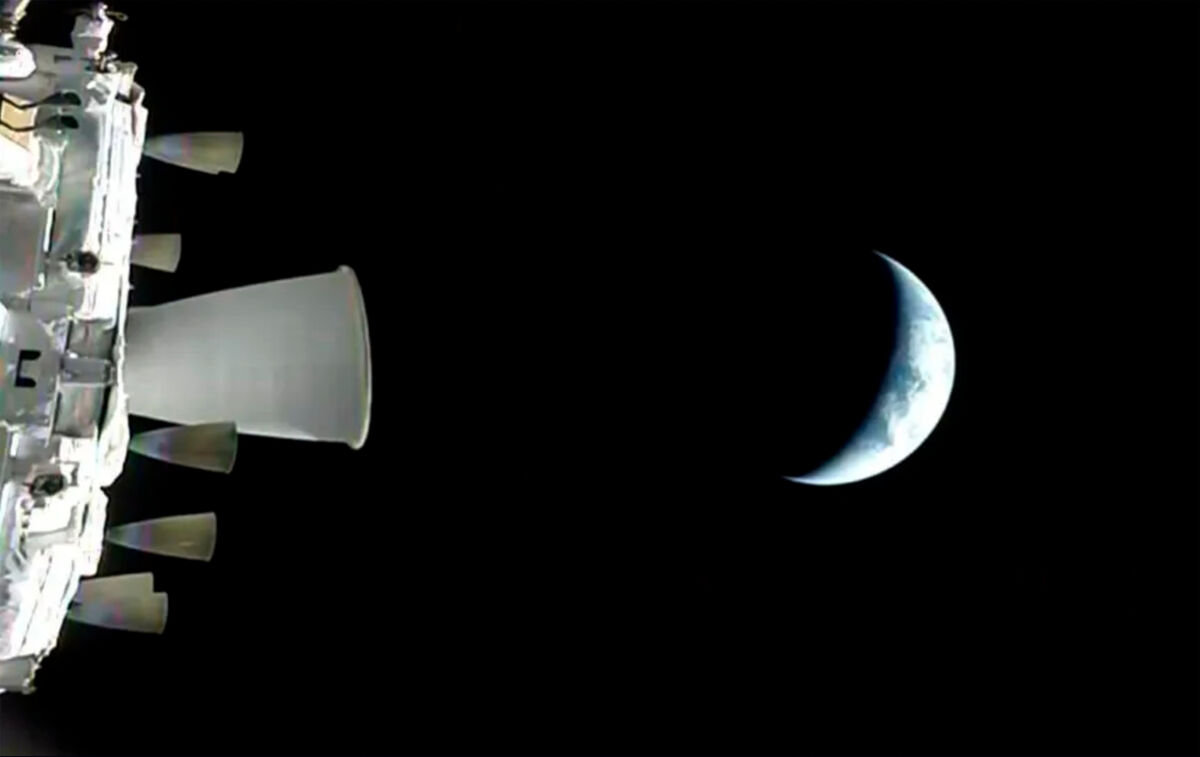
After mission control shifted the position of their capsule, the entire Earth – complete with northern lights – filled their windows.
“It was the most spectacular moment, and it paused all four of us in our tracks,” Wiseman said in a TV interview.
They are the first lunar travellers since Apollo 17 in 1972.
Orion will travel about 4,000 miles (6,400km) beyond the moon before turning back, providing unprecedented and illuminated views of the lunar far side.
If all proceeds smoothly, the astronauts will set a record by venturing further from Earth than any human before – more than 250,000 miles.
The mission is part of a longer-term plan to repeatedly return to the moon, with the aim of establishing a permanent base that will offer a platform for further exploration.
On Thursday, after what Nasa described as a “flawless” engine firing that lasted just under six minutes, the astronauts said they had been glued to the windows of the capsule as they left Earth.
Artemis astronaut Christina Koch said: “There’s nothing that prepares you for the breathtaking aspect of seeing your home planet both lit up bright as day, and also the moon glow on it at night with the beautiful beam of the sunset.”
Now that the astronauts are moon-bound, there is no turning back: they are on a “free return” trajectory, which uses the moon’s gravity to slingshot around it before heading back towards Earth.
In the event something goes wrong, the astronauts are equipped with suits that also serve as “survival systems”. This means that in the unlikely case of a cabin depressurisation or leak, they will maintain oxygen, temperature controls and the correct pressure for up to six days.
They are expected to spend 30 minutes a day working out on the spacecraft’s flywheel exercise device, in order to minimise the muscle and bone loss that happens in the absence of Earth’s gravity.
The mission marks a series of historic accomplishments, including sending the first person of colour, the first woman and the first non-American on a lunar mission. It is also the inaugural crewed flight of SLS, Nasa’s lunar rocket.
After years of delays and massive cost overruns, it was meant to take off in February but was again delayed by repeated setbacks, with the rocket needing to be rolled back to its hangar for repairs.
The current era of US lunar investment has frequently been portrayed as an effort to compete with China, which aims to land humans on the moon by 2030.
During a post-launch briefing, Jared Isaacman, the Nasa administrator, said competition was “a great way to mobilise the resources of a nation”. He added: “Competition can be a good thing – and we certainly have competition now.”
The Artemis programme has come under pressure from Donald Trump, who is hoping US boots will hit the lunar surface before his second term ends in January 2029. But the projected date of 2028 for a landing has raised eyebrows among some experts, in part because Washington is relying heavily on the private sector’s technological headway.
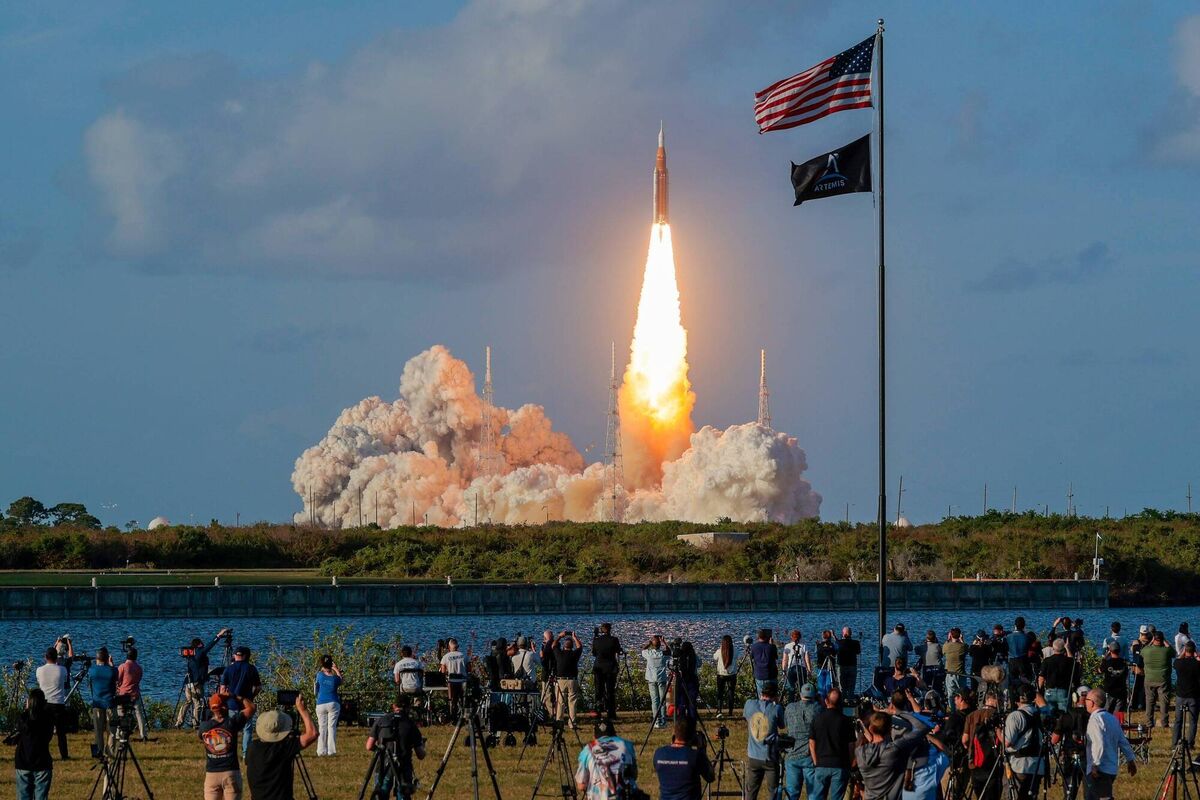
After blasting off from the Kennedy Space Center in Florida on Wednesday, the astronauts sounded the alarm over a slight glitch: a toilet had begun malfunctioning as the crew reached orbit.
With help from mission control, Koch was guided through some plumbing tricks until she finally got it going, but not before having to resort to using contingency urine storage bags.
Koch later said she was proud to call herself “the space plumber”, noting that it had just been an issue of the equipment needing to warm up.
“I like to say that it is probably the most important piece of equipment onboard,” she added. “So we were all breathing a sigh of relief when it turned out to be just fine.”
After the crew was asked about the deep divisions at home and what message they had for Americans, astronaut Victor Glover replied by pointing to their singular vantage point and the view it had afforded them of Earth.
“You look amazing. You look beautiful. From up here, you also look like one thing,” he said. “We’re all one people.”
CONNECT WITH US TODAY



Be the first to know the latest news and updates