Iran threatens to close Strait of Hormuz after Donald Trump’s 48-hour ultimatum
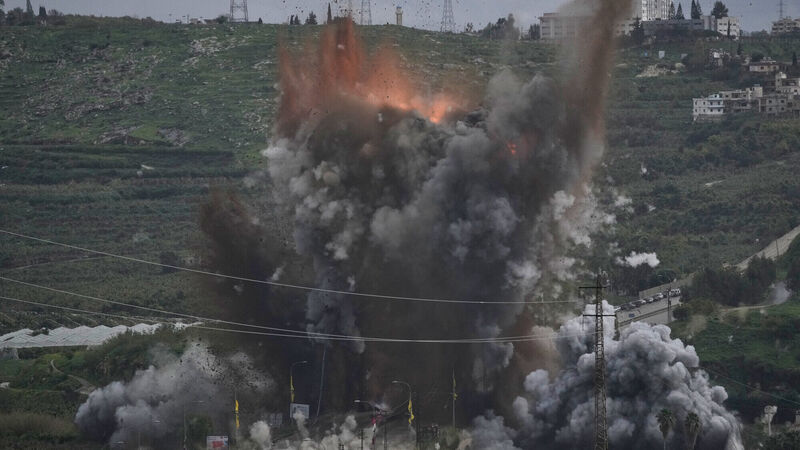
Iran and the allied Lebanese militant group Hezbollah stepped up attacks on Israel on Sunday as the US and Iran threatened to target critical infrastructure in the war in the Middle East, now in its fourth week.
Iran said the Strait of Hormuz, crucial to oil and other exports, would be “completely closed” immediately if America follows up on a threat from US President Donald Trump to attack its power plants.
Mr Trump late on Saturday set a 48-hour deadline to open the strait. Iran’s parliament speaker said Tehran would also retaliate against US and Israeli energy and wider infrastructure.

Read More
Israeli leaders visited one of two southern communities near a secretive nuclear research site struck by Iranian missiles late on Saturday, with scores of people wounded. Prime Minister Benjamin Netanyahu said it was a “miracle” no-one was killed.
He also claimed that Israel and the US were well on their way to achieving their war goals and asked the world for more support.
The aims have ranged from weakening Iran’s nuclear programme, missile programme and support for armed proxies to enabling the Iranian people to overthrow the theocracy.
The developments signalled that the war, which the US and Israel launched on February 28, was moving in a dangerous new direction, despite Mr Trump’s comment last week that he was considering “winding down” operations.
It has killed more than 2,000 people, rattled the global economy and sent oil prices surging.
Hezbollah claimed responsibility for an airstrike that killed a man in northern Israel, while Lebanese President Joseph Aoun called Israel’s targeting of bridges in the south “a prelude to a ground invasion”.
Iran has practically closed the Strait of Hormuz that connects the Persian Gulf to the rest of the world. Roughly one-fifth of global oil supply passes through it, but attacks on ships and threats of further strikes have stopped nearly all tanker traffic. Some of the largest oil producers have made cuts because their crude product has nowhere to go.
The US and its allies in Europe and Asia rely heavily on the oil to meet energy demand. In its most recent attempt to relieve pressure on energy prices, the US has lifted some sanctions on Iranian oil at sea.
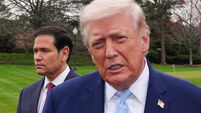
Mr Trump said if Iran did not open the strait, the US would destroy its “various POWER PLANTS, STARTING WITH THE BIGGEST ONE FIRST!”
The US has argued that Iran’s Revolutionary Guard controls much of the country’s infrastructure and uses it to power the war effort.
Iranian parliament speaker Mohammad Bagher Qalibaf responded on X that if Iran’s power plants and infrastructure are targeted, then vital infrastructure across the region — including energy and desalination facilities — would be considered legitimate targets and “irreversibly destroyed”.
Under international law, power plants that benefit civilians can be targeted only if the military advantage outweighs the suffering it causes to civilians, legal scholars say.

Separately, Iranian officials said they would keep providing safe passage through the strait to vessels from countries other than its enemies.
Iran said its strikes in the Negev Desert late on Saturday were in retaliation for an earlier attack on Iran’s main nuclear enrichment site in Natanz, according to state-run media.
Tehran praised the attack as a show of strength, even as Israel’s military asserts that Iranian missile launches have gradually decreased in frequency since the war began.
“If the Israeli regime is unable to intercept missiles in the heavily protected Dimona area, it is, operationally, a sign of entering a new phase of the battle,” Mr Qalibaf said.
Southern Israel’s main hospital received at least 175 wounded from Arad and Dimona, its deputy director Roy Kessous told The Associated Press.

Israel is widely believed to possess nuclear weapons, although it does not confirm or deny their existence.
The UN nuclear watchdog said on X it had not received reports of damage to the Israeli centre or abnormal radiation levels.
Israel denied responsibility for hitting Natanz on Saturday, while the Iranian judiciary’s official news agency, Mizan, said there was no leakage. The Pentagon declined to comment on the strike.
The International Atomic Energy Agency has said the bulk of Iran’s estimated 972 pounds (441 kilograms) of enriched uranium is elsewhere, beneath the rubble at its Isfahan facility.
Iran said strikes hit a hospital in Andimeshk. Its health ministry said patients and doctors were evacuated to another city.
Iran’s death toll in the war has surpassed 1,500, state media reported on Saturday, citing the ministry.
In Israel, 15 people have been killed by Iranian strikes. More than a dozen civilians in the occupied West Bank and Gulf Arab states have been killed in strikes.
A Qatari military helicopter crash on Saturday, blamed on a technical malfunction, killed all seven aboard, Qatari authorities said.
An Israeli civilian was killed in his car in the northern town of Misgav Am in what Israel’s military said appeared to be a rocket attack. Israeli authorities identified him as 61-year-old farmer Ofer “Poshko” Moskovitz.
Two days ago, Mr Moskovitz told a radio station that living near the Lebanese border was like “Russian roulette”.
Hezbollah launched strikes on Israel soon after the war began, calling it retaliation for the killing of Iran’s Supreme Leader Ayatollah Ali Khamenei. Israel then targeted Hezbollah in deadly airstrikes and expanded its ground presence in southern Lebanon.

Israel expanded its target list on Sunday to include bridges over the Litani River that defence minister Israel Katz said Hezbollah was using to move fighters and weapons into the south.
Israel later struck the Qasmiyeh bridge near Tyre, giving an hour’s warning.
Destroying bridges further isolates residents from the rest of Lebanon.
Mr Katz also ordered the military to accelerate its destruction of Lebanese homes near the border.
Lebanese authorities say Israel’s strikes have killed more than 1,000 people and displaced more than one million.
Meanwhile, Hezbollah has fired hundreds of rockets into Israel.


CONNECT WITH US TODAY



Be the first to know the latest news and updates