Why attacks on Iran's Kargh Island could keep oil prices high

Oil tankers and cargo ships line up in the Strait of Hormuz as seen from Mina Al Fajer, United Arab Emirates, Wednesday, March 11, 2026. (AP Photo/Altaf Qadri)
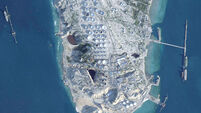
About 20 miles off the coast of Iran lies the source of the petrostate’s economic lifeblood and the latest target of US military aggression: a small coral island through which nine in every 10 barrels of Iranian crude passes each day.
The US president’s decision to launch a weekend attack on Kharg Island, the home of Iran’s processing hub and the heart of its economy, is an unsurprising counterstrike to the Iranian regime’s ongoing chokehold on the oil market’s trade artery.
But uncertainty over future oil production by one of the world’s largest producers is also likely to cause further market volatility after weeks of historic price increases.
Read More
Donald Trump ordered the US military attack on Iran’s most strategic economic asset on Saturday, exactly two weeks after the US-Israeli strikes, which began the war and led to the blocking of the Strait of Hormuz.
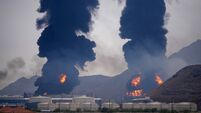
The bombardment took aim at military assets on the island, and has so far spared oil facilities. But Mr Trump has warned that he may reconsider if Iran refuses to open the strait.
“We may hit it a few more times just for fun,” Mr Trump said.
Any damage to Kharg Island’s oil infrastructure could force Iran to cut production at its oilfields, potentially erasing another 1m barrels from global markets already roiled by cuts from neighbouring Gulf nations unable to ship their crude to international buyers.
The world’s largest offshore oilfield stretches more than 40 miles from Saudi Arabia’s eastern province into the depths of the Gulf. For almost 70 years, the Safaniya field has produced millions of barrels of Arabian heavy crude to be sold by the biggest oil-producing country. This week, the field was shut.
The war in Iran has effectively blocked the Gulf states from exporting a fifth of the world’s oil supply to the international buyers through the Strait of Hormuz. Iran’s attacks on tankers trapped in the vital trade route have erased an estimated 15m barrels of oil from the global market.
But beyond the tankers set ablaze in the narrow waterway just a few miles south of Iran lies a quieter threat that risks compounding the greatest energy supply shock in history and fuelling the recent surge in prices.
The risk is that the world’s biggest oil producers will be forced to shut down many of their fields altogether, keeping prices higher for households and businesses for a sustained period. In a worst-case scenario, analysts have forecast oil could pass the record $147.50 a barrel reached in 2008.
Oil producers have scrambled to redirect their crude flows to pipelines and storage facilities, but as their pipes and stockpiles reach the brim, the only option remaining is to turn off the taps. The threat to the Middle East’s oilfields is now considered the main driver for the upward march of market prices.
- The Guardian
CONNECT WITH US TODAY



Be the first to know the latest news and updates