Blast rocks Tehran as Iran fires missiles after US and Israel attacks kill Khamenei
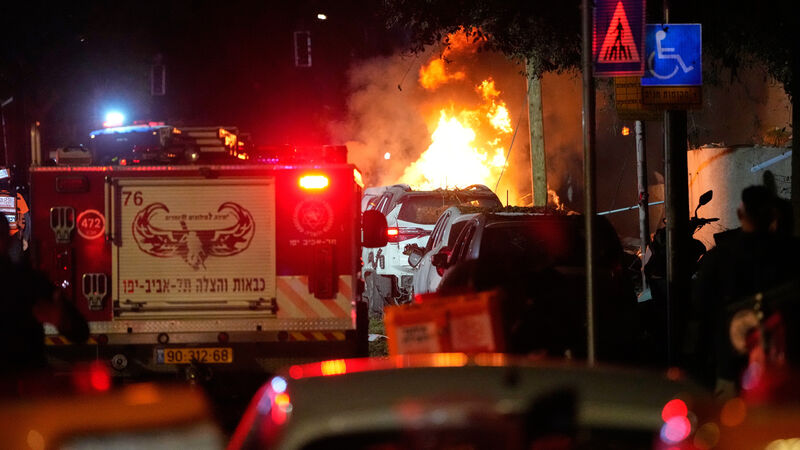
Firefighters try to extinguish flames at the site of a direct hit by an Iranian missile strike in Tel Aviv. Picture: Ohad Zwigenberg/AP
A massive explosion has struck Iran’s capital as the Israeli military said it is targeting the “heart” of the city, after the killing of supreme leader Ayatollah Ali Khamenei by the United States and Israel.
The blast sent a huge plume of smoke into the sky and shook the ground. It was not immediately clear what the target was, but the blast appeared to have occurred in an area of Tehran which is home to the country’s police headquarters and state television.
The Israeli military said it is striking targets in central Tehran. It said on the first day of the war the military cleared the path to the Iranian capital, and on the second day it is striking central Tehran.
Meanwhile, Iran fired missiles at targets in Israel and Gulf Arab states after vowing massive retaliation for the killing of Supreme Leader Ayatollah Ali Khamenei by the United States and Israel.
Iran’s rhetoric prompted US president Donald Trump to threaten Tehran against further escalation.
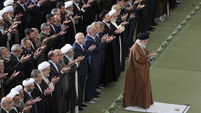
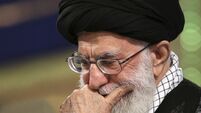
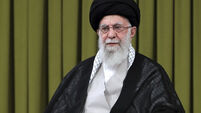
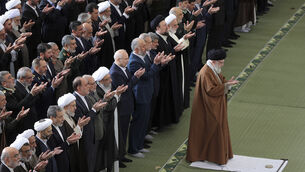
Iran acknowledged Khamenei’s death in the joint Israeli-American air strike on Saturday at his Tehran office, which has thrown the future of the Islamic Republic into question and raised the risk of regional instability.
The 86-year-old’s death “showed that he consistently stood among the people and at the forefront of his responsibilities, confronting what officials call global arrogance,” Iranian state TV said.
Mr Trump said the killing of Khamenei, who has ruled Iran as supreme leader since 1989, gave Iranians their “greatest chance” to “take back” their country.
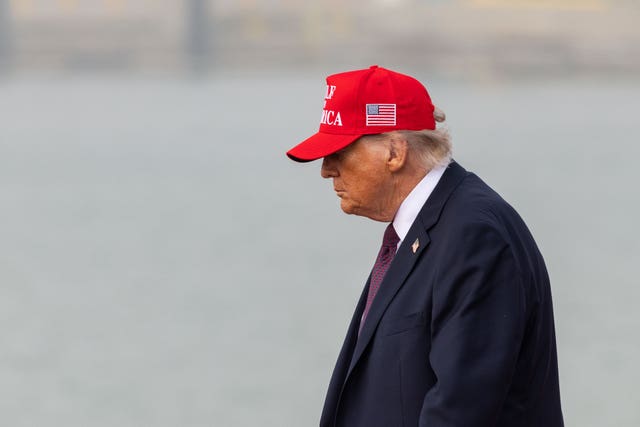
“Khamenei, one of the most evil people in History, is dead,” Mr Trump wrote in a social media post.
Iran’s Cabinet vowed that this “great crime will never go unanswered” and the paramilitary Revolutionary Guard threatened to launch its “most intense offensive operation” ever, targeting Israeli and American bases.
“You have crossed our red line and must pay the price,” Iran’s parliamentary speaker, Mohammad Bagher Qalibaf said in a televised address on Sunday. “We will deliver such devastating blows that you yourselves will be driven to beg.”
“Iran just stated that they are going to hit very hard today, harder than they have ever hit before,” Mr Trump fired back in a social media post. “THEY BETTER NOT DO THAT, HOWEVER, BECAUSE IF THEY DO, WE WILL HIT THEM WITH A FORCE THAT HAS NEVER BEEN SEEN BEFORE!”
As Israel and the US targeted other top officials, an air strike on a meeting of the country’s defence council killed Iran’s army chief of staff and defence minister, alongside the head of Iran’s Revolutionary Guard and a top security adviser to Khamenei.
General Abdol Rahim Mousavi and defence minister General Aziz Nasirzadeh were killed at the meeting, along with Major General Mohammad Pakpour, who took over as the Guard’s top commander after Israel killed its past commander in the 12-day war last June. The adviser, Ali Shamkhani, had long been a figurehead within Iran’s security establishment.
In a sign that the attack could spread instability throughout the region, at least six people were killed in clashes with police as hundreds of people stormed the US Consulate in Pakistan’s port city of Karachi on Sunday, smashing windows.
Police and paramilitary forces used batons and fired tear gas to disperse the crowd, said Mohammad Jawad, a police official. At least one protester was killed and several others were injured in clashes, he said.
After the initial strikes, Iran immediately launched missiles and drones towards Israel and US military installations in Bahrain, Kuwait and Qatar.
The Israeli military said Iran fired dozens of missiles at Israel, with many intercepted. The Magen David Adom rescue service said on Saturday night that a woman in the Tel Aviv area died after being wounded in an Iranian missile attack.
Flights across the Middle East were disrupted, and air defense fire thudded over Dubai, the United Arab Emirates’ commercial capital, with explosions continuing into Sunday morning.
Shrapnel from an Iranian missile attack on the UAE killed one person, state media said, and debris from aerial interceptions caused fires at the city’s main port and on the facade of the iconic Burj Al Arab hotel.
Saudi Arabia said Iran targeted its capital and eastern region in an attack that was repelled and Jordan said it “dealt with” 49 drones and ballistic missiles.
The strikes could rattle global markets, particularly if Iran makes the Strait of Hormuz unsafe for commercial traffic. A third of worldwide oil exports transported by sea passed through the strait in 2025.
The attack on Iran opened a stunning new chapter in US intervention, and carried the potential for retaliatory violence and a wider war, representing a startling flex of military might for an American president who swept into office on an “America First” platform and vowed to keep out of “forever wars”.

The killing of Khamenei is the second Trump administration assault on Iran in eight months and appeared certain to create a leadership vacuum, given the absence of a known successor and because the supreme leader had final say on all major policies during his decades in power.
He led Iran’s clerical establishment and the Revolutionary Guard, the two main centres of power in the governing theocracy.
“This is the single greatest chance for the Iranian people to take back their Country,” Mr Trump said.
Iran quickly formed a council to govern the country until a new supreme leader is chosen.
State media also reported the deaths of the head of Iran’s Revolutionary Guard and a top security adviser to Khamenei in airstrikes.
Major general Mohammad Pakpour took over as the Guard’s top commander after Israel killed its past commander in the 12-day war last June. The adviser, Ali Shamkhani, had long been a figurehead within Iran’s security establishment, IRNA said.
As reports trickled out about Khamenei’s death, eyewitnesses in Tehran told The Associated Press that some residents were rejoicing, cheering from rooftops, blowing whistles and letting out ululations.

CONNECT WITH US TODAY



Be the first to know the latest news and updates