War powers row deepens after Trump orders Iran strike without Congress approval
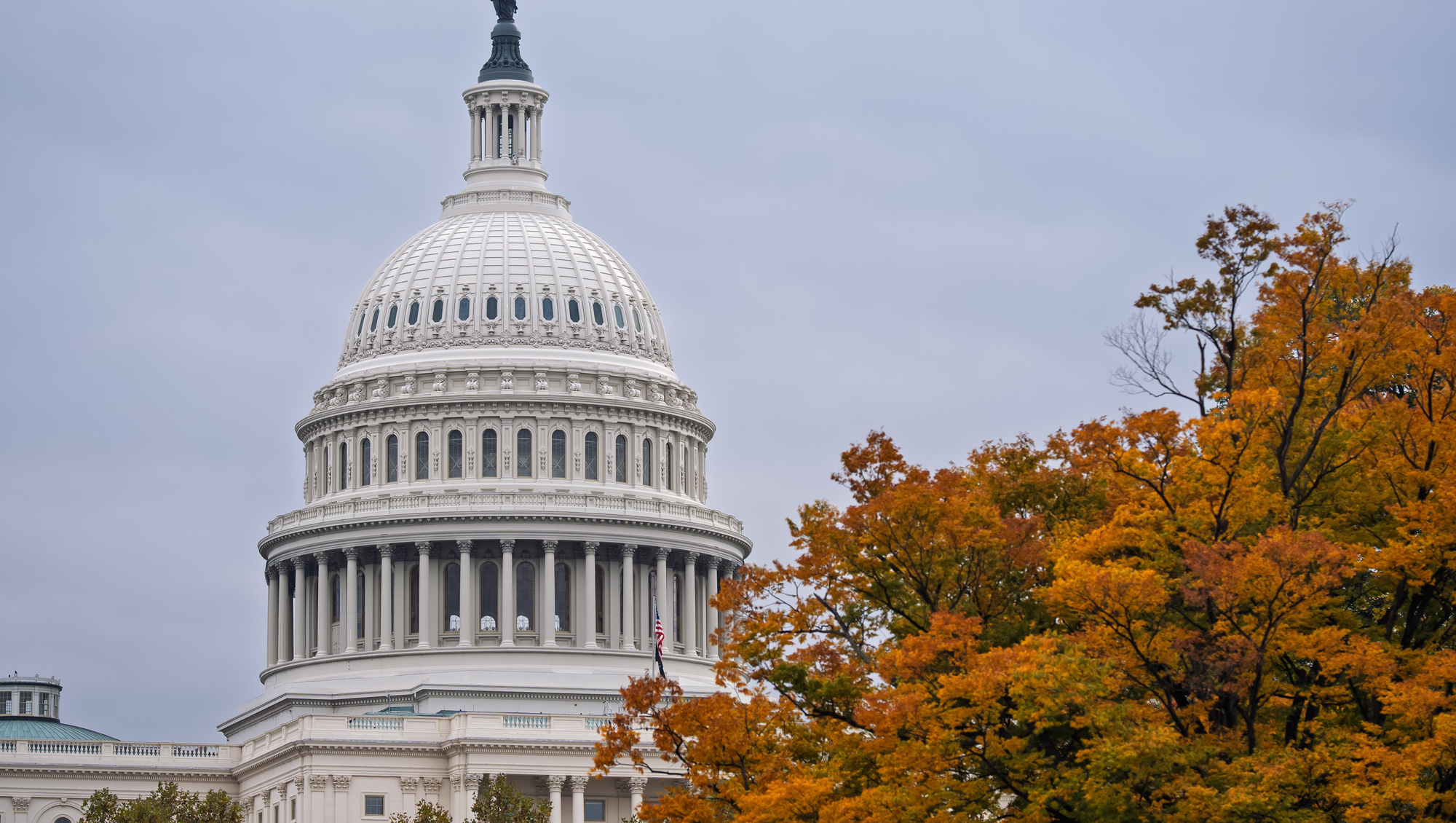
While presidents have the authority as the commander in chief to conduct certain strategic military operations on their own, the Constitution vests Congress with the power to wage war. File Picture: AP Photo/J. Scott Applewhite
Key members of Congress are demanding a swift vote on a war powers resolution that would restrain President Donald Trump’s military attack on Iran unless the administration wins their approval.
Both the House and Senate, where the President’s Republican Party has a slim majority, had already drafted such resolutions long before the strikes on Saturday.
Now they are ready to plunge into a rare war powers debate next week that will serve as a referendum on Mr Trump’s decision to go it alone on military action without formal authorisation from Congress.
“Has President Trump learned nothing from decades of US meddling in Iran and forever wars in the Middle East?” said Democratic Senator Tim Kaine, a leader in the bipartisan effort. He said the strikes on Iran were “a colossal mistake”.
In the House, Democrat Ro Khanna and Republican Thomas Massie are demanding Congress go on record with a public vote on their own bipartisan measure. “Congress must convene on Monday to vote to stop this,” Mr Khanna said.
Mr Massie blasted Mr Trump’s own presidential campaign slogan and said: “This is not ‘America First.’” But most Republicans, particularly their leaders, welcomed Mr Trump’s move against Iran. Many cited the US adversary’s nuclear programmes and missile capabilities as requiring a military response.
“Well done, Mr President,” said Senator Lindsey Graham.
“As I watch and monitor this historic operation, I’m in awe of President Trump’s determination to be a man of peace but at the end of the day, evil’s worst nightmare.”
The administration’s decision to launch, with Israel, what appears to be an open-ended joint military operation aimed at changing the government in Tehran is testing the Constitution’s separation of powers in deep and dramatic ways. Nearly two months earlier, Mr Trump ordered US strikes that toppled Venezuelan leader Nicolas Maduro.
While presidents have the authority as the commander in chief to conduct certain strategic military operations on their own, the Constitution vests Congress with the power to wage war.
Before the Iraq War began in March 2003, Republican President George W Bush made a months-long push to secure congressional authorisation. No such vote was attempted on Iran, and an earlier Senate effort to halt Mr Trump’s actions after last summer’s strike on Iran failed.
The congressional debate over war powers would mostly be symbolic.
Even if a resolution were to pass the narrowly split Congress, Mr Trump likely would veto it and Congress would not have the two-thirds majority needed to overturn that rejection.
Congress has often failed to block other US military actions, including in a Senate vote on Venezuela but the roll calls stand as a public record.
Many Democrats are calling the operation illegal, saying the Constitution gives Congress alone the power to declare war. To them, the administration has failed to lay out its rationale or plan for the military strikes, and the aftermath.
Senator Chris Van Hollen, who serves on the Senate Foreign Relations Committee, said the president has undertaken an “illegal, regime-change war against Iran”.
“This is not making us safer & only damages the US & our interests,” Mr Van Hollen said in a social media post. “The Senate must immediately vote on the War Powers Resolution to stop it.”
CONNECT WITH US TODAY



Be the first to know the latest news and updates