No deal announced after US-Iran nuclear talks conclude as risk of war looms
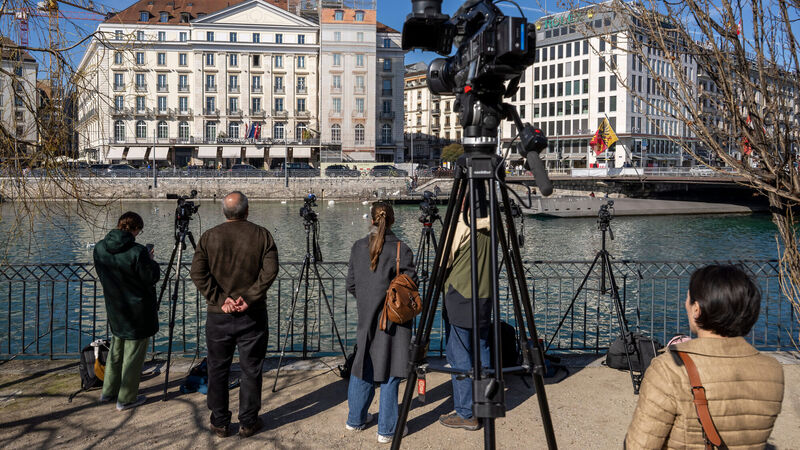
Journalists gather outside the Bergues Hotel in Geneva (Martial Trezzini/Keystone/AP)
Iran and the US have held hours of indirect negotiations over Tehran’s nuclear programme but walked away without a deal, leaving the danger of another Middle East war on the table.
Oman’s foreign minister Badr al-Busaidi, who mediated the talks in Geneva, said there had been “significant progress in the negotiation” without elaborating.
But just before the talks ended, Iranian state television reported that Tehran was determined to continue enriching uranium, rejected proposals to transfer it abroad and sought the lifting of international sanctions, indicating it was not prepared to meet Donald Trump’s demands.

The US president wants a deal to constrain Iran’s nuclear programme and sees an opportunity while the country is struggling at home with growing dissent after nationwide protests.
Tehran also hopes to avert war, but maintains it has the right to enrich uranium and does not want to discuss other issues, like its long-range missile programme or support for armed groups like Hamas and Hezbollah.
Mr al-Busaidi said technical-level talks would continue next week in Vienna, the home of the International Atomic Energy Agency (IAEA), the United Nations atomic watchdog.
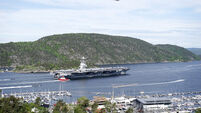
The US has gathered a massive fleet of aircraft and warships in the Middle East and Iran has said American military bases in the region would be considered legitimate targets in the event of an attack, putting at risk tens of thousands of US service members.
Tehran has also threatened to attack Israel, meaning another regional war could erupt across the Middle East.
“There would be no victory for anybody — it would be a devastating war,” Iranian foreign minister Abbas Araghchi said in an interview filmed on Wednesday just before he flew to Geneva.
“Since the Americans’ bases are scattered through different places in the region, then unfortunately, perhaps the whole region would be engaged and be involved, so it is a very terrible scenario.”
Ali Vaez, an Iran expert with the International Crisis Group, said it was a good sign that the Americans did not walk away immediately when Iran presented its latest proposal on Thursday.
“There might still not be a breakthrough at the end of this day, but the very fact that the US team is returning shows that there is enough common ground between the two sides,” he said.
The sides held multiple rounds of talks last year that collapsed when Israel launched a 12-day war against Iran in June and the US carried out heavy strikes on its nuclear sites, leaving much of Tehran’s nuclear programme in ruins.
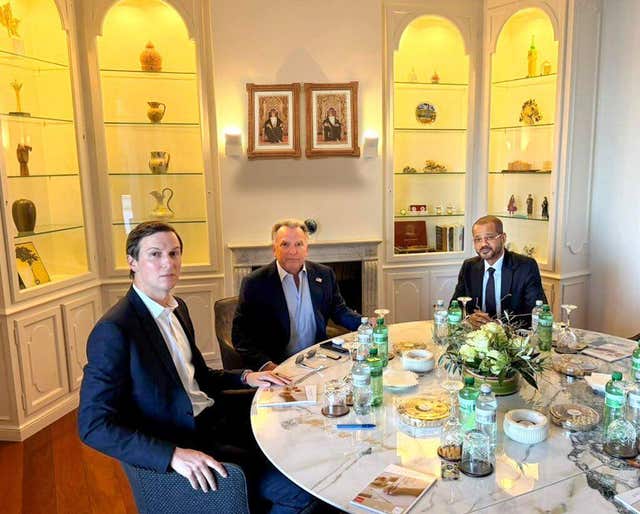
Mr Araghchi represented Iran at the talks. Steve Witkoff, a billionaire property developer and friend of Mr Trump who serves as a special Middle East envoy, headed the US delegation with the president’s son-in-law Jared Kushner. The talks again were mediated by Oman, an Arab Gulf country that has long served as a go-between between Iran and the West.
The two sides adjourned after around three hours of talks and resumed the discussions later.

During the break, Iranian Foreign Ministry spokesperson Esmail Baghaei said diplomats held “very intensive” negotiations. He said the Iranians felt there were “constructive proposals” offered on nuclear issues and sanctions relief.
Mr Trump wants Iran to halt its enrichment of uranium and roll back its long-range missile programme and its support for regional armed groups. Tehran says it will only discuss nuclear issues, and maintains its atomic programme is for entirely peaceful purposes.
US secretary of state Marco Rubio told reporters on Wednesday that Iran is “always trying to rebuild elements” of its nuclear programme. He said that Tehran is not enriching uranium now, “but they’re trying to get to the point where they ultimately can”.
Iran says it has not enriched since June, but it has blocked IAEA inspectors from visiting the sites America bombed. Satellite photos analysed by the Associated Press have shown activity at two sites, suggesting Iran is trying to assess and potentially recover material.
The West and the IAEA say Iran had a nuclear weapons programme until 2003. After Mr Trump scrapped the 2015 nuclear agreement, Tehran ramped up its enrichment of uranium to 60% purity — a short technical step away from weapons-grade levels of 90%.
US intelligence agencies assess that Iran has yet to restart a weapons programme, but has “undertaken activities that better position it to produce a nuclear device, if it chooses to do so”. Some Iranian officials have spoken openly about the country’s readiness to produce a bomb if that decision is taken.

CONNECT WITH US TODAY



Be the first to know the latest news and updates