Hungary uses veto to block EU cash for Ukraine
Hungary claims Ukraine is preventing the flow of cheap Russian oil to Slovakia and Hungary through the Soviet-era Druzhba pipeline. The pipeline was damaged by Russian airstrikes
Hungary uses veto to block EU cash for Ukraine

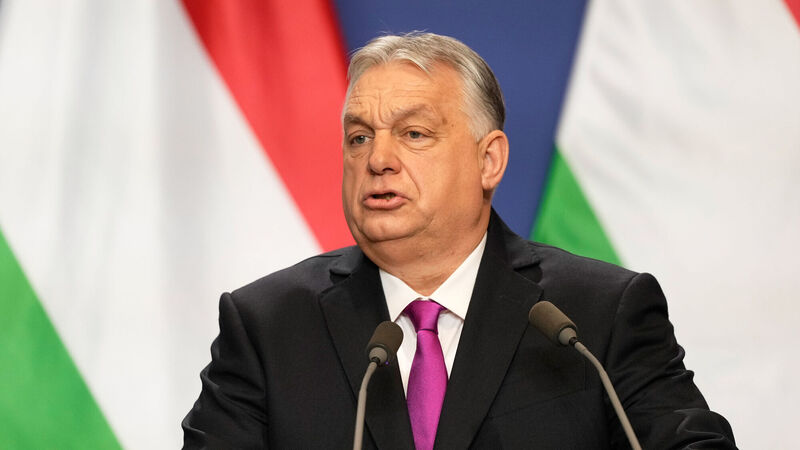
Hungary’s prime minister Viktor Orban. The loan continues to be blocked by Hungary together with the 20th package of sanctions. File Picture: AP

EU foreign ministers failed to break the deadlock over the Hungarian government’s veto on crucial European policies relating to a €90bn funding for Ukraine for the next two years.

Budapest is also vetoing the EU’s twentieth sanctions package against Russia for its full-scale invasion of Ukraine. The impasse comes as Kyiv enters its fifth year under Moscow’s war from today.

Separately, the government of Viktor Orban is also blocking the sanctioning of several Israeli settlers wreaking destruction and violence against Palestinians in the West Bank.

At a meeting in Brussels, EU foreign ministers expressed frustration, and some called for changes to be made about how the EU takes decisions given that one country could halt progress on consequential matters such as obstructing vital funding for Ukraine.

At a high stakes meeting before Christmas, all 27 EU leaders — including Mr Orban — agreed to capitalise Ukraine for the next two years to pay for the functioning of the state such as salaries for teachers and doctors as well as money for military spending.

However, ahead of the EU meeting of foreign ministers in Brussels, Hungary’s foreign minister, Péter Szijjártó posted on X: “The EU aims to adopt the 20th sanctions package. Hungary will block it. Until Ukraine resumes oil transit to Hungary and Slovakia via the Druzhba pipeline, we will not allow decisions important to Kyiv to move forward.”

Hungary claims Ukraine is preventing the flow of cheap Russian oil to Slovakia and Hungary through the Soviet-era Druzhba pipeline. The pipeline was damaged by Russian airstrikes.

“Russia bombed the pipeline. Not only the pipeline but also 80% of Ukrainian energy infrastructure,” EU foreign policy chief Kaja Kallas said in Brussels at a press conference after the meeting of foreign affairs ministers.

“I can’t really blame Ukrainians for repairing the energy infrastructure that their people need in weather of minus 25,” she said.

“That they are prioritising the people who are suffering, ahead of [repairing] this pipeline which just takes cheap oil to other countries.

If Russia hadn’t started this war, we wouldn’t have this problem

Meanwhile, foreign affairs minister Helen McEntee urged the Hungarians to move past their demands for the greater good. 

“We have to ensure that money gets to those who need it most — for critical infrastructure, just to just to keep the lighting on,” Ms McEntee told journalists ahead of the meeting.

“We can see the sanctions implemented to date are starting to have an impact on the Russian economy and on the Shadow fleet which is funding the war,” she said.

Fourth anniversary

The president of the European Commission and EU leaders are in Kyiv with president Volodymyr Zelenskyy today to commemorate four years since the start of Russia’s full-scale invasion.

Commission president Ursula von der Leyen was due to announce the passage of the sanctions package and prepare to deliver the first tranche of the loan to Ukraine — which runs out of money in approximately eight weeks’ time.

Meanwhile, Ms Kallas said 26 out of 27 EU member states supported the sanctioning of some Israeli settlers responsible for constant waves of violence in the West Bank including killing, harming and expelling Palestinians from their homes.

“When one country is blocking, we don’t do what the majority wants, we do what one country wants,” said Ms Kallas, pointing to Hungary’s serial use of the veto on major policy decisions.

More in this section

Cookie Policy Privacy Policy Brand Safety FAQ Help Contact Us Terms and Conditions

© Examiner Echo Group Limited