World faces new danger of 'economic denial' in climate fight, Cop30 head says
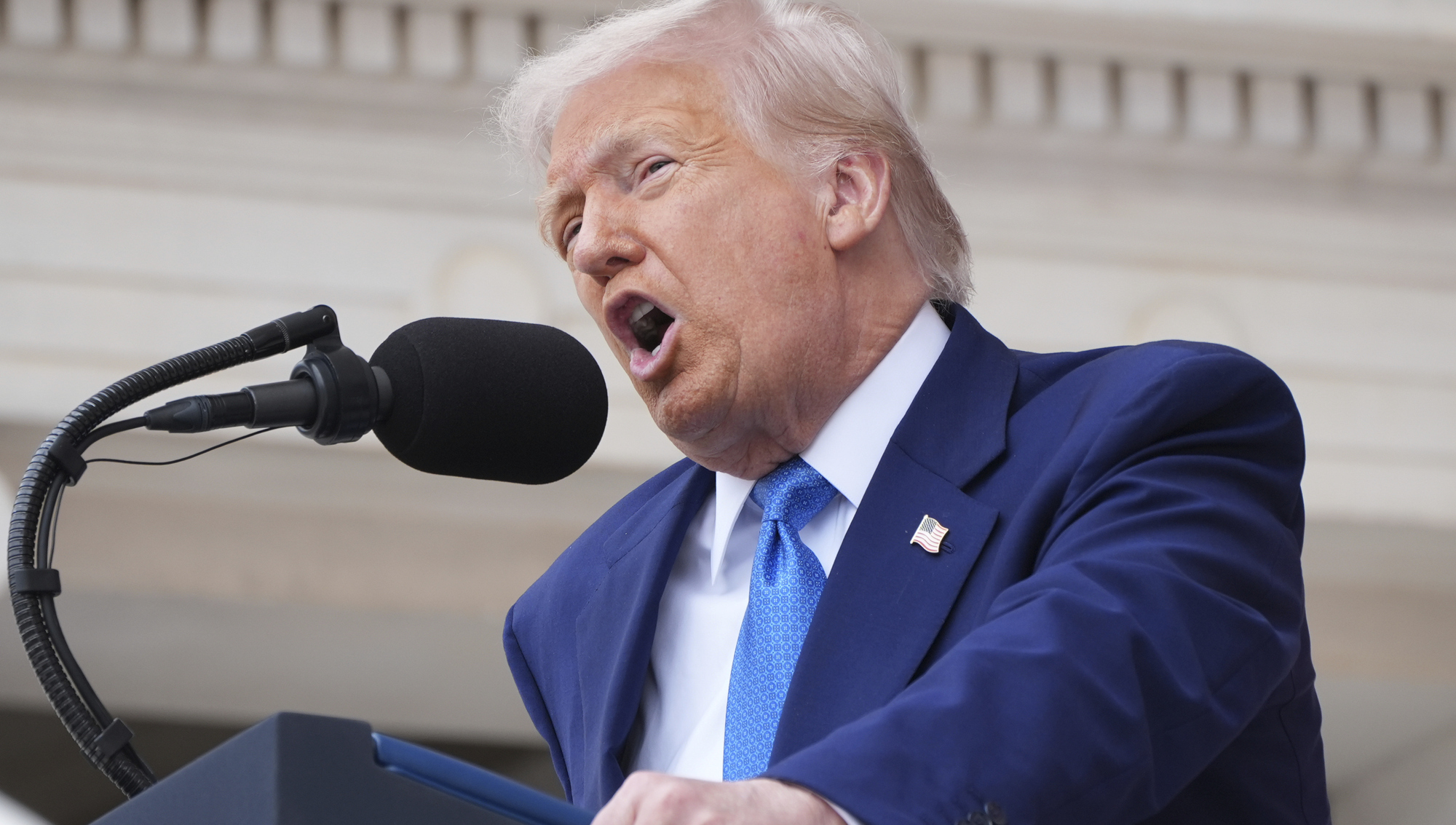
The rise of populist politicians around the world has fuelled a backlash against climate policy, most clearly seen in the presidency of Donald Trump in the US, where he has set about cancelling policies intended to boost renewable energy and cut greenhouse gases, and dismantling all forms of government-sponsored climate-related institutions, including scientific research labs. Photo: AP/Jacquelyn Martin
The world is facing a new form of climate denial – not the dismissal of climate science, but a concerted attack on the idea that the economy can be re-organised to fight the crisis, the president of global climate talks has warned.
André Corrêa do Lago, the veteran Brazilian diplomat who will direct this year’s UN summit, Cop30, believes his biggest job will be to counter the attempt from some vested interests to prevent climate policies aimed at shifting the global economy to a low-carbon footing.
“There is a new kind of opposition to climate action. We are facing a discredit of climate policies. I don’t think we are facing climate denial,” he said, referring to the increasingly desperate attempts to pretend there is no consensus on climate science that have plagued climate action for the past 30 years.
This economic denial could be just as dangerous and cause as much delay as repeated attempts to deny climate science in previous years, he warned.
As the climate crisis has gathered pace, temperatures have risen and the effects of extreme weather have become more obvious, scientists have been able to draw ever more clearly the links between greenhouse gas emissions and our impacts on the planet.
So the argument has shifted, Corrêa do Lago believes, from undermining or misrepresenting the science to attempts to counter climate policy.
“It is not possible to have [scientific] denialism at this stage, after everything that has happened in recent years. So there is a migration from scientific denial to a denial that economic measures against climate change can be good for the economy and for people.”
The rise of populist politicians around the world has fuelled a backlash against climate policy, most clearly seen in the presidency of Donald Trump in the US, where he has set about cancelling policies intended to boost renewable energy and cut greenhouse gases, and dismantling all forms of government-sponsored climate-related institutions, including scientific research labs.
Corrêa do Lago wants to spur a new global effort to persuade people that remodelling the economy away from a reliance on fossil fuels and towards a clean energy future will reap benefits for all people.
“The new populism is trying to show [that tackling the climate crisis does not work],” he said. “It’s the turn of those who believe in the fight against climate change to show and to prove that fighting climate change is possible, and that it can come with economic advantages and with a better quality of life.”
Corrêa do Lago faces the task of corralling 196 nations into producing new national plans on greenhouse gas emissions within the next few months, and meanwhile Brazil is already wrestling with the logistical challenges of holding Cop30 in a rainforest.
There was controversy earlier this year over a road being built through the forest to the city, though Brazilian officials said the road had already been planned before Cop30 was awarded to Belém. There are also concerns about the environmental credentials of the Brazilian president as his government continues to approve mines and oil drilling projects.
CLIMATE & SUSTAINABILITY HUB
CONNECT WITH US TODAY



Be the first to know the latest news and updates